


Uber's battle in San Francisco
Submitted by brad on Fri, 2016-12-16 16:44For a few months, Uber has been testing their self-driving prototypes in Pittsburgh, giving rides to willing customers with a safety driver (or two) in the front seat monitoring the drive and ready to take over.
When Uber came to do this in San Francisco, starting this week, it was a good step to study new territory and new customers, but the real wrinkle was they decided not to get autonomous vehicle test permits from the California DMV. Google/Waymo and most others have such permits. Telsa has such permits but claims it never uses them.
Topic:
 T: Why did he do it?

 One can understand the appeal of presenting the simulation in a mostly real environment. But the advantages of the VR experience are many. In particular, with the top-quality, retinal resolution light-field VR we hope to see in the future, the big advantage is you don't need to make the physical things look real. You will have synthetic bodies, but they only have to feel right, and only just where you touch them. They don't have to look right. In particular, they can have cables coming out of them connecting them to external computing and power. You don't see the cables, nor the other manipulators that are keeping the cables out of your way (even briefly unplugging them) as you and they move.
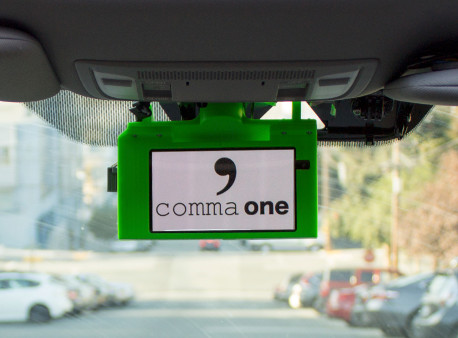 To be clear, comma is a tiny company taking a radical approach, so it is not a given that what NHTSA has applied to them would have been or will be unanswerable by the big guys. Because Tesla's autopilot is not a pure machine learning system, they can answer many of the questions in the NHTSA letter that comma can't. They can do much more extensive testing that a tiny startup can't. But even so a letter like this sends a huge chill through the industry.
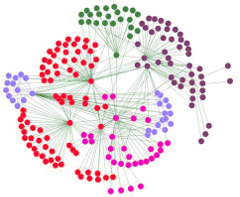 Of course, for the social site to aggregate and use this data for its own purposes would be a gross violation of many important privacy principles. But social networks don't actually do (too many) things; instead they provide tools for their users to do things. As such, while Facebook should not attempt to detect and use political data about its users, it could give tools to its users that let them select subsets of their friends, based only on information that those friends overtly shared. On Facebook, you can enter the query, "My friends who like Donald Trump" and it will show you that list. They could also let you ask "My Friends who match me politically" if they wanted to provide that capability.
 Recordings of mundane driving activity are less exciting and will be easier to gather. Real world incidents are rare and gold for testing. The sharing is not as golden, because each vehicle will have different sensors, located in different places, so it will not be easy to adapt logs from one vehicle directly to another. While a vehicle system can play its own raw logs back directly to see how it performs in the same situation, other vehicles won't readily do that.