Non Forbes

Affordable robocars -- will it be cameras or LIDAR?

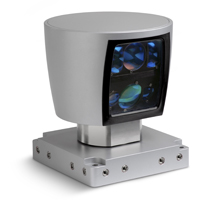
There have been a wide variety of announcements of late giving the impression that somebody has "solved the problem" of making a robocar affordable, usually with camera systems. It's widely reported how the Velodyne LIDAR used by all the advanced robocar projects (including Google, Toyota and many academic labs) costs $75,000 (or about $30,000 in a smaller model) and since that's more than the cost of the car, it is implied that is a dead-end approach.
Topic: 

The laptop in the tablet world

I have owned a laptop for decades, and I've always gone for the "small and light" laptop class because as a desktop user, my laptop is only for travel, and ease of carrying is thus very important. Of course once I get there I have envied the larger screens and better keyboards and other features of the bigger laptops people carry, but generally been happy with the decision.

Others have gone for "desktop replacement" laptops which are powerful, big and heavy. Those folks don't have a desktop, at most they plug their laptop into an external monitor and other peripherals at home. The laptop is a bitch to carry but of course all files come with it.

Today, the tablet is changing that equation. I now find that when I am going into a situation where I want a minimal device that's easy to carry, the tablet is the answer, and even better the tablet and bluetooth keyboard. I even carry a keyboard that's a fair bit larger than the tablet, but still very light compared to a laptop. When I am in a meeting, or sitting attending an event, I am not going to do the things I need the laptop for. Well, not as much, anyway. On the airplane, the tablet is usually quite satisfactory -- in fact better when in coach, though technically the keyboard is not allowed on a plane. (My tablet can plug in a USB keyboard if needed.)

**If my laptop is now going to be used in a more stationary way, primarily in hotel rooms and remote work situations, perhaps now a larger one with a bigger screen and keyboard makes sense. ** In fact, the name laptop becomes a misnomer. With the tablet your prime choice when in a place with no table, you would almost never put the computer on your lap.

Planes are a particular problem. It's not safe to check LCD screens in your luggage, so any laptop screen has to come aboard with you, and this is a pain if the computer is heavy.

With the tablet dealing with the "I want small and light" situations, what is the right laptop answer?

One obvious solution are the "convertible tablet" computers being offered by various vendors. These are laptops where the screen is a tablet and it can be removed. These tend to be Windows devices, and somewhat expensive, but the approximate direction is correct.

Another option would be to break the laptop up into 3 or more components:

  • The tablet, running your favourite tablet OS
  • A keyboard, of your choice, which can be carried easily with the tablet for typing-based applications. Able to hold the laptop and connect to it in a permitted way on the plane. Touchpad or connection for mouse.
  • A "block," whose form factor is now quite variable, with the other stuff.

Topic: 

Betterplace dies -- how do you make an electric robotic taxi fleet?

It seems that Better place has gone to... a better place to put it ironically. I'm not greatly surprised, I expressed my skepticism last year.

But I do believe in the idea of the self-driving electric taxi as the best answer for our future urban transportation. So how do you make it happen?

Automating big-event parking

There are a growing number of apps designed to help people find parking, and even reserve and pay for parking in advance. Some know the state of lots. These apps are good for the user but also can produce a public good by reducing the number of people circling looking for parking. Studies suggest in certain circumstances a large fraction of the cars on the road are doing that.

This weekend, I attended the Maker Faire. I've been to almost every Make Faire, including the first, and now it's grown to be far too successful -- you can hardly walk down the aisles at the busy times. They need more space and a way to put more of it outside so thin out the crowds. Still, it is one of those places that makes you feel very clearly you are in the 21st century.

Early on Maker Faire realized it had a parking problem. The lot at the fairgrounds fills up now even before the event opens, and they manage various satellite lots and run shuttle buses to them.

This year they tried something interesting, a twitter feed with parking updates. They tweeted when lots filled up or re-opened, and suggested where to go. They took some limited feedback about lack of shuttles. I think that it by and large worked and reduced traffic around the event.

However, my judgment is that they were not entirely honest in their tweets. This year, and in prior years, they strongly encouraged people to go to one of the most remote lots, regularly telling people it was the fastest route to the event. This was not true. I don't want to ascribe any particular malice here, but there is a suspicion that there is a temptation to make reports in the interest of the event rather than the user. This does have positives, in that cars diverted from near the event reduce traffic which makes the shuttle buses run much faster, but if you give wrong information (deliberately or by accident) this means people stop trusting it and you get the traffic back as more people ignore it.

For example, we stopped at a remote lot, and saw a very long shuttle line. We drove on to a closer lot (also reported as having spaces, but not reported as clearly a better choice) to find lots of spaces, no shuttle line, frequent shuttles and also a walk that was only slightly longer than the shuttle trip.

We need a security standard for USB and other plug-in devices

Studies have shown that if you leave USB sticks on the ground outside an office building, 60% of them will get picked up and plugged into a computer in the building. If you put the company logo on the sticks, closer to 90% of them will get picked up and plugged in.

New surveys with growing acceptance levels

Some interesting robocar surveys are out.

Today, a survey conducted by Cisco showed very high numbers of people saying, "yes, they would ride in a robocar." 57% said yes globally, with 60% in the USA and an incredible 95% in Brazil. (Perhaps it is the trully horrible traffic in the big cities of Brazil which drives this number.) A bit more surprising was the 28% number for Japan.

Topic: 

Pages