Non Forbes

Review of Downfall / Der Untergang

Last month I released a parody video for the film "Downfall" (known as Der Untergang in German.) Having purchased the movie, I also watched it of course, and here is my review. At least in my case, the existence of the parody brought some new sales for the film. There are "spoilers" of a sort in this review, but of course you already know how it ends, indeed as history you may know almost everything that happens in it, though unless you are a detailed student of these events you won't know all of it.

Topic: 
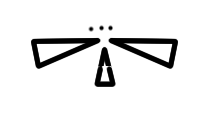
Design for a universal plug

I've written before about both the desire for universal dc power and more simply universal laptop power at meeting room desks. This week saw the announcement that all the companies selling cell phones in Europe will standardize on a single charging connector, based on micro-USB. (A large number of devices today use the now deprecated Mini-USB plug, and it was close to becoming a standard by default.) As most devices are including a USB plug for data, this is not a big leap, though it turned out a number of devices would not charge from other people's chargers, either from stupidity or malice. (My Motorola RAZR will not charge from a generic USB charger or even an ordinary PC. It needs a special charger with the data pins shorted, or if it plugs into a PC, it insists on a dialog with the Motorola phone tools driver before it will accept a charge. Many suspect this was to just sell chargers and the software.) The new agreement is essentially just a vow to make sure everybody's chargers work with everybody's devices. It's actually a win for the vendors who can now not bother to ship a charger with the phone, presuming you have one or will buy one. It is not required they have the plug -- supplying an adapter is sufficient, as Apple is likely to do. Mp3 player vendors have not yet signed on.

USB isn't a great choice since it only delivers 500ma at 5 volts officially, though many devices are putting 1 amp through it. That's not enough to quickly charge or even power some devices. USB 3.0 officially raised the limit to 900ma, or 4.5 watts.

USB is a data connector with some power provided which has been suborned for charging and power. What about a design for a universal plug aimed at doing power, with data being the secondary goal? Not that it would suck at data, since it's now pretty easy to feed a gigabit over 2 twisted pairs with cheap circuits. Let's look at the constraints

Smart Power

The world's new power connector should be smart. It should offer 5 volts at low current to start, to power the electronics that will negotiate how much voltage and current will actually go through the connector. It should also support dumb plugs, which offer only a resistance value on the data pins, with each resistance value specifying a commonly used voltage and current level.

Real current would never flow until connection (and ground if needed) has been assured. As such, there is minimal risk of arcing or electric shock through the plug. The source can offer the sorts of power it can deliver (AC, DC, what voltages, what currents) and the sink (power using device) can pick what it wants from that menu. Sinks should be liberal in what they take though (as they all have become of late) so they can be plugged into existing dumb outlets through simple adapters.

Style of pins

We want low current plugs to be small, and heavy current plugs to be big. I suggest a triangular pin shape, something like what is shown here. In this design, two main pins can only go in one way. The lower triangle is an optional ground -- but see notes on grounding below.

Topic: 
Tags: 

Panoramas of Israel

Back in March, I took my first trip to the middle east, to attend Yossi Vardi's "Kinnernet" unconference on the shores of lake Kinneret, also known as the Sea of Galilee. This is an invite-only conference and a great time, but being only 2 days long, it's hard to justify 2 days of flying just to go to it. So I also conducted a tour of sites in Israel and a bit of Jordan.

Topic: 

The overengineering and non-deployment of SSL/TLS

I have written before about how overzealous design of cryptographic protocols often results in their non-use. Protocol engineers are trained to be thorough and complete. They rankle at leaving in vulnerabilities, even against the most extreme threats. But the perfect is often the enemy of the good. None of the various protocols to encrypt E-mail have ever reached even a modicum of success in the public space. It's a very rare VoIP call (other than Skype) that is encrypted.

The two most successful encryption protocols in the public space are SSL/TLS (which provide the HTTPS system among other things) and Skype. At a level below that are some of the VPN applications and SSH.

TLS (the successor to SSL) is very widely deployed but still very rarely used. Only the most tiny fraction of web sessions are encrypted. Many sites don't support it at all. Some will accept HTTPS but immediately push you back to HTTP. In most cases, sites will have you log in via HTTPS so your password is secure, and then send you back to unencrypted HTTP, where anybody on the wireless network can watch all your traffic. It's a rare site that lets you conduct your entire series of web interactions entirely encrypted. This site fails in that regard. More common is the use of TLS for POP3 and IMAP sessions, both because it's easy, there is only one TCP session, and the set of users who access the server is a small and controlled set. The same is true with VPNs -- one session, and typically the users are all required by their employer to use the VPN, so it gets deployed. IPSec code exists in many systems, but is rarely used in stranger-to-stranger communications (or even friend-to-friend) due to the nightmares of key management.

TLS's complexity makes sense for "sessions" but has problems when you use it for transactions, such as web hits. Transactions want to be short. They consist of a request, and a response, and perhaps an ACK. Adding extra back and forths to negotiate encryption can double or triple the network cost of the transactions.

Skype became a huge success at encrypting because it is done with ZUI -- the user is not even aware of the crypto. It just happens. SSH takes an approach that is deliberately vulnerable to man-in-the-middle attacks on the first session in order to reduce the UI, and it has almost completely replaced unencrypted telnet among the command line crowd.

I write about this because now Google is finally doing an experiment to let people have their whole gmail session be encrypted with HTTPS. This is great news. But hidden in the great news is the fact that Google is evaluating the "cost" of doing this. There also may be some backlash if Google does this on web search, as it means that ordinary sites will stop getting to see the search query in the "Referer" field until they too switch to HTTPS and Google sends traffic to them over HTTPS. (That's because, for security reasons, the HTTPS design says that if I made a query encrypted, I don't want that query to be repeated in the clear when I follow a link to a non-encrypted site.) Many sites do a lot of log analysis to see what search terms are bringing in traffic, and may object when that goes away.

Tags: 

Secrets of the "Clear" airport security line

Yesterday it was announced that "Clear" (Verified ID Pass) the special "bypass the line at security" card company, has shut its doors and its lines. They ran out of money and could not pay their debts. No surprise there, they were paying $300K/year rent for their space at SJC and only 11,000 members used that line.

As I explained earlier, something was fishy about the program. It required a detailed background check, with fingerprint and iris scan, but all it did was jump you to the front of the line -- which you get for flying in first class at many airports without any background check. Their plan, as I outline below, was to also let you use a fancy shoe and coat scanning machine from GE, so you would not have to take them off. However, the TSA was only going to allow those machines once it was verified they were just as secure as existing methods -- so again no need for the background check.

To learn more about the company, I attended a briefing they held a year ago for a contest they were holding: $500,000 to anybody who could come up with a system that sped up their lines at a low enough cost. I did have a system, but also wanted to learn more about how it all worked. I feel sorry for those who worked hard on the contest who presumably will not be paid.

The background check

Use the battery to power AC startup surge in an RV

Many RVs come with generators, and the air conditioner is the item that demands it be a high power generator. The Generator needs to be big enough to run the AC, and in theory let you do other things like microwave when you run it. It also has to be big enough to handle the surge that the AC motor takes when the AC starts up.

Topic: 

Anti-atrocity system with airdropped video cameras

Our world has not rid itself of atrocity and genocide. What can modern high-tech do to help? In Bosnia, we used bombs. In Rwanda, we did next to nothing. In Darfur, very little. Here's a proposal that seems expensive at first, but is in fact vastly cheaper than the military solutions people have either tried or been afraid to try. It's the sunlight principle.

First, we would mass-produce a special video recording "phone" using the standard parts and tools of the cell phone industry. It would be small, light, and rechargeable from a car lighter plug, or possibly more slowly through a small solar cell on the back. It would cost a few hundred dollars to make, so that relief forces could airdrop tens or even hundreds of thousands of them over an area where atrocity is taking place. (If they are $400/pop, even 100,000 of them is 40 million dollars, a drop in the bucket compared to the cost of military operations.) They could also be smuggled in by relief workers on a smaller scale, or launched over borders in a pinch. Enough of them so that there are so many that anybody performing an atrocity will have to worry that there is a good chance that somebody hiding in bushes or in a house is recording it, and recording their face. This fear alone would reduce what took place.

Once the devices had recorded a video, they would need to upload it. It seems likely that in these situations the domestic cell system would not be available, or would be shut down to stop video uploads. However, that might not be true, and a version that uses existing cell systems might make sense, and be cheaper because the hardware is off the shelf. It is more likely that some other independent system would be used, based on the same technology but with slightly different protocols.

The anti-atrocity team would send aircraft over the area. These might be manned aircraft (presuming air superiority) or they might be very light, autonomous UAVs of the sort that already are getting cheap in price. These UAVs can be small, and not that high-powered, because they don't need to do that much transmitting -- just a beacon and a few commands and ACKs. The cameras on the ground will do the transmitting. In fact, the UAVs could quite possibly be balloons, again within the budget of aid organizations, not just nations.

Authenticated actions as an alternative to login

The usual approach to authentication online is the "login" approach -- you enter userid and password, and for some "session" your actions are authenticated. (Sometimes special actions require re-authentication, which is something my bank does on things like cash transfers.) This is so widespread that all browsers will now remember all your passwords for you, and systems like OpenID have arise to provide "universal sign on," though to only modest acceptance.

Another approach which security people have been trying to push for some time is authentication via digital signature and certificate. Your browser is able, at any time, to prove who you are, either for special events (including logins) or all the time. In theory these tools are present in browsers but they are barely used. Login has been popular because it always works, even if it has a lot of problems with how it's been implemented. In addition, for privacy reasons, it is important your browser not identify you all the time by default. You must decide you want to be identified to any given web site.

I wrote earlier about the desire for more casual athentication for things like casual comments on message boards, where creating an account is a burden and even use of a universal login can be a burden.

I believe an answer to some of the problems can come from developing a system of authenticated actions rather than always authenticating sessions. Creating a session (ie. login) can be just one of a range of authenticated actions, or AuthAct.

To do this, we would adapt HTML actions (such as submit buttons on forms) so that they could say, "This action requires the following authentication." This would tell the browser that if the user is going to click on the button, their action will be authenticated and probably provide some identity information. In turn, the button would be modified by the browser to make it clear that the action is authenticated.

An example might clarify things. Say you have a blog post like this with a comment form. Right now the button below you says "Post Comment." On many pages, you could not post a comment without logging in first, or, as on this site, you may have to fill other fields in to post the comment.

In this system, the web form would indicate that posting a comment is something that requires some level of authentication or identity. This might be an account on the site. It might be an account in a universal account system (like a single sign-on system). It might just be a request for identity.

Your browser would understand that, and change the button to say, "Post Comment (as BradT)." The button would be specially highlighted to show the action will be authenticated. There might be a selection box in the button, so you can pick different actions, such as posting with different identities or different styles of identification. Thus it might offer choices like "as BradT" or "anonymously" or "with pseudonym XXX" where that might be a unique pseudonym for the site in question.

Now you could think of this as meaning "Login as BradT, and then post the comment" but in fact it would be all one action, one press. In this case, if BradT is an account in a universal sign-on system, the site in question may never have seen that identity before, and won't, until you push the submit button. While the site could remember you with a cookie (unless you block that) or based on your IP for the next short while (which you can't block) the reality is there is no need for it to do that. All your actions on the site can be statelessly authenticated, with no change in your actions, but a bit of a change in what is displayed. Your browser could enforce this, by converting all cookies to session cookies if AuthAct is in use.

Note that the first time you use this method on a site, the box would say "Choose identity" and it would be necessary for you to click and get a menu of identities, even if you only have one. This is because a there are always tools that try to fake you out and make you press buttons without you knowing it, by taking control of the mouse or covering the buttons with graphics that skip out of the way -- there are many tricks. The first handover of identity requires explicit action. It is almost as big an event as creating an account, though not quite that significant.

You could also view the action as, "Use the account BradT, creating it if necessary, and under that name post the comment." So a single posting would establish your ID and use it, as though the site doesn't require userids at all.

Topic: 
Tags: 

ClariNet history and the 20th anniversary of the dot-com

Twenty years ago (Monday) on June 8th, 1989, I did the public launch of ClariNet.com, my electronic newspaper business, which would be delivered using USENET protocols (there was no HTTP yet) over the internet.

ClariNet was the first company created to use the internet as its platform for business, and as such this event has a claim at being the birth of the "dot-com" concept which so affected the world in the two intervening decades. There are other definitions and other contenders which I discuss in the article below.

Pages