


No, a Tesla didn't predict an accident and brake for it
Submitted by brad on Tue, 2017-01-10 14:30You may have seen a lot of press around a dashcam video of a car accident in the Netherlands. It shows a Tesla in AutoPilot hitting the brakes around 1.4 seconds before a red car crashes hard into a black SUV that isn't visible from the viewpoint of the dashcam. Many press have reported that the Tesla predicted that the two cars would hit, and because of the imminent accident, it hit the brakes to protect its occupants. (The articles most assuredly were not saying the Tesla predicted the accident that never happened had the Tesla failed to brake, they are talking about predicting the dramatic crash shown in the video.)
The accident is brutal but apparently nobody was hurt.
The press speculation is incorrect. It got some fuel because Elon Musk himself retweeted the report linked to, but Telsa has in fact confirmed the alternate and more probable story which does not involve any prediction of the future accident. In fact, the red car plays little to no role in what took place.
Tesla's autopilot uses radar as a key sensor. One great thing about radar is that it tells you how fast every radar target is going, as well as how far away it is. Radar for cars doesn't tell you very accurately where the target is (roughly it can tell you what lane a target is in.) Radar beams bounce off many things, including the road. That means a radar beam can bounce off the road under a car that is in front of you, and then hit a car in front of it, even if you can't see the car. Because the radar tells you "I see something in your lane 40m ahead going 20mph and something else 30m ahead going 60mph" you know it's two different things.

 T: Why did he do it?

 One can understand the appeal of presenting the simulation in a mostly real environment. But the advantages of the VR experience are many. In particular, with the top-quality, retinal resolution light-field VR we hope to see in the future, the big advantage is you don't need to make the physical things look real. You will have synthetic bodies, but they only have to feel right, and only just where you touch them. They don't have to look right. In particular, they can have cables coming out of them connecting them to external computing and power. You don't see the cables, nor the other manipulators that are keeping the cables out of your way (even briefly unplugging them) as you and they move.
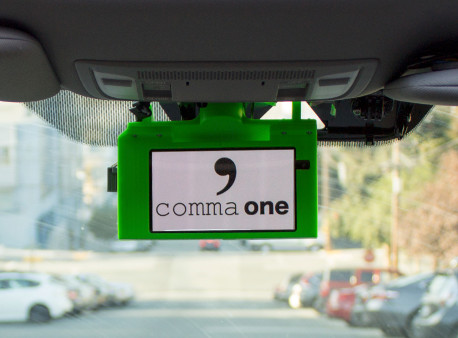 To be clear, comma is a tiny company taking a radical approach, so it is not a given that what NHTSA has applied to them would have been or will be unanswerable by the big guys. Because Tesla's autopilot is not a pure machine learning system, they can answer many of the questions in the NHTSA letter that comma can't. They can do much more extensive testing that a tiny startup can't. But even so a letter like this sends a huge chill through the industry.