


Competing With $1/Gallon Gas—The Strange Non-Economics Of EV Charging
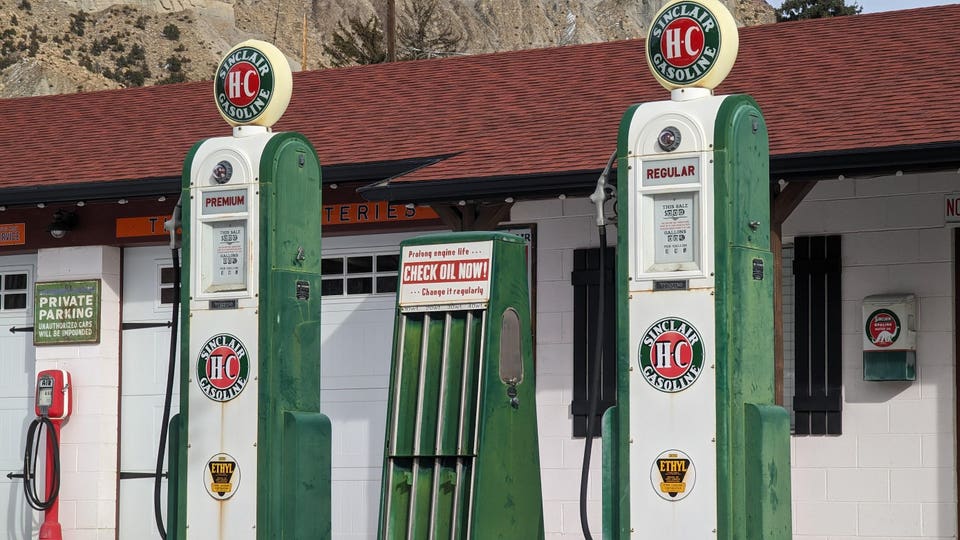
How do you make a gas station business selling gas for $4/gallon when almost everybody gets it at home for $1.20?
The planned electric vehicle transition needs charging infrastructure, but a great deal of planning and spending is being done by people who don’t understand how different their economics are from the gasoline industry—mostly people who don’t own an EV, but even a few who do.
While the mistake is often best called “gasoline thinking”—seeing the world in terms of filling the gas tank—it turns out that some gasoline analogies can help explain just how strange the economics are, and why it’s so hard to make charging a business.
One challenge of the public charging business is that some companies are effectively hoping to open gas stations that charge $4/gallon in a world where 80% of the drivers have a private station in their homes where it costs the gallon-equivalent of $1.20. You’re only going to get those who have no other choice, and they’re going to resent it.
Selling gasoline is a very well-established commodity business. The price rarely varies by more than 10% around town. Nationally today the average is $3.15/gallon but in California its $4.73. In Canada it’s more like $4.11 USD and in Europe $6.34. People hunt to save a few cents, but because the fill-up is fast, they generally drive around until the tank says it’s low, then stop for 10 minutes to refuel. The station doesn’t make that much money off the gasoline, they typically get more profit from the convenience store.
The average U.S. vehicle gets 25 mpg, though of course some hybrids get 40-50 mpg and trucks will get less than 20. At the national average, that’s an average of around 15 cents/mile, but it can vary based on where you are and what car you have. The most common EV (the Tesla Model Y) gets about 3.5 miles/kWh, and we’ll compare that with that average 25mpg gas vehicle. Which means 7.2kWh in the model Y takes you as far as a gallon of gas in the average car.
People puzzle over why California gas is so pricey, but electricity varies a lot more. That’s because electricity isn’t really a commodity at all—it’s a service. Only a small fraction of the cost is generating the electrical energy, almost all of it is in the delivery. That’s why you might see a slow charging station billing 20 cents/kWh (or even free) next to a fast charging station asking 50 cents/kWh. The price also varies greatly by time of day. But I will describe 20 cents/kWh as $1.44/gallon-equivalent, and 50 cents as $3.60 (a bit over that national average gas price.) So on pure price (ignoring the environmental damage and death caused by burning gasoline) we see a range like this (gallon equivalents written as gallon.)
- National average electricity price : $1.19/gallon
- My California house (with solar panels) : $0.50
- North Dakota : $0.70
- Average in California : $3.02
- Night rate in California : $2.30
- Electrify America Fast Charger without pass : $3.46
- Electrify America Fast Charger with membership : $2.59
- Typical hotels which have charging for guests : Free
- Some hotels which have “minibar” charging fees : $3.24
- Most offices with charging for employees : Free
- Tesla Supercharger: (varies by location and time) : $2.88
- Ontario night charging : $0.14
And now the kicker. This is comparing to a 25mpg car. Compare to a hybrid, like the 50mpg Prius, and you can double all those prices, making most fast charging stations cost more than gasoline in the Prius! That’s not what EV buyers signed up for, and it makes fast-charging an expensive but sometimes necessary evil.
This is after recent significant rises in the price of electricity. In most places, EV drivers can get “time of use” electricity pricing that makes night electricity cheaper and daytime electricity more. The night rate can become quite low (see the 2.6 Canadian cents/kWh price in Ontario) and while other costs go up it’s generally a win. Some public chargers vary prices based on the time as well. It’s not unusual to see 55 cents ($4/gallon) at public fast chargers, and even at many public slow chargers, whose price ranges from that all the way down to free, but averages closer to $2.50/gallon depending on the state and location.
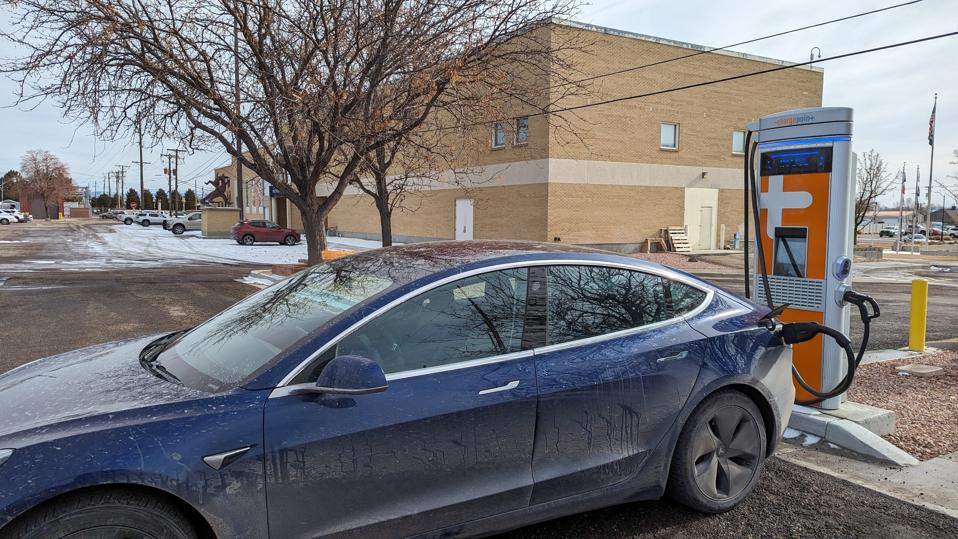
While it’s a challenge to make money selling energy for $4/gallon when people can get it at home for less than a third of that, some station owners hope to, like gas stations, make money from other things on the property. But since charging takes time, drivers actually want to leave the property altogether to dine at a restaurant or do some other major task. They are not satisfied to just go get a coffee or candy bar as they do when filling up with gas. They would rather not be there at all. For hotels, it’s different. Even today I always pick a hotel with free charging over a hotel with no charging or pricey charging. In the future, hotels with no charging just won’t get many EV driver guests.
For hotels, charging a customer’s car on night electricity rates probably costs about $4 total, less if the car doesn’t need a full charge. That’s the sort of amenity cost many hotels will pay if it brings them guests—cheaper than the typical motel free breakfast—though some will want to make it a profit center, billing the guest $20 or more. It’s unknown which model will prevail.
Solar Homes
For homeowners with solar, it’s complex. If they don’t have “net metering” solar, then it’s “free” but more correctly “paid in advance with lump sum” though usually at a very good rate that works out to perhaps 50 cents/gallon. With net metering, if you have a surplus it’s also cheap, with no surplus it’s the grid rate for the extra your car uses. Without it, you also want to try hard to charge your car during the day, which can be an issue for commuters. Even if not, the worst case is the low grid night price, under $1/gallon. Just how to work out the cost of solar generated electricity is remarkably complex, but it’s generally cheaper, sometimes much cheaper, than grid power in most areas.
The Future of Charging Stations
A large fraction of public charging stations look like they’re hoping to be “The gas station of the 21st century” but there probably won’t be such a thing. A gas pump puts out effectively 7 megawatts, which is not going to happen and will be quite expensive to even get close to. Charging works best when it’s not something you go to, but rather something that happens while you are already somewhere for another reason. Gas stations aren’t places people want to go to (even though some will argue that for Buc-ee’s) they are places you go because you need to. Duplicating that for EV charging is an error.
Stations must understand they are in a service business, not a commodity one. Customers will want convenience, not electricity, and no gas station experience can match the home/hotel/office “I already wanted to spend time there” experience.
It’s very hard to make a business out of a charging station. To make a profit, most fast charging stations charge a price that exceeds the cost of gasoline in an efficient hybrid. Today, EV drivers are just figuring things out, and charging is hard to find, so they’re surprisingly tolerant of price variation, but that won’t last. We know what people are like when a market matures. They’ll drive across town to save 10 cents/gallon on gasoline, eating up all their savings with the extra driving. The more cost conscious they become, the less they will tolerate these prices. When they stop, however, they want to stop at a restaurant or store or attraction they already wanted to visit, it will be hard to create new destinations for them to make them come to stations. Stations will locate near attractions but won’t get the revenue from them. Gas stations depend on revenue from convenience stores, but EV drivers are looking for a 30 minute stop, not a 5 minute one.
This is why most of the charging stations out there weren’t created as a business. Tesla’s network was built to sell Teslas—in fact it started off being free for life for any Tesla buyer. Electrify America was built to satisfy VW’s “Dieselgate” penalty. Chargepoint doesn’t sell electricity, they sell charging hardware. Other networks are struggling. There’s a lot more to be learned before this matures.
Originally published at Forbes.com in Competing With $1/Gallon Gas—The Strange Non-Economics Of EV Charging. Copyright © 2025 by Brad Templeton.


Add new comment