


Networks Say They’ll Fix Broken Chargers, But What About Broken Billing?
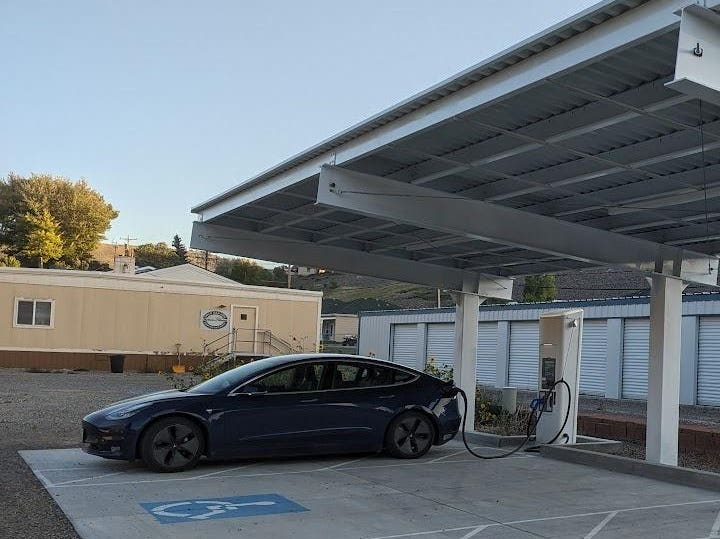
It’s the bane of those who drive non-Tesla EVs: Poor reliability of many of the CCS based fast charging networks. The federal government has committed $100 million in funds to help with repairs, and networks such as EVGo, Electrify America and others have pledged to get better about station uptime. A study by JD Power reported that in the Seattle, Denver and Dallas areas, as many as 35% of visits resulted in a failure to charge, which goes far beyond any acceptable level.
Hardware malfunctions, particularly the basic electrical hardware, however, are only a portion of the problem. More common are software problems with authentication and billing. Reports are frequent not simply of sessions failing entirely, but also of it taking several minutes to get these things working so charging can begin. While some networks will give a charge for no cost if their authentication system is broken, one step that is rarely taken is to start charging before authentication, only stopping the service if authentication is not worked out within a few minutes.
Not included in these problems is frustration over the user experience of these stations, even when the driver eventually gets them to work. While it is not uncommon for stations to offer a swipe of a credit card for billing, this will usually result in a higher cost for use of the station because the networks want to encourage drivers to get some sort of membership in their network, and use their app. In addition, the apps often provide valuable services to monitor the charge from the station’s end, as well as finding stations, authenticating and paying.
Unfortunately, the experience of this is often quite poor. There are 30 different networks listed on Plugshare, and the number keeps growing. Drivers do not want to manage 30 apps in their phones to use these stations. On a road trip, it’s the norm to encounter new networks, though you might possibly ever use a network just once or twice.
At some rural stations, cell phone service is spotty, so apps can’t be downloaded, or in some cases even used. (Stations would be well advised to install limited wifi at any remote stations which can at least support downloading and using their app.) As such, the burden to know in advance what stations you might use and pre-download their apps is more than most drivers want to manage.
Several networks, in order to save themselves credit card fees and support poor connectivity, require drivers to pre-load a “balance” into an account. If the driver is going to use that station regularly, that may be tolerable but it’s not acceptable for stations you may only use rarely. You don’t want to maintain a balance with them, but they don’t automatically refund any unused balance. You may be better off just paying more for a credit card swipe—that is, if that’s supported.
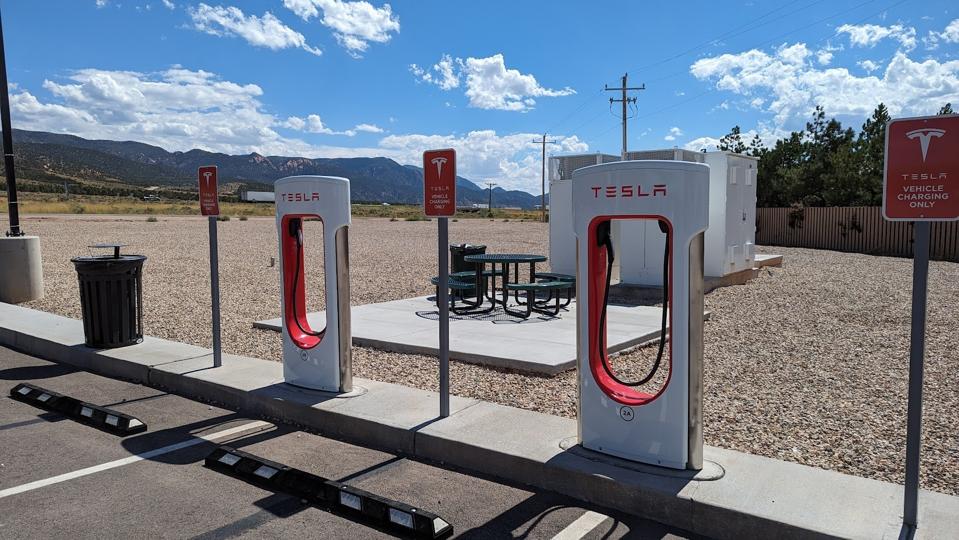
Once again, Tesla sets the gold standard. Their stations have no user interface at the station at all. You simply plug in the car and walk away, and it works very close to 100% of the time, and generally within just a few seconds. Of course, because Tesla builds both the car and the station, it is much easier for them to make this work, but it sets a bar for the experience drivers want.
To provide a similar experience, the standards body created a communications profile for stations to talk to cars through the cable, and exchange billing and authentication information. While this protocol is very complex, a number of cars implement it, and several of the large charging networks do as well. Even so, it is used more rarely than one might expect. EVgo reports that only 13% of their charging sessions are handled through their Autocharge+ system (their name for “Plug and Charge.”) This in spite of the system being in place for over a year, and over 30 models of EV supporting the protocol. In order to use it, drivers must register their car and a billing account in the system. It is difficult to understand why so few would do that. (One advantage for Tesla drivers is that entry into their system is automatic, and not optional. Everybody is enrolled when they provide a credit card to Tesla for all their Tesla related purchases.)
Resisting Temptation
Charging network operators seek stronger relationships with their customers. As such, they are keen to get each driver to set up a direct account with them, and to download their custom app. The problem is that drivers don’t want this. Most (but not all) of these apps only work with the network in question. If you search for a charger in the app, you are shown only the chargers of that network, but no driver has that sort of brand loyalty. It would be like gasoline burners looking for gas on an app that only showed Texaco stations, then calling up the Exxon app to look for those. (Gasoline vendors more commonly in the past got drivers to use a credit card tied to their stations, but this is less common today.)
Drivers would prefer just one app, or perhaps one system. Almost all EVs have an app for the car (and unless you have multiple EVs from different vendors, you never need more than 1 or 2 of those.) Some of those apps can pay for charging at some of the networks which have a deal with the car OEM. (Tesla’s system of course is only for one OEM and one charging network, which would be just as bad if it were not for the fact that that one OEM and network are as large all the others put together.)
The charging networks have to accept they aren’t special. Other than Tesla, people don’t choose for charging stations by brand—they choose entirely based on location, or maybe on price and charging speed. The networks would desperately love to get brand loyalty but they are unlikely to get it until the day that charging stalls are so common that brand becomes a factor.
Before then, if there are two chargers in the same location, drivers will pick based on factors like availability, price and speed, but also on ease of use. The best ease of use is a frictionless experience with as little user interface as possible. That means station finding apps that find all stations and show clear pricing. It means never having to download a new app or set up a new account just to use a station at a good price. It means they must use a consortium or common provider to handle billing, or a set of such providers who all work to the same protocols.
Yes, that means they won’t get every driver running their app. They won’t get the name and e-mail address of each driver as they set up an account. They will need to live with that. In gasoline’s early days, the buying experience involved first pumping the gas with no authentication (either full service or self-service) and only after filled up handing over some cash. Today, pump-first, pay-later is uncommon in most of the USA (though still common in some countries) but it’s usually just “swipe a card and start pumping” when done well.
The bargain price of EV charging actually interfered with that. Picking up just $10 of electricity is not at all uncommon, but it’s very rare for gasoline. For slower level 2 stations, getting $3 might be the norm. Credit card fees are a much larger fraction of those sorts of transactions. With credit cards, however, there are only 3 major brands and every station takes at least the top 2.
How Should It Be?
The Tesla experience—just grab the cord, push a button on it to open your charge door, plug it in and walk away, then do the reverse when done—is lauded for good reasons. It is enabled by the fact that Tesla controls both the design of the car and the station, and has an account with credit card on file for every car from day one. Even so, it has some flaws. You need to look at an app or car screen to see pricing and status, and there’s no real way to manage lines, though they are rare. Tesla does show load and predict wait times on car screens, and finally updated those predictions based on the knowledge it has about what cars are driving to each station and when they will get there.
With scores of EV models from dozens of manufacturers, and 30 different charge networks, both parties have to agree on a small set of “bridge” companies to arrange relationships between every car and every charge network (including Tesla, now that they are opening up and their connector is winning.) Every car should speak all major charging communications protocols for authentication and billing, and should be able to use the bridge companies to allow drivers who have registered once—typically through their car OEM—to have a similar “plug and play/pay” experience.
Charging networks should eliminate the need to have a membership with them to get good prices, or to maintain a balance. The bridge networks might provide that for them, but drivers should only have to maintain one account and balance, or just pay a modest surcharge to cover credit card fees when they pay that way. Ideally the bridge networks should charge very minor fees—and not per kWh—but car OEMs can have direct relationships with the larger charging networks to reduce those costs. In particular, some car OEMs have cut deals to give drivers free or discounted charging, to parallel Tesla’s early “free supercharging” plan, and that can continue.
Even so, we’re a long way from having a competitive market in fast charging. Drivers do care a bit about price—though sometimes barely—and care much more about whether the station is in a convenient location, and has a working stall when they get there.
Stations should begin charging a car the moment the driver plugs in, and cease charging if the authentication process doesn’t come through within a minute or two. If the station is offline and can’t authenticate due to lack of connectivity, it should temporarily offer at least enough electricity—for free—to get to the next station in all major directions. Nobody should be stranded by a communications failure.
Of course, much more than this is needed—stations chosen because people want to park at whatever’s already there, like food or attractions, reliability, live status and all information needed for trip planning, enough capacity for the growing number of EV drivers and much more. But we could start with getting everybody the experience Tesla made standard for their customers over a decade ago—it’s well past time.
Originally published at Forbes.com in Networks Say They’ll Fix Broken Chargers, But What About Broken Billing?. Copyright © 2023 by Brad Templeton.


Add new comment