


Waymo And SwissRe Show Impressive New Safety Data
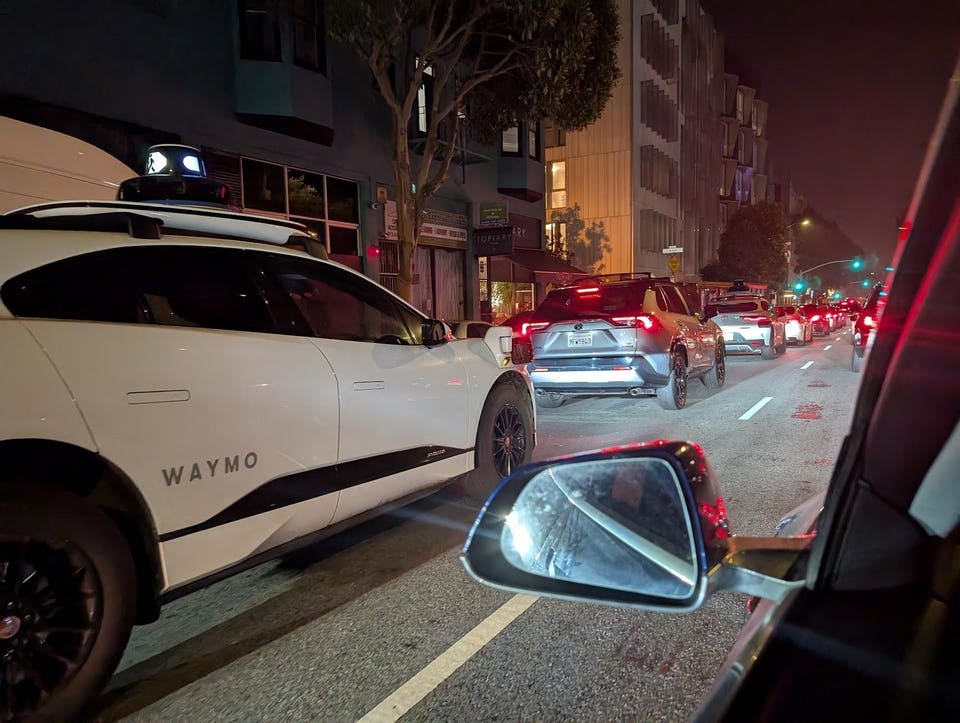
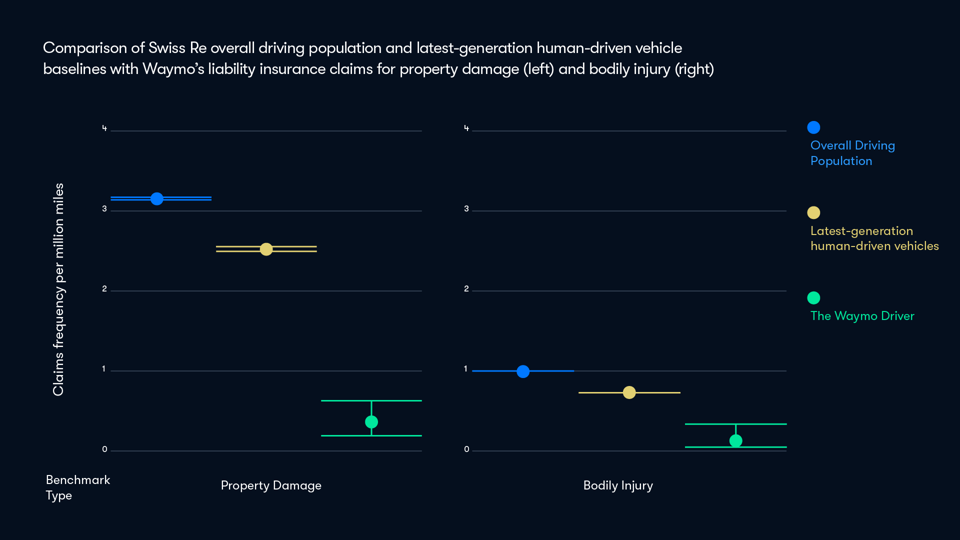
Waymo has released a new study of their safety, conducted for them by SwissRe, the large global reinsurance company. SwissRe looked at all of Waymo’s road incidents over 25 million autonomous miles (Waymo reports it did 4 million trips in 2024) and counted up all those where there might be a liability claim against Waymo, comparing this to the rate of claims against ordinary human drivers on similar streets.
This is quite different from the most common statistics we see, which simply report all incidents, no matter whether the self-driving car was at fault or not. These reports are mandated by regulations but paint an incomplete picture. In a large number of those incidents, it’s fairly obvious the fault was not with the self-driving vehicle. For example, they happen when a vehicle is stopped at a light and is hit by behind by another car.
It’s worth knowing about these, but they don’t inform us on the key question, of what sort of risk the robotaxis present to overall road safety. It’s work to attribute fault, and most companies are very wary of publishing any of their own evaluation of fault, as that could hurt them in lawsuits. Insurance companies, on the other hand, are experts at studying crash rates and assigning (and litigating) liability. While SwissRe is not a consumer auto insurer, they have expertise in the business.
The numbers that came back are good. The Waymo vehicles had 88% fewer property damage claims and 92% injury claims than average human drivers. They did almost as good compared with human drivers in the newest cars with advance safety—86% fewer property claims and 90% fewer injury claims. These numbers are for average drivers, but other data suggest that the human drivers most commonly compared to robotaxis, namely Uber/Taxi drivers, are worse than average. As such, having the Waymos on the road is improving road safety. The fully detailed report is here.
Cruise also published a study of this form, which claimed they were also outperforming those TNC drivers, though not by quite this much. Cruise has now shut down its robotaxi plans, in large part because after a serious safety incident, they had their permits pulled in California by the DMV, which cited both safety issues and Cruise not being forthcoming with regulators about their errors in the incident. The cover-up was a serious flaw on the part of Cruise, though it was quite short-lived, but if Cruise truly was driving as safely as it claimed overall, the DMV made an error by focusing on an incident rather than the overall record.
Waymo has done very well, but some day it will be at fault in a significant incident. If regulators focus on the incident rather than the overall record reported by SwissRe, they could make the wrong decision for road safety.
One of the two injury events listed in the SwissRe report was serious. However, it was the result of a human driven vehicle which ran a red light, chased by police, and then hit the Waymo, another car and a pedestrian. Fault for the Waymo seems unlikely here, but insurers know claims can often be made against “bystander” vehicles and possibly are leaving this event in their list to cover that contingency. Otherwise the Waymo record is even better.
Update: Waymo has clarified that the study evaluated only 3rd party claims, not events where the car damaged itself. Thus if a car hit a curb or road debris it would not be counted. They also didn’t count non-contact events. These exclusions were also applied to the data for human drivers.
I have proposed that the regulators, rather than just asking for counts of disengagements or counts of crashes, try to get data like this. I have outlined such a system where a 3-person panel evaluates crashes and rates their probability, severity, fault and other factors. This is what we need to make good judgments. In the Cruise dragging, Cruise would have been rated at-fault for the dragging but not for the entire event. The severity would have been high but the probability of it happening fairly low. Certainly absent the cover-up, it would not have remotely rated shutting them down.
Cruise robotaxis are gone, but Zoox plans to deploy very soon, and Motional still has aspirations. These players should work to measure their safety performance in a manner similar to Waymo, with a 3rd party, perhaps also in insurance, doing a real evaluation of the risk of having their vehicles on the roads, and also an evaluation of delaying their scaling and leaving humans behind the wheel.
Cruise may have been cut off even without the incident and the California DMV order. It’s always been the case that the big auto OEMs were unlikely to have the stamina for this race. Nonetheless, the loss of a major player isn’t good for the roads, or even their competition like Waymo. Waymo is clearly superior, but the existence of Cruise would have pushed them to do even better. We should hope that Zoox and Motional still do that, as well as the rapidly growing Chinese players—some of which just did major expansions of their fleets. Tesla has yet to operate robotaxis with no safety driver aboard, but when they do, we should hope to see their data of this sort as quickly as possible.
Originally published at Forbes.com in Waymo And SwissRe Show Impressive New Safety Data. Copyright © 2024 by Brad Templeton.


Add new comment