


Can Self-Driving Go Mainstream Within 10 Years? Watch This Debate
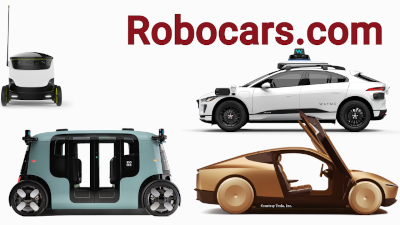
Billions are being invested in self-driving technology each year, and some question why it isn’t further along today, whether it can be really made to work and whether it can be a business that scales and makes profits for the many companies in the game.
To address these questions, I engaged this week in a formal debate. Taking the negative was Professor Raj Rajkumar from CMU. Raj was one of the team leaders when CMU won the DARPA Urban Challenge — the contest that really got the self-driving robocar world going.
For those who prefer, here is a transcript of my opening statement. For the rest you will need to go to the debate. In addition to the opening and rebuttals, there are 3 sub sections on:
- Is Tesla’s approach viable at all?
- What are the prospects for self-driving consumer vehicles?
- What are the prospects for commercial services.
Templeton:
I'm going to outline why self-driving vehicles are well on their way to being mainstream in 10 years. To me that means they are available in 50 or more major cities, and being sold in decent volumes to private individuals for freeways and major roads. That doesn't mean you can buy a private car that does minor city streets, or get a ride in every town.
Obviously, we now see pilot services operating in 31 cities around the world like San Francisco, Phoenix, Austin, Shanghai, Beijing, Shenzhen, Wuhan, Toronto and many others, with smaller delivery robots in many more. The passenger services are pilots, though some of the delivery services are production. I've made a map of cities where services have been or shortly will be deployed with no employee in the vehicle and it's much more populated than people expect.
This is coming through the march of Moore's law combined with the greatest effort in robotics in history, with a huge amount of detail work.
To understand just how this grows, you must understand that the core target is robotaxi, not private car, and that perfection is not necessary — it's not even the right goal — before deployment.
What matters to deploy a taxi or delivery service is whether it's commercially viable. It may only handle a particular region or subset of streets, and may be supplemented with carshare, transit, TNCs and car delivery. It doesn't have to do everything. To get really big, it has to offer car replacement to the urban dweller, but it can be quite lucrative with the baby step of replacing Uber.
You can do this when you've reached a suitable level of safety, as well as of road citizenship. To do that you need an "MTBF" better than human. You need your error rate low enough, and the severity of errors low enough but you don't need to be error free.
To solve this, one basic approach is just to have seen so much in millions of miles of testing and billions of miles of sim so that the frequency of surprises is low. Even though corner cases don't just happen at the corners, you can measure how often you're surprised. And you can also measure how often you handle surprises well and how often you fail, and from that see if your MTBF is low enough. Multiple companies have already reached that level in their pilot projects, at least on safety, and they're working rapidly on road citizenship.
They've made a raft of great tools to get this confidence. Amazing LIDARS with great resolution and performance that will never miss that something is there. Imaging radars with velocity detection and weather penetration. Even though CV isn't ready for prime time on its own, its improving rapidly, improving the most important task of prediction and dropping in price. All these sensors are plummeting in price and soaring in performance. If you don't believe in them today it would be foolish to bet against them a few years from now.
The leader is Waymo. I worked on that team a decade ago and continue to be impressed. Cruise is behind but also reaching milestones. We've all seen the press over both teams having stall-outs and little mistakes here and there, blocking traffic, being confused by unusual situations, or waiting for a rescue driver when they team doesn't trust remote assistance to be 100% safe. These may seem silly but it's exactly what you want to see — the cars on on the roads to find mistakes and fix them.
Nobody's been hurt by Waymo and Cruise's incidents remain minor and better than human. The great thing about robots is, unlike people, they don't repeat the same mistake twice. Almost every problem you see is a success — something found that won't happen again.
For skeptics, it's also worth nothing that communications tech also is booming, and nobody doubts that long before 10 years we'll see highly reliable, fast and low latency communications in all the needed zones, enough so that if you had to, problems could be solved with remote driving, though that's not how anybody wants to do it — but they will if the option is to not deploy.
China is also going very strong. Over 300 teams are working on vehicles and there are dozens of fully autonomous deployments. Regulation will not stand in the way there, though it's an open question in the USA, and definitely in Europe. Indeed, if I had to do this debate for Europe I would be less optimistic, though Mercedes promises their S-Class will do 130kph on the Autobahn without driver attention fairly soon.
While I'm not at all a fan of infrastructure based approaches, and they are doomed in the west because the pace of change and innovation in infrastructure is measured in decades, it's not at that pace in China — just look at what's happened in the last 10 years, and many Chinese teams are working on infrastructure based approaches.
To return to the core thesis — the reason people don't think this technology will succeed is they try to define the problem as much bigger than it is. To get a real business serving lots of people you only need to do decent robotaxi service in lucrative sized zones of major cities. You don't need to drive every road. We'll talk later about consumer cars, but they don't need to be that heavily featured either.
Considering autonomous vehicles are already on the road in over 30 cities, it's a slam dunk to being a lot bigger by 2033, unless the law shuts it down, and right now it doesn't seem on track to do that, except in a few places. When the change comes it will boggle your mind with its speed. This newspaper clipping from 1928 describes how the horse and buggy industry completely collapsed in 2 years when its time came. Moore's law always surprises you — don't bet against it.
(Note: The remainder of the transcript is machine generated, with associated errors and lack of paragraph breaks.)
Dan Levy
Thank you so much, Brad. OK, let's pivot to the con side of the debate and arguing against autonomous driving being mainstream in the next 10 years. As Professor Raj Raj Kumar, Raj, please go ahead. You had you. Have 6 minutes.
Raj Rajkumar
Thank you, Dan. Just to add a little bit more intro about where I come from. I was the lead of the Systems Engineering group of the CMU team that won the 2007 that Urban Challenge at that event, in my view, was the event that triggered the creation of the AV industry that we know today, and I've been working with the General Motors for about. 18 years consecutively starting in 2004, so I'm extremely intricately aware of the technology progress, the promises that have been made in search. So we do a V software development on a daily basis we test. On private tracks and simulation on and on public roads in Pittsburgh and beyond. So I really come in with that visceral experience. If you #1 #2, I am very optimistic about autonomous vehicles literally transforming the face of transportation has been nowhere. I only do think that it's going to take time. It's a very complex domain. Our next slide please. So the key point I want to make is that I guess my fellow debater here, Brad talked about the hype. Let me touch upon that. Let me give you a sense for the complexities of the domain. Why is it taking so long and we are not there yet towards where ABS are supposed to be by this this point in time, I will talk about the. Technology and primarily it's limitations, which we're actually going to take time, let me talk about the business side of Robo taxis that talk about dependability and scalability that Brad touched upon. And I will basically make the opposite case that Brad did. I think there is a strong case to be made for consumer vehicles becoming. Highly automated, right? I'm talking about high degrees of automation, not full autonomy, right? Next slide please. So I guess the hype has been for quite some time since 2007. Plus, is that autonomous ride sharing given that Uber, Lyft were into the game as well? It would get rid of vehicle ownership within years. So go to 2010, 2011. Most law was in operation since then. Period 2023, we are nowhere. Close to getting rid of vehicle ownership, right, so one has to take these things with a big grain of salt. Right. Most law, really. It's really on the semiconductor setup things. Things get faster, things getting faster does not mean that we likely accomplish the intelligence required to basically drive a vehicle autonomous. They're completely two different domains. If your raw performance is alone not sufficient, we need to basically make functional paradigm. Changes, improvements, enhancements. So the reality is that today we are 16 years since the 2007 DARPA Urban Challenge Google Slash Way more literally had its roots there. Larry Page and Sergey Brin were at the event when the final actually happened opened up their eyes. They hired a bunch of key people from CMU, Stanford, and the rest is history, as they say, and meanwhile. Companies like Argo AI embark have shut down companies like Neuro, have been scaling back despite investments of. Billions of dollars, if you will, with a B, right? So question really is what went wrong? Well, next slide please. The the domain of driving is enormously complex. All of us adults in the room today drive, so we take it for granted. But it turns out there's actually a massive mess of different things actually happen at all all the time. And then the humans are just intelligent, flexible, adaptive enough to basically react to those situations. On the fly. I even when the situation is something that we have never ever seen before, right, the area of today will not know what to do when it encounters situation. It has not been programmed to do. It's not the data at at the training set for the data right? So more specifically, there's really this huge massive cross product of. A long list of weather conditions. Lighting conditions. Traffic conditions and road conditions, rural urban tunnels, and so on and so forth. Right. Let's take bad weather. You have to deal with heavy rain, possibly snow conditions for conditions, work zones, work zones can be changing all the time. The work zone itself could be moving. Detours may be in place when construction is going on, driving may be forced to go onto the shoulders. Which may not be in the road maps and so on and so forth. So work zones in its in itself actually constitute a very. They are complex set of use cases. The next piece, basically the picture says says it all flag men basically a flag men can actually use props of very different kinds. They may not use props at all. Just use hand gestures and humans. Of course, they're humans. They need to take a break and they'll basically be paying attention, not pay attention. Be ambiguous and so on. So just basically these three sets of conditions which can happen in combinations of. Bad weather work zones. Flag men could include flag women, of course as well. These are very hard problems for computers to solve anytime in the near future, so we have to be very cautious about what we mean by autonomy. Full autonomy is a long way away, and all these robo taxi companies, therefore, are restricting themselves to a regions and cities. Where the weather is good, that the lightning trends should be good, and then when these quote UN quote. Edge cases actually happen. They basically say, hey, we're going to basically lend remote assist or basically have the vehicle just basically wait there, send out a a physical group of people to basically retrieve the vehicle from there and so on. And so yes, we have various deployments, if you will, but they are not where they need to be. To be scalable and to make money and become a viable business next line. So the technology limitations, basically I guess there's this common death way analogy that we'll talk about the first segment of the debate when we move on to three specific topics. The analogy goes like ohh humans, we drive with eyes alone. We use our years too, but so therefore computers can drive with cameras alone. The human brain is not. A computer and vice versa. AI is the word that's of course being bandied if. Where I really think of computer intelligence as an alternate alternative form of intelligence. That's my expansion of AI. Not sure where it is, not human intelligence. The human brain can reason, contextualize, generalized, and specialized, and hundreds of millions of years of evolution made we humans, who we are. And I guess I've said this already, robot taxis of today, they do require interventions by dispatch health even under relatively benign operating conditions of various kinds and so on and so on. Brad, with the brought this up, I am a strong believer in infrastructure support which will actually help vehicles go a very long way. Next next slide. The business model, I guess I would let me pass it this very, very bluntly, if you will. The revenue model is actually lacking for way more the lead in the the domain and GM cruise where they are spending for example, they alone could be spending easily 1 to $1.5 billion a year with the B. And the revenue streams are miniscule, right? They've been trying to raise multiple rounds of investments and so on. It is not clear that they actually have the funding pipeline. Of course they are. Parent actually has deep pockets, if you will, but even they have been saying they go raise funds externally and that external funding has dried up. Because the scalability does not seem to be there. The deployment timelines don't should be there, and profits are nowhere in the horizon, right? And then meanwhile, there are skewed usage patterns. These robo taxis should be running all the time to basically make money, but you'll have high demand during peak hours, very little demand in off peak hours and so on. So it's not clear that bankers will be making money all the time is absolutely required. Because the investments that are required are very large, right? And basically the bottom line is that robo taxis today are money 6. All of that basically is about, hey, the market is multiple trillions of dollars per year and therefore we should be investing. But companies including very more GM crews investing billions and billions of dollars with basically. The the crossover point when things become profitable, it's a long, long, long, long time away. And the question really is that will management continue to support these kinds of investments, right when management changes, expect dramatic reductions. Exactly what happened to? Argo AI, right? Basically management change. As I said, I don't see money being spent. Robo taxis. Let's go spend money on adding automation features for consumer vehicles. Next slide. So I guess so just to place my bottom line here, I think high automation, not full autonomy. Is a revenue generated today keeps the automotive business viable and attractive? You add sensors, you add a dash plus automation capabilities and then a human driver may be present to take over only when needed. And then I do believe that full safe autonomy is what I like to call. It will be possible in the next 10 days, not full autonomy. There, remote guidance may be available if a human is not present or the human will be asked to take over and drive whenever the software cannot handle the situation. Basically, they've asked for help as needed, otherwise the human need not pay attention to the task at hand. So this is where I think the business is viable and the technology, because viable and it buys the automotive industry and the technology time to basically incrementally evolve. So that slowly but steadily we conquer that huge massive. Set of operating conditions. If you next slide. So putting I guess I'm going to play this video in the background if you can play the video this playable. Video is not playing so.
Amar Pradhan
It's it's not sorry.
Raj Rajkumar
Yeah, so that's fine. So I guess this is a video where my team had developed here in CMU in Pittsburgh, actually drives from the urban campus of Carnegie Mellon University, goes all the way to a Township of Cranberry about 30 miles away, 55 traffic lights going through urban roads. Joining merging into our into our a highway, taking Interstate highways, taking exit, going through a three different business districts and so on and so forth. And that's it. Fully autonomous, if you right. So I fully aware. Of what the technology can do today, and it's in my group actually that developed it, but I'm also extremely circumspect. Basically over generalizing that, saying that hey, we can do this in all sorts of conditions and make money in the time frame that we are talking about. So let me wrap up with that point and we'll go back to our rebuttal phase, I guess. Thank you.
Dan Levy
Thank you. Thank you so much, Raj. So I think we had two, two different approaches here. I think you're both saying that there has been very clear progress, Brad, saying there is more of an opportunity we're getting here. Professor Rajkumar, you know, you're arguing a bit more opportunity on the consumer side and just tempering expectations and and thinking about some of. The the the. You know the practical sides of this. So we're going to go into rebuttal portion. Brad, you have 3 minutes to issue bubble comments to Professor Raj Kumar.
Brad Templeton
OK. Well, I mean I think it's good that I showed the Gartner hype cycle because this is the pattern of history. We see things. A few things not working. We don't understand the the March of Moores Law. And so we're very tempted to say, Oh my God, this is not going as planned. And of course it never goes exactly as people imagined or planned unless world. I mean this is, but I don't think the things I've seen are intractable problems that would make you make the prediction that this is not going to happen. And that includes in the business model now first of all, as I mentioned, Uber makes $34 billion a year. It's well worth spending a couple of billion dollars in investment over several years if you think you'd have a shot at just that. Business and I think everyone thinks they have a shot at a great deal more than that business over time, not immediately. But a lot. Of people have asked sort of what went wrong and I think the thing that went wrong is that the people who are not high tech companies like Ford that shut down Argo never had the same ambition as companies like Google and Waymo and Amazon with Zooks and GM with crews and so on. They didn't think about it this way. They didn't want to see their industry turned upside. Way down by, especially by high tech companies. And so it's not surprising that they want to pull away. From it now. All of the things that Raj listed, all of those complexities and weather issues, none of them are unknown to the major teams working on this. Everyone who is optimistic is fully aware of all of those problems and in fact is fully aware of more problems. They spend all day discovering new problems every day, and they know about them, and they're continuing to invest. Some are not, but many of them are continuing to in. What you're seeing today, for example, with the vehicles in San Francisco, which gets stalled for 10 minutes because they send a remote driver, that's them being too conservative, that's them being too safe. They run into a problem. The Remote Assist team decides we could give this vehicle some guidance for how to get out of this, but we're not 100% confident that that's safe and we know that sending a person is 100%. Life, even if very very annoying. Now this turned out to annoy the city officials far more than they probably expected it to. So I think they made the wrong choice and should have moved to being able to get the vehicles out more. But that's very much a hiccup, not an intractable problem that keeps us away from 10 years, or from this being here in 10 years. Yes, of course. Humans are not AI, but the driving problem is not the same as doesn't require you to be a human. I've often said it requires artificial horse intelligence. You know that a horse can navigate the roads even without its human onboard and deal things. So yeah. Yeah, no, I got that. So I don't think billions a year is too much. I think that we can solve these problems. And I think that a lot of very informed people are working very hard at solving these problems. I am not scared of it. I want to talk about the business problems when we get into the section on the commercial. Implications of this? I think the business opportunities remain extremely high.
Dan Levy
Thank you. Thank you, Brad. OK, professor Raj Kumar, you have 3 minutes to issue rebuttal.
Raj Rajkumar
Thank you, Dan. Thank you. Thank you, Brad. So let's separate this into really two orthogonal dimensions. One is the tractability. Of the problem. Which is really a technology oriented let's then? Talk about the. Business and other related aspects here so. On the tractability side, so I'm a technologist. I've been working on intelligent autonomous vehicles, connected vehicles for a long time now. 19 years and and running fuel. I am very optimistic. I'm very bullish because that's what I do for a living on a day-to-day basis myself, right. So I I do believe it's tractable but I guess what. I am saying is that. The domain is so complex. Flags that it's going to take time, right? We have already spent 16 years since the 2007 challenge. We need more time, so human intelligence evolved literally over hundreds of millions of years. Don't expect to basically get that level of intelligence or something equivalent or better within five 10/15/20 years. Give us more time. We will accomplish that. We will be able to drive safely if you. Well, autonomously vehicle driving themselves, maybe with support from the infrastructure and we will save lots and lots of life. So that is what drives my work. It's so we can actually save lives, minimize injuries and so on so forth. And meanwhile, people who cannot drive will be driven around autonomously and so on. They they are quite healthy, will go up. So I am a. I'm very bullish about the tractability. It's only a question about the timeline going back to Bradt shot, if you will. It really has to be extended towards the right, if you will. We will get there eventually, lower than the height if you will, but we will. Get there so. It it is tractable, but it's going to take time, primarily because the sensors. Need to become cheaper, more capable? And meanwhile I think we probably need to bring in even more sensor types and so on and so forth. So that's on the packability side. We need time on the other side of the business side, which is where the pressures are coming from. All these companies, including GM Cruise and Waymo, they need money to keep the development process up and running. Right now, their revenue streams are minuscule compared to their expense infrastructure. The question is, how long can business? Put in the dollars, hoping that money will actually turn up some ten, 20-30 years down the road, right? So really, that's a question review. Well, I worry about that so much. So the US Department of Transportation is worried about hey venture capital has begun to dry up. Does the government need to step in so that we can actually keep pace with the Chinese and so on and so forth? And because it is transformative and beneficial to the transportation industry? I guess there are other issues like of course regulatory aspects, if you will, so settle acceptance and so on. So it's basically that complete that list of things that need to actually fall into place before it can happen. So let's not exaggerate, let's not hype it again. Let's basically keep it promising. Thank you, Dan.
Dan Levy
Great. OK. OK. So that's that's a good opening section. I think we have a sense of each of your sides, the debate, let's get now into some of the topics that I think many of you are critical on and we'll we'll want to know some color on. And I think the 1st is on Tesla is Tesla's. Approach viable just as a reminder, Tesla is unique in its approach to AV versus others. Tesla Tesla is using a vision only approach, no LIDAR, limited use of radar, or no use of radar, no HD maps. Contrast versus what you've seen from others, which are relying on a variety of sensors and maps, etcetera. Tesla's really leaning into the AI side of it, so Brad and Professor Raj Kumar, you each have 3 minutes to provide your response to this question. Brad please.
Brad Templeton
Well, actually I think Raj and I are pretty much in agreement on being pessimistic about Tesla's prospects here, although he's even more pessimistic than I am. So I own a Tesla and I've written some or made some very scathing YouTube reviews that those who want to see me rip new things into the Tesla can can go and watch. This is error is actually that they're trying to make things cheap. To school quickly, they're saying we want to do it with the lowest cost sensors, the ones that are already in the car, and we're hoping they make this canard about humans can do it with their eyes, so therefore it must be possible, and I keep pointing out that birds also fly by flapping their wings, but that's unlikely. How we're going to design jetliners. So the test. You approach might work. I call it a long shot bet. I mean a breakthrough in computer vision is not impossible. We've seen a number of breakthroughs in a number of fields of AI that have surprised pretty much all of us in the field. And you can't deny that such breakthroughs are possible. But they are a long shot. Bet I think the other companies are making smarter approaches by basically saying let's. And take every tool at our hands, the lidars, the radars, the infrared cameras, everything, they get their. Come on, make it work in an expensive way. Raj thinks it's too expensive and then they'll fail because of cost. But make it work in an expensive way and then later make it cheap, which oddly enough was the Tesla master plan. There's an irony because Tesla built itself by saying let's build a very expensive, sporty car and see what we can do with that. And then let's make it cheap later. Now I will give one interesting. Brought to some things that Tesla does that. I think are very smart. And could give them a victory if they can pull off this technology bet. They've pre sold 500,000 people. A self driving car that doesn't exist. Charging them up to $15,000 each, that's a pretty remarkable. In fact, that's more than I expected to cost in the future to retrofit existing cars to have self driving ability in terms of adding the sensors and compute that, you'll need to do so even if Tesla completely fails with their computer vision project, they can buy some team that. Gets cancelled because they their owners followed Raj and said we're not going to pay for this anymore. They can buy one of those teams and then start retrofitting their cars for $5000 or $8000 and still have. Another $8000 in profit when they sell it to them. So that's an interesting position. Nobody else you know, Raj says. Nobody's making money at this. Tesla is actually making money. They're selling something they don't have, but they're making huge amounts of money selling it. So it actually gives you some hope for the possibility they might be able to do something, but nonetheless the approach of trying to do it. Cheap first seems like the wrong approach and that's why most of us don't believe they're a serious contender right now.
Dan Levy
Thank you, Brad. I know both of you are on the same page, but Raj, maybe you'd like to provide some other sides to this question. Go ahead. Yeah, 3 minutes.
Raj Rajkumar
Yes, yes, I guess as Brad pointed out. When Tesla want to introduce the autopilot. The only way they could have done it is you're using cameras because light has were too expensive, right? So that's the only way they could do it. And and that cameras only split out numbers corresponding to pixel values and such. So you need to basically have vision processing AI to do that and let's all be clear on it, right? AI has gone through multiple phases. Remarkable accomplishment of the past ten years or so. But the best air technology out there will will produce false positives and false negatives, right? There's no way around it, right? So you feel all kinds of data if you will. Tomorrow you can see a a set of data in the real world that the training set never had because it never had happened before. Right. A new new look of. Of the roads of the structures, vehicles and so on, so forth. So AI will always basically be problematic, right? As it currently stands, we can of course and the AI. Community, for example. Thought about four years back or we are making making so much progress in two years. The AI driving problem will be solved. OK, now go talk to them. They'll say not even it's going to happen in 10 years. So our expectations blow up initially, but the reality is really far behind. So I think without lidars. And Radar, I would urge everybody online who's using a Tesla. Please be extremely cautious. Do not assume that Tesla vehicles can drive themselves. They will not and be, I guess, do the right thing for yourself and for your family, right? So that's just there. It is just level 2 technology and will be likely level 2 technology for a long time to come as long as they use only cameras. But just be very careful about that with respect to the other thing that they do. Is that they do not use HTML. I turn out that I actually tend to agree visit to a quite a degree. Having HD maps, which is what GM crews seems to be using. What Amos seems to be using is. Not very scalable because. The world changes all the time. Seasons change all the time. If you are so I do actually tend to agree to agree with what Tesla is doing to at least to a certain degree there. But you do need map. Information lane level information, but not the high definition resolution that's required of maps that many people love have in mind. So with respect to, I guess Tesla buying out the different company and so on, so, so forth, we all know I guess the person leading Tesla, I would be blown away if he basically gives up on his ego and goes by. So the different company and says I was wrong with them. So I don't think a person like that ever admit that he was wrong. Talk to you then.
Dan Levy
Thank you professor. Raj Kumar. OK, I think you each have one minute to provide rebuttals on on each of the sides. I think you're sort of on the same page, but there is a little bit of a of of, of a nuance, but go ahead, Brad, please provide your bottle. You have one minute.
Brad Templeton
Yeah, I'm we, we both said the same thing on that actually believe it or not, now Elon has certainly gone crazy with Twitter. I'll tell you that, but he actually is able to change his mind on things. He's he's very slow to do it sometimes, but he blew up his Starship rocket by not having events underneath it, which everyone says should have. He's definitely going to change his mind. On that, there's a bunch of things we've certainly seen that happen in the rocket space, less so in the car space, but every so often it does happen. And I've known the people who work with them. So I don't think that's out of the question. You know whether or not, I mean, I think the lighters are actually already quite cheap, especially ones from China. They're coming down to prices, which will not be a barrier to anyone making a robo taxi. There's still expensive for consumer cars, although there are already several consumer cars that have got lidars in them. In order to do various ADAS. Functions, so I don't think we're actually that far away from having lied our at a consumer price. So there's a they might change their mind. Ohh, just very quickly about maps. Tesla does use maps, they just pretend they don't maps do scale just fine. I'll we'll talk about what some of the company scaling maps have done. Later, if you want.
Dan Levy
Thank you. I think we'd all be very fascinated to actually see if Tesla pivots on the the Lidar side, professor Raj Kumar, please, you have a minute to respond.
Raj Rajkumar
Thank you, Dan. So I think Brad and I are pretty much on the same page, if you will. I think lidars are being deployed in consumer carts in some of the Chinese models, if you will. That needs to be they need to be installed in US cars and European cars as well. A couple of things. One is that it's not clear that the LIDAR is being currently being deployed, are robust enough to basically last for several years on bumpy roads. It's that's not clear. Some of them have been failing at a much higher rate than would be acceptable to a consumer #1 #2. I do believe that all the. Most of the current LIDAR technologies out there will hopefully die, and I think what will end up being present is basically optical. What are they called? Optical semiconductor technology basically. All the technology required basically will be in a single semiconductor CMOS chip if you will. And with 0 fibers. And therefore that could be very cheap to manufacture, very compact, very nice form factors and so on. And the cost will end up probably being of the order of a few 100 bucks. We're talking 300 four $100. That's the price. Is when things actually become very, very attractive. Thank you.
Dan Levy
OK. Very interesting, very topical, especially given the the, the, the investment, the, the, the, the discussion within the investment debate. OK, let's pivot to our second discussion topic and the second topic is will there be scalable and profitable? Ava's for personal ownership in the next 10 years, we've seen, you know, a lot of pushes on this front, you. Know we've we've heard about. EM, you know, offering consumer AV's, obviously we just talked about Tesla, but that's obviously consumer application, mobile eye, another entry in the field, they're they're talking about consumer applications. So go ahead Brad, you have 3 minutes to provide some content, some color on this topic.
Brad Templeton
Well, actually, even though I was a bit of a high priest of that for a long time, I have moderated my view on that. I I don't think that the consumer full self driving robo cars I call it is a super viable product in the early days. But I think is viable, will be a vehicle that can drive the major roads, you know, not the long tail. Basically, the highways, the arterial roads that the commuter can take the car to an arterial and then it can do the job until it gets to the end of the freeways and arterials. And of course, we have seen Mercedes for sale. In Germany and now in. Nevada, a car that will do the full driving task on a highway at traffic jam speeds. Now, that's a much easier problem to handle traffic jam speeds, but they keep promising that they're going to have a vehicle for you to do autobahn speeds very soon, and I don't think it's too much of A stretch to suggest that this could commonly be available. In 10 years and become mainstream, the subject of our debate, so that is a viable product. That's something people will pay for. It's a premium product. It'll start in luxury cars and move its way down. Is what Tesla also feels it's making. Although Tesla is trying, as I say, to do this City Street product as well. So I I think there'll be market for that. The Robo taxi is actually an easier product, even though it has to drive all of the city streets, which is difficult because you can constrain where it drives to as long as it's commercially viable a taxi. It'll only take you around. Manhattan is a viable product, even though it has to deal with all the small streets of. Manhattan, you cannot make a Chevy Tahoe that's only works at Lake Tahoe. It's not a product that anybody would buy. It's no good to have to build one city at a time. The Robo taxi business can be built one city at a time, and that allows it to be a viable, growing business that can be made profitable region by profitable region, starting where there's no snow. For example, if you don't. Think you have the ability to handle snow. You can't sell a car across the United States if it doesn't have the ability to handle those weather conditions on all the roads that you warrant, that it will sell on that actually makes it much harder. And it turns out that the commercial value of driving those last that long tail of few streets isn't as high as we would like people. Mostly want to get their time back from our product like that. It's not doing all of the other great things it does hopefully provide you better safety, but it's not doing the ability to have a cloud of cars that can suddenly serve people and create a whole new style of transportation, which is the the real long term goal we're after with the robots. Actually, so it can happen. I think it will happen, but it won't be if people are imagining it. A car that can drive them everywhere, what it will do though possibly is be able to drive short local distances to park itself in nearby parking lots, or stand there, as I call it, or also to recharge itself. Cars that recharge themselves are actually a very interesting. Product with a lot of consequences for our energy system and I think we could see some great stuff there.
Dan Levy
Thank you, Brad. Professor Raj Kumar and I think you know you, you noted it in your initial comments, you know a push toward the consumer side of it. So please go ahead. You have 3 minutes on this topic.
Raj Rajkumar
So Dan, I presume this is only about the private vehicle space. Brad touched upon the public space, which is also the next question as well anyway. I am very bullish about the. Private vehicle space in the sense that. People, consumers today pay for safety packages, eras packages, and quote UN quote automation features like Super Cruise Blue crew. Autopilot, the misnomer, FSD, and so on, so forth and. People buy the automatic emergency braking eras, all those features, so it is a well known money making Business Today, right? And once you basically add, for example lidars, even more radars and basically add some processing capability, the the driving features functions can be significantly enhanced, right? So Brad said yes, we should be able to drive on highways, arterial roads, and I don't see any fundamental problem basically having this vehicle. Drive down the side streets as well. The side streets. The speeds are lower and therefore the risks are lower. And with the LIDAR in the picture right on the picture, through cameras and infrared, you can actually see in the dark react to it. So I do believe that the scope of automation functionality will keep increasing. So number one that the two elements which go hand in hand. One these are both viable. Technically speaking, #2, it's financially feasible, right? Because we are making money off of you're not basically betting on something in the future which may have not happened within the timeline that you're seeking, right? So those two elements I think which actually help and meanwhile with these vehicles out there driving collecting data, collecting experience, if you want, we can keep moving that. Frontier forward and when you run into educations today that you cannot deal with the human steps in from the vehicle or remote assist car kicks in, you may actually pay a subscription fee for that service. Or if you are in the vehicle, you take over, you're not paying attention, but when the vehicle calls for help. You basically step in and deal with the situation and as we learn more and more, we basically keep expanding the frontier. And one fine day we will reach what we what I call full safe autonomy, not full autonomy or full safe autonomy. Aviation is the safest mode of transportation today, primarily because planes. Refused to take off and the weather is bad. They refuse to land and the weather is bad, right? Those are very classic examples that the FAA has been has put in place for a very long time. The same thing will happen. The vehicle the autonomous vehicle will actually be self aware. To speak now that in these conditions it is not safe for me to drive, and therefore I will not drive the human can take over, or I will pull, pull out to the side and stop so that full safe autonomy. I think that's actually going to be the viable piece of deployment and that I believe it will happen in the next 10 years.
Dan Levy
OK. So clear opportunities on the personal or or consumer side, Brad, maybe you'd like to provide a little further color on the topic.
Brad Templeton
Yeah, actually I was a little confused, Raj. Whether you meant that we would get cars which you didn't have to look at the road at all, even on city streets, which means you've built and solved the robotaxi problem. And so I think you're way ahead or if you were talking about Adas where you have to watch which of course is, I don't think I've tried it. I have the Tesla FSD, it's not a pleasant product to use, I don't think. The product that people actually want to use, there are some people, but a lot of people won't Level 3. I I never use these levels, they don't actually exist, but a car that the driver is in there and he has to take over with a, you know, 10 to 20 seconds warning. There's a number of people who've done tests on that. We did them at. The pre Waymo and we found it not to be a safe thing that you could not guarantee that people would come in and do that within the amount of time. Occasionally they would do it most of the time, but occasionally they would not, and so many people have said that that is not a good. Like to make and so that's why I don't think it's all that commercially viable. I think that doing ADS on city streets where the car can suddenly turn and you have to be on the watch for that and know whether you agree with it or not, I don't think that's a pleasant thing to drive with. And as an unpleasant thing to drive with. It won't be that commercially viable.
Dan Levy
Great. Thank you, Raj. Would you like to respond one minute?
Raj Rajkumar
Sure. Thank you, Dan. With respect to that issue of reaction time, response time from humans. So Brad, I agree with you that we should not expect the human to regain attention within 1020 seconds. Take over to the right thing. So I do believe that the vehicle itself will basically be conservative and then it likely. Bring the vehicle to a safe state. Very slow speed or even to a stop. Before the humans, assistants will be engaged, and meanwhile it turns the flashes so on and so forth. I do not I hear the results from Google. I don't think that's the way I would formulate it. Speaking as a professor. So so to me I would basically say the vehicle takes the vehicle to a safe state and the human jumps in after that could be two minutes later but. So that we can, Selena. Safety with respect to the levels, if you will. I think people in the audience need to know this pretty much all car makers out there have pretty much given up hope on quote UN quote, level 5, level 4 plus and so on. They're looking at, hey, let's bring to the market level 2, Level 3, I guess I don't like the levels like Brad that's not level 2, Level 3 features is basically what they're focusing on. That pretty much tells you where the money is and where the technology is. Thank you.
Dan Levy
Thank you, Professor Rajkumar and I, I would generally agree. If you look at the commentary from the automakers, with the exception of Tesla, there's really no one else that's talking about full autonomy. You know, maybe it's through a JV or an entity like Cruise, but otherwise the push has been to scalable solutions. From the automaker, so just a question of how exactly that's rolled out to consumers, OK, so.
Speaker
That's the.
Dan Levy
The personal ownership. Side the other side of this is the commercial use case will scalable and profitable autonomous try for commercial use cases be available in the next 10 years. I think we've seen this in a variety of settings, the most notable one is the robo taxi lead approach. We've heard about the idea of autonomous pods companies like Neuro. Or even trucking. You know, companies such as Waymo, Aurora, which does both. So there's a variety of commercial use cases. Brad, I invite you to provide your perspectives. You have 3 minutes.
Brad Templeton
Yeah, well, of course I did spend a bit of my early time on the robo taxi and I believe that is where the highest commercial value lies, because if you make a successful robo taxi business, that gets people to decide, as New Yorkers do, 75% of New Yorkers do not own cars because they find suitable other transportation and they are Americans. People say Americans will never. Give up their cars. If you can make that happen, you own the whole value chain. You're selling them the car, you're selling the insurance, the parking, everything about the energy, of course. Everything about automotive goes through you and that's a very lucrative and nice place to be. It's what has attracted a lot of people into getting into that space. Now the other commercial space is frankly we're seeing quite a bit of a downturn in trucking. Yesterday, we saw Waymo declare that they would hold back their trucking efforts, focus only on the robo taxi we saw. Two simple shut down its operations in the United States. We also saw, however, Aurora, which is run by Chris Urmson, who led the Waymo team for much of its life. Receive an extra $800 million in funding they raised in private placement and in the public markets, so there's obviously not complete doom and gloom about long haul trucking. However, the reason long haul trucking has run into some suspicion is that even though driving on the freeway is a much easier problem than driving on the city streets and therefore you can feel more confident. About how reliable your vehicle will be, the kinetic energy is of course many times higher and so the one mistake you will have will be a mistake of much more severe consequences. You also have people who ask about the employment issue. It doesn't turn out to be real. There is such a shortage of truck drivers out there that no one's going to lose their job to a robot for many, many years. To come when it comes from tracking automation, but this is scaring people away from tracking. A bit now delivery though, is not so Gothic is a company which is now running empty trucks, delivering things between warehouses in Toronto, and for Walmart in Arkansas, and they're expanding their service. Those are happening every day. This is a real thing. It's a commercial operation. They're getting money for it and they think the middle mile of trucking is where they'll find a lucrative thing. On ride is from Sweden is also focusing on electrifying trucks through the use of remote driving and and and automation. And they are getting money and having success. So the long haul trucking part is seeing problems. But the robo taxi is still where I think you'll see it. And we also mentioned of course the freeway cars. I actually think car delivery is an interesting business. That's like cars that come to you, but then you drive them can be actually very nice way to do car share compared to having to trundle through town to find a car in a car sharing lot. And I think self charging. It's a very interesting solution to the charging infrastructure problem everyone says, how are we gonna charge our cars if the cars can slink off late at night, empty streets 2 miles? You know, a little two mile trips. So your car is just automatically, magically charged. You don't even know. What happens? That's much better than gasoline. So it's actually a marvelous solution to our big electrification problems.
Dan Levy
Thank you. And it's it's an interesting comment that you make on trucking because if you rewind the narrative 2 years ago, trucking in many. Cases was viewed to be. Actually, the first expected to be. The first to scale, and now that's that's flip. Professor Raj Kumar, please. I invite you to provide your perspectives on this. You have 3 minutes.
Raj Rajkumar
Thank you, Dan. I think about 3 specific sectors, Robo taxis that Brad is very bullish about, autonomous shuttles that go a fixed route. And the third, of course, is autonomous trucking. So on the robot taxi front, I think there are two independent. So deep things going on, one is that the technology has to be customized, if you will, maps, maps and so on do a lot of testing in different areas. Of course it takes a huge amount of resources to do that. Any any particular city, Phoenix, Austin and so on and so forth. It's a huge investment and therefore. The managers, the business people, look for a return on the money, right? So that's where the issue is. When will that return actually happen? Right now it's not happening, right. And if you look at the numbers from UK? Million Uber drivers in the US I believe, right. If each autonomous vehicle basically costs at least $100,000, it's probably more $100,000 * 1,000,000 is basically a hundred 100 billion brats to comment is that we don't need a million cars to basically make the business viable that deploy to only a small number of cities. And such. But you need to basically have that scale start making money. The code development team remains the same. The testing team remains the same, but then you're able to basically scale and then the scale is basically where the money keeps pouring in without any money being spent. And that's where the business becomes profitable. So I think that's a fundamental business tension. If you are where to not to move. To a new city. You need to basically do more development, more testing and so on and so forth. So the the robotaxi model is not organically scalable field problem or with respect to autonomous shuttle. But today, the laws do not allow drivers to be taken away from the vehicle and in which case you basically have a shuttle with all the sensing processing components in them, and you basically have a human driver supervising the driving. It basically becomes financially not so attractive. You actually have the vehicle, which is expensive. And the human. So I guess it remains to be seen how that plays out. Companies like mobility with respect to tracking brand and I on the same page seems like a simpler problem, but it's at higher speeds and the weight the kinetic energy is much, much higher. So in the very first accident actually happens, how will society react? How will the regulatory infrastructure? Jack to be seen, right. So that goes back to all the edge cases that will happen in fact. First, crashes ahead. Debris on the road, sudden bad weather, icy road conditions, slippery oil on the roads and such, and so on. And then when things go wrong up with, there'll be a lot of second guessing armchair quarterbacking and so on. So that needs to be played itself out, right? So a country like China, probably as an advantage that they could basically mandate some things. To happen or not happen if you so I'm less gung ho because the risks are higher. There's no human in the truck or in in the vehicle, and therefore there causes problems. Thank you.
Dan Levy
OK, great. Thank you, Professor Rajkumar. So in the interest of time, we're going to skip the rebuttal section to to this. I think you know you're you're both somewhat on the same page. Is just a question of infrastructure scalability etcetera.
Brad Templeton
I I wanna. I wanna cheat though and use that time for one thing, as I completely forgot to mention something pretty important. The company I helped build called Starship. Which has done 5,000,000 autonomous deliveries by using a simpler problem on the sidewalk. I would say it's doing autonomous vehicle delivery today and almost would classify as mainstream in 2023. So I just won the debate, but that was a people will argue, of course, where the sidewalk is the real thing or not. But I just wanted to. I'd forgotten to mention that. And I feel very remiss because it's. One of my own companies.
Dan Levy
Great, great. OK. OK, well, let's, let's wrap up Brad and Professor Rajkumar. You each have two minutes to provide your closing statements. So, Brad, please go ahead.
Brad Templeton
I always have to go first, which is of course definitely the wrong place in the debate. But Rogers basically said that it's too hard and. Expensive, and that's why he's skeptical about it becoming mainstream within 10 years. It is not a task for ordinary investors and VC's. It is a task for people like Larry Page, who he mentioned billionaires who have the will to make things happen. But they do have that will, and Jeff Bezos and various others, Apple, all these companies are getting in this game. These are the companies with the vision to make that happen. Those pilots are here, they're going, they're going very strong. We're going to see them solve the problems and robo taxis and delivery and the other things that we mentioned, they're they're. They're just not intractable as far as anyone can say. And I even would question anyone who wants to make a prediction. They're intractable today, which Raj did not. But I do run into people who believe that if you can make this happen. And you can make it so that it, like in New York City and like many cities of Europe and many other places, you provide a service which is viable and can replace the cars you do get to be in the catbird seat of a $5 trillion industry, the billions invested so far are drops in the bucket compared to the potential for victory there. Victory is not guaranteed. None of these investors. That it is, but it's a well worthy investment and we have, as I mentioned, companies like Google, Apple, Baidu, Amazon, General Motors, the biggest and most powerful companies and some of the most forward thinking companies in the world are the ones going after it. And the Chinese are going after it like crazy. We don't see what's going on in China. But if you've been impressed by what's in the United States, there are even bigger. Scale things going on there. I think the tech still a bit better in Waymo, but those Chinese companies are very impressive. The public actually is going to love this. Everyone thinks they'll fear it, but every time we see what happens when you put members of the public into one of these vehicles, they trust it too much. Frankly, within a very short amount of time, they're trying to figure out more they can do with it than they're supposed to. I don't think we're gonna have any difficulty in getting a large number of people to pay for these services when they're available. And bring the mainstream in the next 10 years. It's coming and it's going. To change the world.
Dan Levy
OK. Thank you, Brad presser. Raj Kumar, please. You have two minutes with your closing statement.
Raj Rajkumar
I guess just to reiterate why I said earlier, I am a strong believer in how automation connected autonomy with infrastructure support will actually transform transportation as we know it. But we need time. We are the problem. Space is very, very complex and with time we will actually conquer it. And they are tractable. But it's a question of time, right? So don't over promise and under deliver you already cost a lot of disappointment and lots of people if you will. We should be cautious going going for. As I said, consumer vehicles can actually incorporate cameras, radars, and lidars need to become more robust, even cheaper, and then let them drive on highways. Arterial roads. Eventually the smaller roads, and so on and so forth keep collecting more and more data do over their updates. And overtime they will actually do. Who are bigger and better things? More, improve more improvements and therefore that's how we basically get full save atonomy where the vehicle says I can drive here. Let me do the driving. I cannot drive under these conditions. I will not drive you. Human drive. I'm going to stop. Right. So that will happen within 10 years is my my premise and. With the other domains, if you will robot access and so on and so forth, these cases will happen. And because there is no human in the loop, if you will. Assist teams coming in and rescuing the overheads are way too high and therefore the business side basically begins to fall, begins to fall apart. So that's really my premise. If you Brad made a comment about China, I do tend to agree, China being different administrative structure and so forth. They actually have lots of money as well. Lots and lots of talented individuals. We in the US and Europe should be very cognizant of that. They could end up eating our lunch, so therefore I believe States and the government agencies and so on should be investing more. In the space, not wait for the business investment side, the VC side to basically step in. They've been disappointed with all the hype and the delivery not happening, so therefore we should be cautious if you because it could end up being winner takes all in a multi trillion dollar per per year market. I I do believe that I do agree with Brad that. The silent the silent majority is waiting for. The demonstration of safety in these vehicles that actually happens, the silent majority will adopt the vehicles. The skeptical minority will eventually come over. And meanwhile, because there are early adopters for any technology and so on and so forth, so that is definitely hope on the price. Little literally speaking, I guess all these companies, Amazon and GM. To see even we were spending lots and lots of dollars. Just we have lots of dollars if you want. It is not at all obvious that level of investment can continue without the revenues coming in without the profits coming in.
Dan Levy
OK. Thank you so much, Professor. Raj Kumar and thank you Brad. Very insightful debate, very enlightening. I think shedding side on both sides and and I think to me really a question of just how do we manage. There's been clear progress, how do we manage expectations going forward. So with that I'll hand the. And Mike, back to you.
Amar Pradhan
Thanks, Dan. Thank you all for joining today. Before we go to the reception, please take a moment to go respond to the poll question. The chat and we started this debate out. It was about 5050 split between Pro and Con. Let's see what we get after the debate. Whether we change any minds or anything else, it's a it's a bit of a sampling here, so I really want to thank Brad and Rob for being to take so much fire today and for helping us understand a really complex issue. I also like to thank Dan for keeping them honest. Thanks also to Barclays, Carnegie Mellon and everyone else who helped bring this to. Heather and once again, thank you all for joining us, so please stay on to speak directly with the participants. I'll be opening some breakout rooms. You can either choose to be with Brad on the pro side or rock on the con side and just open discussion for as long as Brad and Rob are willing to to to bear with it. So I'll open those rooms up now. Please join us. Please answer the full question and join us, get an impact debates impacted. Sitcom is where we host and maintain a history of. These events thanks everybody.
Originally published at Forbes.com in Can Self-Driving Go Mainstream Within 10 Years? Watch This Debate. Copyright © 2023 by Brad Templeton.


Add new comment