


Should Tesla Buy Cruise, And Other Strange Wonderings
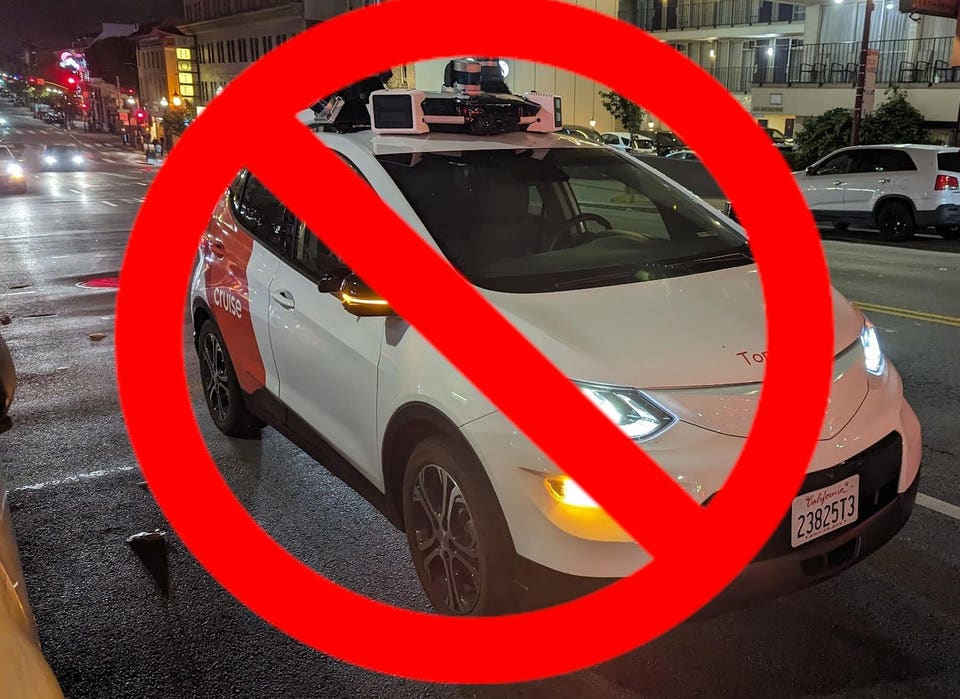
The self-driving world was shocked by the not entirely shocking news that General Motors will shut down the robotaxi project of Cruise, absorbing some of the Cruise team to work on in-car technologies like the previously unrelated SuperCruise driver assist system. Cruise had been the clear #2 robotaxi project (at least outside China) until it suspended operations in 2023 after losing its California permits due to a severe incident and cover-up, and GM had spent and was continuing to spend many billions on it.
The death of Cruise raises a number of important issues. One is the fate of the project and team, beyond being shrunk and absorbed. It is interesting to note that GM has a (mostly) working robotaxi system but has lost faith in the business case. Tesla has a robocar business (hundreds of thousands of customers have pre-ordered a self-driving system at up to $15,000 and are still waiting for it) but does not have a working self-drive technology. While Tesla fans and Elon Musk have for 8 years believed it was just a year away, and while it has been showing good improvement, it is still quite far from production “bet your life” quality. Tesla’s safety level is around where Waymo was over 8 years ago, and perhaps where Cruise was 6 years ago — though there are those who, with justification, doubt the numbers Cruise claimed.
Of course, the Cruise system uses a much more expensive and sophisticated sensor suite, focused on LIDAR, a sensor that Elon Musk has called a “crutch.” For reasons of ego, if nothing else, Tesla would strongly resist such a switch. On the other hand, in the event (which some view as likely, and others do not) that Tesla’s end-to-end ML approach reaches an “AI plateau” and can’t be made to truly self-drive with just cameras, or any time soon, it would be the rational thing to eat a lot of crow and cost and switch over to the approach that Cruise (and Waymo, and Zoox, and Baidu and all the other companies who have working robocars) are using. The sensors are dropping in price (as all electronics do in volume) and could easily be paid for out already collected funds, at least from those who paid fees like $15K, $12K or even less for the pre-order of FSD. (I’m one of them, though I only paid $2K and they would lose money on the few of us in that group.)
In addition, Cruise is several years ahead on understanding and setting up all the many logistics elements needed to run a robotaxi service, which Tesla has said they will do. That experience would save Tesla a lot of time, even if they don’t care much for Cruise’s driving technology.
This is not going to happen, of course. Tesla is very set on its path. It’s a shame if Cruise’s work just vanishes into the ether. More than a shame, as it leaves the US with one less player. Waymo is going strong, Zoox is just getting ready to go out, and Motional, also owned by a car company, has shown troubling signals. Waymo will be busy for some time in the USA, and in fact with less competition may expand more slowly. Cruise’s competition definitely provided some prompting for Waymo to act in the past (and vice versa.) This may mean that the Chinese companies will be able to expand into the world with less competition and establish themselves in some countries before other companies get there. It also means it will take longer for prices to come down in the USA, and longer for many other things which get driven by competition.
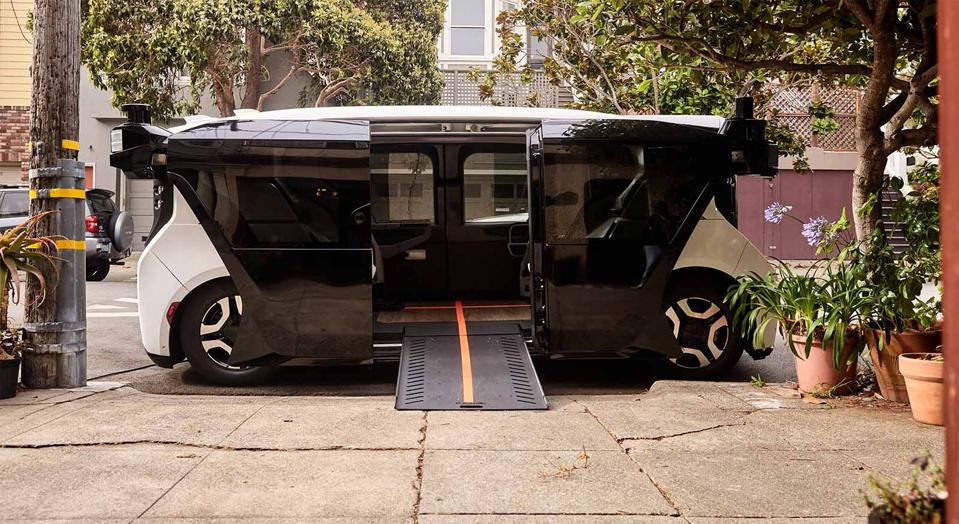
As noted, this action by GM was not too shocking. I have never felt that traditional car OEMs would lead the way in robocars, but Cruise began as a startup. After the infamous dragging incident of October 2023, the founders were fired, and corporate management stepped in. Even before that, the prior CEO of Cruise was fired over conflict of how much it should be a startup and how much a part of the whole.
Role of the DMV
After the dragging incident, the California DMV pulled Cruise from the streets. They cited safety issues (such as the dragging) but most feel the primary reason they cited was concern over their short-lived attempt to cover-up the incident, though they never expressed which was more important. There’s a strong argument that this DMV action played a significant role in the death of Cruise, though with no agreement over whether the DMV’s reaction was at the right strength. It’s possible that Cruise would have had another incident before too long without the DMV, though Cruise published numbers claiming they were having fewer crashes than the Uber drivers they were replacing with their robotaxi service.
There have been two serious robotaxi/pedestrian encounters. The first involved Uber, whose vehicle killed a pedestrian, with fault placed entirely on the negligent safety driver (not) supervising the vehicle and the procedures by which Uber trained and managed that safety driver. Nonetheless, Uber left the roads and eventually “sold” off their self-driving unit to Aurora. (They traded their robotaxi unit (and cash) for Aurora stock, however that stock is currently doing decently.) The second was Cruise.
What this means in both cases of a serious crash is the robocar project received the corporate death penalty, resulting in the loss of billions of effort and investment. In the debate over how much regulation is appropriate for self-driving projects, there is a case that extremely strong deterrents are already in place.
While it’s hardly a settled question over whether the DMV’s order is solely or even significantly responsible for the end of Cruise, it should be considered. It was not the intention of the DMV to end Cruise, of course. Their mission is to improve road safety. Even if Cruise’s claim of superior safety was false, they were on a path to providing major improvements to road safety over time. There’s a good case that the DMV’s actions have seriously worsened road safety, both because of what Cruise would have done, and because of what extra competition would also have done.
When I write “seriously,” I mean very significant numbers. While today’s robocar fleets are tiny, this means any mistakes they make will be small in magnitude. They will be—they must be—significantly safer than the human drivers they replace once they start driving in large volumes. That future Cruise fleet, had it come to be, and been a success, would very probably have prevented literally millions of future crashes. While the DMV has to do its job, this number, and its application to their core mission, should not leave their minds.
Fortunately, all is not lost. Some of the technology developed at Cruise will be used to make GM’s regular cars safer, or at least that’s the plan, as it was when Ford shut down Argo. Much will still be lost.
Originally published at Forbes.com in Should Tesla Buy Cruise, And Other Strange Wonderings. Copyright © 2024 by Brad Templeton.


Add new comment