Non Forbes

Will Robocars be heaven or hell for our cities?

Today, Robin Chase wrote an article wondering if robocars will improve or ruin our cities and asked for my comment on it. It's a long article, and I have lots of comment, since I have been considering these issues for a while. On this site, I spend most of my time on the potential positive future, though I have written various articles on downsides and there are yet more to write about.

Topic: 

Platoon, or just carpool?

At the recent AUVSI/TRB symposium, a popular research topic was platooning for robocars and trucks. Platooning is perhaps the oldest practical proposal when it comes to car automation because you can have the lead vehicle driven by a human, even a specially trained one, and thus resolve all the problems that come from road situations too complex for software to easily handle.

Topic: 

Don't throw away your vote on a major party -- vote 3rd party and mean something

It's common for people to write that those who vote for a minor party in an election are "throwing away" their vote. Here's a recent article by my friend Clay Shirky declaring there's no such thing as a protest vote and many of the cases are correct, but the core thesis is wrong. Instead, I will argue that outside the swing states, you are throwing away your vote if you vote for a major party candidate.

To be clear, if you are in one of the crucial swing states where the race is close -- and trust me, you know that from the billions of dollars of ad spend in your state, as well as from reading polls -- then you should vote for the least evil of the two party candidates as you judge it. And even in most of the country, (non-swing) you should continue to vote for those if you truly support them. But in a non-swing state, in this election in particular, you have an additional option and an additional power.

Consider here in California, which is very solidly for Clinton. Nate Silver rates it as 99.9% (or higher) to go for Clinton. A vote for Clinton or Trump here is wasted. It adds a miniscule proportion to their totals. Clinton will fetch around 8 million votes. You can do the un-noticed thing of making it 8 million and 1, and you'll bump her federally by an even tinier fraction. Your vote can make no difference to the result (you already know that) and nor will it be noticed in the totals. You're throwing it away, getting an insignificant benefit for its use.

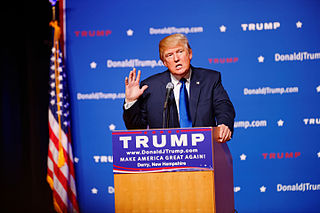
Of course, the 3rd party candidates had no chance of winning California, or the USA. And while they like to talk a pretend bluster about that, they know that. You know that. Their voters know that. 3rd party voters aren't voting to help their candidate win, any more than Trump voters imagine their vote could help him win California, or Clinton voters imagine they could affect her assured victory.

Third party voters, however, will express their support for other idea in the final vote totals. If Jill Stein gets 50,000 votes in California, making it 50,001 doesn't make a huge difference, but it makes 160 times as much difference to her total than a Clinton vote does, or 100x what a Trump vote does. Gary Johnson is doing so well this year (polling about 8% of national popular vote) that his voters won't do quite as much to his total, but still many times more improvement than the major party votes. Clay argues that "nobody is receiving" the message of your vote for a third party, but the truth is, your vote for Clinton in California or Trump in Texas is a message that has even less chance of being received.

A big difference this year is that the press are paying attention to the minor parties. This year, you will see much more press on Johnson's and Stein's totals. It is true that in other years, the TV networks would often ignore those parties. In some case, TV network software is programmed to report only the top two results, and to make the percentages displayed add up to 100%. This is wrong of the networks, but I suspect there is less chance of it happening. Johnson will probably appear in those totals. Web sites and newspapers have generally reported the proper totals.

Does anybody look at these totals for minor candidates? Some don't, but the big constituency for them is others interested in minor parties. People want a tribe. Many people don't want to support something unless they see they are not alone, that others are supporting it. Johnson and Stein's poll numbers are already galvanizing many more votes for them.

This is how third parties arise, and it happens a lot outside the USA. In the USA it has't happened since the Republicans arose in the 1850s, tied to the collapse of the Whigs. Prior to that multiple parties were more common. Of course, there have been several runs at new parties (Perot/Reform, Dixiecrat and American Independent) which did not succeed. But if everybody refuses to actually vote for the 3rd parties they support because it is viewed as a waste, of course no 3rd parties will ever arise. Having a slim chance at that is one of the things to drive 3rd party voters, because that slim chance still means making a bigger difference than a meaningless extra vote for a major party.

This is how most political change happens. Because people see they are not alone. That's how small marches and protests grow into bigger ones until leaders are toppled. It's how small movements within big parties, and whole 3rd parties rise.

Topic: 

A smarter successor to Trump is even scarier, but it's coming

Social media are jam packed with analysis of the rise of Donald Trump these days. Most of us in what we would view as the intellectual and educated community are asking not just why Trump is a success, but as Trevor Noah asked, "Why is this even a contest?" Clinton may not be, as the Democrats claim, the most qualified person ever to run, but she's certainly decently qualified, and Trump is almost the only candidate with no public service experience ever to run. Even his supporters readily agree he's a bit of a buffoon, that he says tons of crazy things, and probably doesn't believe most of the things he says. (The fact that he doesn't actually mean many of the crazy things has become the primary justification of those who support him.)

But it is a contest, and while it looks like Clinton will probably win it is also disturbing to me to note that in polls broken down by race and sex, Trump is actually ahead of Clinton by a decent margin among my two groups -- whites and males. (Polls have been varying a lot in the weeks of the conventions.) Whites and males have their biases and privileges, of course, but they are very large and diverse groups, and again, to the coastal intellectual view, this shouldn't even be a contest. (It's also my view as a foreigner of libertarian leanings and no association with either party.)

The things stacked in favour of the Republican nominee

There have been lots of essays examining the reason for Trump's success. Credible essays have described a swing to nationalism and/or authoritarianism which Trump has exploited. Trump's skill at marketing and memes is real. His appeal to paternalism and strength works well (Lakeoff's "strong father" narrative.) The RNC also identified Hillary Clinton as a likely nominee 2 decades ago, and since then has put major effort into discrediting her, much more time than it's ever had to work on other opponents. And Clinton herself certainly has her flaws and low approval ratings, even within her own party.

It is also important to note that the chosen successor of a Democratic incumbent has never in history defeated the Republican. (In 1856 Buchanan defeated the 1st ever Republican nominee, Fremont, but was Franklin Pierce's opponent at the convention.) This stacks the deck in favour of this year's Republican. Of course, Wilson, Cleveland, Roosevelt the 2nd, Carter and Clinton the 1st all defeated incumbent Republicans, so Democrats are far from impotent.

The specific analysis of this election is interesting, but my concern is about the broader trend I see, a much bigger geopolitical trend arising from technology, globalization, income inequality and redistribution among nations as well as the decline of religion and the classic lifetime middle class career. This big topic will get more analysis in time here. I was particularly interested in this recent article linking globalization and the comparative reduced share for the U.S. middle class. The ascendancy of the secular, western, technological, intellectual capitalist liberal elite is facing an increasing backlash.

Where Trump's support comes from

Trump of course begins, as Clinton does, with a large "base." There is an element of the Republican base that will never tolerate voting for Clinton almost no matter how bad Trump is. There is a similar Democratic contingent. This base has been boosted by that 2 decade anti-Clinton campaign.

Topic: 

Tesla's Master plan -- some expected, some strange

Today I want to look at some implications of Tesla's Master Plan Part Deux which caused some buzz this week. (There was other news of course, including the AUVSI/TRB meeting which I attended and will report on shortly, forecast dates from Volvo, BMW and others, hints from Baidu, Faraday Future and Apple, and more.)

In Musk's blog post he lays out these elements of Tesla's plan

  • Integrating generation and storage (with SolarCity and the PowerWall and your car.)
  • Expand into trucks and minibuses
  • More autonomy in Tesla cars
  • Hiring out your Tesla as a robotaxi when not using it

Except for the first one, all of these are ideas I have covered extensively here. It is good to see an automaker start work in these directions. As such while I will mostly agree with what Tesla is saying, there are a few issues to discuss.

Electric (self-driving) minibus and Trucks

In my article earlier this year on the future of transit I laid out why transit should mostly be done with smaller (van sized) vehicles, taking ad-hoc trips on dynamic paths, rather than the big-vehicle, fixed-route, fixed-schedule approach taken today. The automation is what makes this happen (especially when you add the ability of single person robocars to do first and last miles.) Making the bus electric can make it greener, though making it run full almost all the time is far more important for that.

The same is true for trucks, but both trucks and buses have huge power needs which presents problems for having them be electric. Electric's biggest problem here is the long recharge time, which puts your valuable asset out of service. For trucks, the big win of having a robotruck is that it can drive 24 hours/day, you don't want to take that away by making it electric. This means you want to look into things like battery swap, or perhaps more simply tractor swap. In that case, a truck would pull in to a charging station and disconnect from its trailer, and another tractor that just recharged would grab on and keep it going.

Carpool apps are on the rise, let's make transfer points and roads to help them

The success of carpool apps

The cell phone ride hail apps like Uber and Lyft are now reporting great success with actual ride-sharing, under the names UberPool, LyftLines and Lyft Carpool. In addition, a whole new raft of apps to enable semi-planned and planned carpooling are out making changes.

Understanding the huge gulf between the Tesla Autopilot and a real robocar, in light of the crash

It's not surprising there is huge debate about the fatal Tesla autopilot crash revealed to us last week. The big surprise to me is actually that Tesla and MobilEye stock seem entirely unaffected. For many years, one of the most common refrains I would hear in discussions about robocars was, "This is all great, but the first fatality and it's all over." I never believed it would all be over, but I didn't think there would barely be a blip.

There's been lots of blips in the press and online, of course, but most of it has had some pretty wrong assumptions. Tesla's autopilot is a distant cousin of a real robocar, and that would explain why the fatality is no big deal for the field, but the press shows that people don't know that.

Tesla's autopilot is really a fancy cruise control. It combines several key features from the ADAS (Advance Driver Assist) world, such as adaptive cruise control, lane-keeping and forward collision avoidance, among others. All these features have been in cars for years, and they are also combined in similar products in other cars, both commercial offerings and demonstrated prototypes. In fact, Honda promoted such a function over 10 years ago!

Tesla's autopilot primarily uses the MobilEye EyeQ3 camera, combined with radars and some ultrasonic sensors. It doesn't have a lidar (the gold standard in robocar sensors) and it doesn't use a map to help it understand the road and environment.

Most importantly, it is far from complete. There is tons of stuff it's not able to handle. Some of those things it can't do are known, some are unknown. Because of this, it is designed to only work under constant supervision by a driver. Tesla drivers get this explained in detail in their manual and when they turn on the autopilot.

ADAS cars are declared not to be self-driving cars in many state laws

This is nothing new -- lots of cars have lots of features to help drive (including the components used like cruise controls, each available on their own) which are not good enough to drive the car, and only are supposed to augment an alert driver, not replace one. Because car companies have been selling things like this for years, when the first robocar laws were drafted, they made sure there was a carve-out in the laws so that their systems would not be subject to the robocar regulations companies like Google wanted.

The Florida law, similar to other laws, says:

The term [Autonomous Vehicle] excludes a motor vehicle enabled with active safety systems or driver assistance systems, including, without limitation, a system to provide electronic blind spot assistance, crash avoidance, emergency braking, parking assistance, adaptive cruise control, lane keep assistance, lane departure warning, or traffic jam and queuing assistant, unless any such system alone or in combination with other systems enables the vehicle on which the technology is installed to drive without the active control or monitoring by a human operator.

The Tesla's failure to see the truck was not surprising

There's been a lot of writing (and I did some of it) about the particulars of the failure of Tesla's technology, and what might be done to fix it. That's an interesting topic, but it misses a very key point. Tesla's system did not fail. It operated within its design parameters, and according to the way Tesla describes it in its manuals and warnings. The Tesla system, not being a robocar system, has tons of stuff it does not properly detect. A truck crossing the road is just one of those things. It's also poor on stopped vehicles and many other situations.

Tesla could (and in time, will) fix the system's problem with cross traffic. (MobilEye itself has that planned for its EyeQ4 chip coming out in 2018, and freely admits that the EyeQ3 Tesla uses does not detect cross traffic well.) But fixing that problem would not change what the system is, and not change the need for constant monitoring that Tesla has always declared it to have.

Topic: 

Starship delivery robots getting ready to deliver in London, Germany, Bern

Today at Starship, we announced our first pilot projects for robotic delivery which will begin operating this summer. We'll be working with a London food delivery startup Pronto as well as German parcel company Hermes and the Metro Group of retailers, plus Just Eat restaurant food delivery to trial on-your-schedule delivery of packages, groceries and meals to people's homes.

Topic: 

Should Tesla disable your Autopilot if you're not diligent? - and a survey of robocar validation

Executive Summary: A rundown of different approaches for validation of self-driving and driver assist systems, and a recommendation to Tesla and others to have countermeasures to detect drivers not watching the road, and permanently disable their Autopilot if they show a pattern of inattention.

The recent fatality for a man who was allowing his car to be driven by the Tesla "autopilot" system has ignited debate on whether it was appropriate for Tesla to allow their system to be used as it was.

Tesla's autopilot is a driver assist system, and Tesla tells customers it must always be supervised by an alert driver ready to take the controls at any time. The autopilot is not a working self-driving car system, and it's not rated for all sorts of driving conditions, and there are huge numbers of situations that it is not designed to handle and can't handle. Tesla knows that, but the public, press and Tesla customers forget that, and there are many Tesla users who are treating the autopilot like a real self-driving car system, and who are not paying attention to the road -- and Tesla is aware of that as well. Press made this mistake as well, regularly writing fanciful stories about how Tesla was ahead of Google and other teams.

Brown, the driver killed in the crash, was very likely one of those people, and if so, he paid for it with his life. In spite of all the warnings Tesla may give about the system, some users do get a sense of false security. There is debate if that means driver assist systems are a bad idea.

There have been partial self-driving systems that require supervision since the arrival of the cruise control. Adaptive cruise control is even better, and other car companies have released autopilot like systems which combine adaptive cruise control with lane-keeping and forward collision avoidance, which hits the brakes if you're about to rear end another car. Mercedes has sold a "traffic jam assist" like the Telsa autopilot since 2014 that only runs at low speeds in the USA. You can even go back to a Honda demo in 2005 of an autopilot like system.

With cruise control, you might relax a bit but you know you have to pay attention. You're steering and for a long time even the adaptive cruise controls did not slow down for stopped cars. The problem with Tesla's autopilot is that it was more comprehensive and better performing than earlier systems, and even though it had tons of things it could not handle, people started to trust it with their lives.

Tesla's plan can be viewed in several ways. One view is that Tesla was using customers as "beta testers," as guinea pigs for a primitive self-drive system which is not production ready, and that this is too much of a risk. Another is that Tesla built (and tested) a superior driver assist system with known and warned limitations, and customers should have listened to those warnings.

Neither is quite right. While Tesla has been clear about the latter stance, with the knowledge that people will over-trust it, we must face the fact that it is not only the daring drivers who are putting themselves at risk, it's also others on the road who are put at risk by the over-trusting drivers -- or perhaps by Tesla. What if the errant car had not gone under a truck, but instead hit another car, or even plowed into a pedestrian when it careened off the road after the crash?

At the same time, Tesla's early deployment approach is a powerful tool for the development and quality assurance of self-drive systems. I have written before about how testing is the big unsolved problem in self-driving cars. Companies like Google have spent many millions to use a staff of paid drivers to test their cars for 1.6 million miles. This is massively expensive and time consuming, and even Google's money can't easily generate the billions of miles of testing that some feel might be needed. Human drivers will have about 12 fatalities in a billion miles, and we want our self-driving cars to do much better. Just how we'll get enough verification and testing done to bring this technology to the world is not a solved problem.

Topic: 

Man dies while driven by Tesla Autopilot

A Tesla blog post describes the first fatality involving a self drive system. A Tesla was driving on autopilot down a divided highway. A truck made a left turn and crossed the Tesla's lanes. A white truck body against a bright sky is not something the MobilEye camera system in the Tesla perceives well, and it is not designed for cross traffic.

Topic: 

Pages