Non Forbes

NHTSA ODI report exonerates Tesla in fatal crash

NHTSA released the report from their Office of Defects Investigation on the fatal Tesla crash in Florida last spring. It's a report that is surprisingly favorable to Tesla. So much so that even I am surprised. While I did not think Tesla would be found defective, this report seems to come from a different agency than the one that recently warned comma.ai that:

Topic: 
Rodney Brooks on Pedestrian Interaction, Andrew Ng on Infrastructure, and both on human attitudes

Recently we've seen two essays by people I highly respect in the field of AI and robotics. Their points are worthy of reading, but in spite of my respect, I have some differences of course.

The first essay comes from Andrew Ng, head of AI (and thus the self-driving car project) at Baidu. You will find few who can compete with Andrew when it comes to expertise on AI. (Update: This essay is not recent, but I only came upon it recently.)

Topic: 

CES News Part 1 -- cars

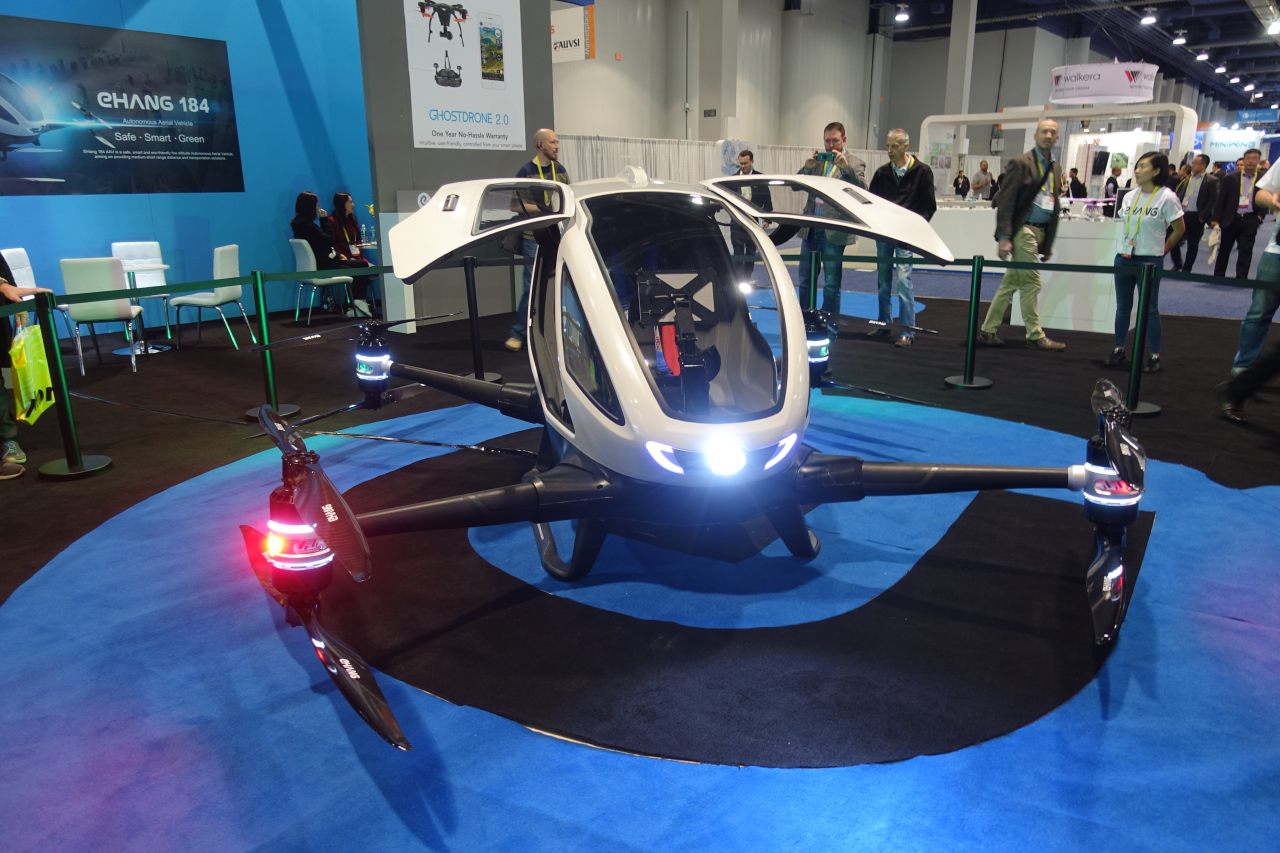
CES has become the big event for major car makers to show off robocar technology. Most of the north hall, and a giant and valuable parking lot next to it, were devoted to car technology and self-driving demos.

Gallery of CES comments

Earlier I posted about many of the pre-CES announcements and it turns out there were not too many extra events during the show. I went to visit many of the booths and demos and prepared some photo galleries. The first is my gallery on cars. In this gallery, each picture has a caption so you need to page through them to see the actual commentary at the bottom under the photo. Just 3 of many of the photos are in this post.

To the left you see BMW's concept car, which starts to express the idea of an ultimate non-driving machine. Inside you see that the back seat has a bookshelf in it. Chances are you will just use your eReader, but this expresses and important message -- that the car of the future will be more like a living, playing or working space than a transportation space.

Nissan

The main announcement during the show was from Nissan, which outlined their plans and revealed some concept cars you will see in the gallery. The primary demo they showed involved integration of some technology worked on by Nissan's silicon valley lab leader, Maarten Sierhuis in his prior role at NASA. Nissan is located close to NASA Ames (I myself work at Singularity University on the NASA grounds) and did testing there.

Their demo showed an ability to ask a remote control center to assist a car with a situation it doesn't understand. When the car sees something it can't handle, it stops or pulls over, and people in the remote call center can draw a path on their console to tell the car where to go instead. For example, it can be drawn how to get around an obstacle, or take a detour, or obey somebody directing traffic. If the same problem happens again, and it is approved, the next car can use the same path if it remains clear.

I have seen this technology a number of places before, including of course the Mars rovers, and we use something like it at Starship Technologies for our delivery robots. This is the first deployment by a major automaker.

Nissan also committed to deployment in early 2020 as they have before -- but now it's closer.

You can also see Nissan's more unusual concepts, with tiny sensor pods instead of side-view mirrors, and steering wheels that fold up.

Startups

Several startups were present. One is AIMotive, from Hungary. They gave me a demo ride in their test car. They are building a complete software suite, primarily using cameras and radar but also able to use LIDAR. They are working to sell it to automotive OEMs and already work with Volvo on DriveMe. The system uses neural networks for perception, but more traditional coding for path planning and other functions. It wasn't too fond of Las Vegas roads, because the lane markers are not painted there -- lanes are divided only with Bott's Dots. But it was still able to drive by finding the edge of the road. They claim they now have 120 engineers working on self-driving systems in Hungary.

Topic: 

No, a Tesla didn't predict an accident and brake for it

You may have seen a lot of press around a dashcam video of a car accident in the Netherlands. It shows a Tesla in AutoPilot hitting the brakes around 1.4 seconds before a red car crashes hard into a black SUV that isn't visible from the viewpoint of the dashcam. Many press have reported that the Tesla predicted that the two cars would hit, and because of the imminent accident, it hit the brakes to protect its occupants. (The articles most assuredly were not saying the Tesla predicted the accident that never happened had the Tesla failed to brake, they are talking about predicting the dramatic crash shown in the video.)

The accident is brutal but apparently nobody was hurt.

The press speculation is incorrect. It got some fuel because Elon Musk himself retweeted the report linked to, but Telsa has in fact confirmed the alternate and more probable story which does not involve any prediction of the future accident. In fact, the red car plays little to no role in what took place.

Tesla's autopilot uses radar as a key sensor. One great thing about radar is that it tells you how fast every radar target is going, as well as how far away it is. Radar for cars doesn't tell you very accurately where the target is (roughly it can tell you what lane a target is in.) Radar beams bounce off many things, including the road. That means a radar beam can bounce off the road under a car that is in front of you, and then hit a car in front of it, even if you can't see the car. Because the radar tells you "I see something in your lane 40m ahead going 20mph and something else 30m ahead going 60mph" you know it's two different things.

Topic: 

On voting, sampling, measurement, elections and surveys

Yesterday's post about the flaws in the so-called "popular vote" certainly triggered some debate (mostly on Facebook.) To clarify matters, I thought I would dive a little deeper about what the two types of Presidential elections in the USA are so different they can't be added together in a way that isn't misleading.

Topic: 

We don't know who won the US popular vote, decent chance it was Clinton

The common statistic reported after the US election was that Clinton "won the popular vote" by around 3 million votes over Trump. This has caused great rancour over the role of the electoral college and has provided a sort of safety valve against the shock Democrats (and others) faced over the Trump victory.

Topic: 

DMV pulls out big guns, Uber backs off, Waymo minivans emerge & Honda next?

The California DMV got serious in their battle with Uber and revoked the car registrations for Uber's test vehicles. Uber had declined to register the cars for autonomous testing, using an exemption in that law which I described earlier. The DMV decided to go the next step and pull the more basic licence plate every car has to have if based in California. Uber announced it would take the cars to another state.

Topic: 

Car NAS for semi-offsite backup

Everybody should have off-site backup of their files. For most people, the biggest threat is fire, but here in California, the most likely disaster you will encounter is an earthquake. Only a small fraction of houses will burn down, but everybody will experience the big earthquake that is sure to come in the next few decades. Of course, fortunately only a modest number of houses will collapse, but many computers will be knocked off desks or have things fall on them.

To deal with this, I've been keeping a copy of my data in my car -- encrypted of course. I park in my driveway, so nothing will fall on the car in a quake, and only a very large fire would have risk of spreading to the car, though it's certainly possible.

The two other options are network backup and truly remote backup. Network backup is great, but doesn't work for people who have many terabytes of storage. I came back from my latest trip with 300gb of new photos, and that would take a very long time to upload if I wanted network storage. In addition, many TB of network storage is somewhat expensive. Truly remote storage is great, but the logistics of visiting it regularly, bringing back disks for update and then taking them back again is too much for household and small business backup. In fact, even being diligent about going down to the car to get out the disk and update is difficult.

A possible answer -- a wireless backup box stored in the car. Today, there are many low-cost linux based NAS boxes and they mostly run on 12 volts. So you could easily make a box that goes into the car, plugs into power (many cars now have 12v jacks in the trunk or other access to that power) and wakes up every so often to see if it is on the home wifi, and triggers a backup sync, ideally in the night.

Pages