


Waymo Builds Fancy AI-Based Simulator Tool To Improve Robotaxi Tests
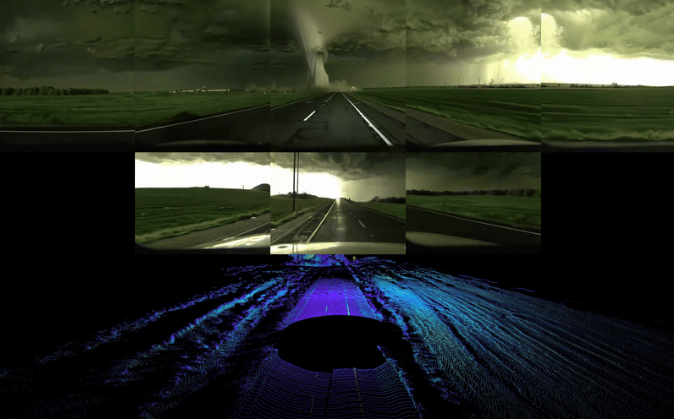
To build and test a robotaxi, you need to put it out in the real world and make sure it performs well. That’s not enough, though, because there are a lot of unusual and dangerous situations you just aren’t going to encounter very often, if at all, even in the almost 200 million miles of real world driving Waymos have done in autonomous mode. For example, human drivers will be involved in a fatality about twice in that distance, but there are millions of situations where a fatality can occur, and you want to know you’ll handle them safely.
The answer is to test things in simulation. You put your car into a driving video game and have it drive through everything you have ever seen, everything you or anybody else can dream up, and everything that computers can dream up by tweaking situations in a million different ways. You drive hundreds of billions of miles in the simulator, and more. You throw as many different situations at the car as you can. You throw every time the car screwed up in its history, every time you heard of another driver (human or robot) screwing up. Every variation you can think of – do the same in a snowstorm, in the middle of an earthquake, during a power outage and more. You won’t imagine everything but you’ll get a lot.
(Ideally, you trade these scenarios with other companies too. That’s why I helped create the Safety Pool together with the World Economic Forum and others. Indeed, I’ve been preaching the value of making these simulated worlds for close to two decades.)
Even so, it’s work to create new scenarios in the simulator to test cars. Waymo has announced that they have worked with their colleagues and sibling company Google DeepMind to build a tool using their latest fancy Genie 3 AI to make this job easier.
Modern LLMs are valuable for these sorts of programming tasks. Everybody knows you can describe a scene and they will make a realistic video. Now Waymo claims you can do the same to make a realistic simulation scenario, and 3-D video game world where you can test how a car performs. That should allow much faster creation of test scenarios to find problems before they happen in the physical world.
Waymo has a blog post full of videos of scenarios created with the AI tool. That’s the best way to get a sense of the range of things it can do.
Above, I said the teams want to make simulation scenarios of everything anybody has ever seen or thought of. They do, but wanting doesn’t make it so. It takes effort. Now it should take a lot less effort, both for invented scenarios, and scenarios based on real world recordings from Dashcams and other sources. Companies have been collecting Dashcam videos of immense numbers of crashes (which, of course, are what dashcam owners save to memory) and now you can be sure your robotaxi has been tested as every participant in pretty much every kind of crash in every sort of traffic and weather, and done the best it can.
Worried about AI hallucinations? This is an application that is fairly immune to them. A hallucinating AI will just create extra, non-real situations. If a car does well, it’s good, and if it fails, a human will look at discover the situation wasn’t particularly realistic, and delete it. You do want to make sure you don’t do training based on false data, though.
Fleet Simulation
Waymo’s new AI project does not yet do fleet simulation, they report. In fleet simulation, you don’t simulate the streets in full detail, but you try to see what happens when things happen across an entire city, like a power failure, or earthquake, or flood. You want to make sure individual cars do well when they encounter a flood, but you also want to know how your fleet will do when many cars are facing flooding. This is something Waymo may not have done enough, in that they didn’t fully anticipate what would happen in a wide-area power outage in San Francisco. That said, what happened was probably not something they might have thought to simulate, since you’ll never think of everything, and perfection is not an option on the table.
Even so, if Waymo expands this tool to create realistic whole-city situations, it can make them better prepared for those contingencies. Due to the power failure, city officials are asking Waymo to show they will handle emergencies better, and simulation is one way to do that.
Originally published at Forbes.com in Waymo Builds Fancy AI-Based Simulator Tool To Improve Robotaxi Tests. Copyright © 2026 by Brad Templeton.


Add new comment