


Car NAS for semi-offsite backup
Submitted by brad on Mon, 2016-12-19 11:06Everybody should have off-site backup of their files. For most people, the biggest threat is fire, but here in California, the most likely disaster you will encounter is an earthquake. Only a small fraction of houses will burn down, but everybody will experience the big earthquake that is sure to come in the next few decades. Of course, fortunately only a modest number of houses will collapse, but many computers will be knocked off desks or have things fall on them.
To deal with this, I've been keeping a copy of my data in my car -- encrypted of course. I park in my driveway, so nothing will fall on the car in a quake, and only a very large fire would have risk of spreading to the car, though it's certainly possible.
The two other options are network backup and truly remote backup. Network backup is great, but doesn't work for people who have many terabytes of storage. I came back from my latest trip with 300gb of new photos, and that would take a very long time to upload if I wanted network storage. In addition, many TB of network storage is somewhat expensive. Truly remote storage is great, but the logistics of visiting it regularly, bringing back disks for update and then taking them back again is too much for household and small business backup. In fact, even being diligent about going down to the car to get out the disk and update is difficult.
A possible answer -- a wireless backup box stored in the car. Today, there are many low-cost linux based NAS boxes and they mostly run on 12 volts. So you could easily make a box that goes into the car, plugs into power (many cars now have 12v jacks in the trunk or other access to that power) and wakes up every so often to see if it is on the home wifi, and triggers a backup sync, ideally in the night.
 T: Why did he do it?

 One can understand the appeal of presenting the simulation in a mostly real environment. But the advantages of the VR experience are many. In particular, with the top-quality, retinal resolution light-field VR we hope to see in the future, the big advantage is you don't need to make the physical things look real. You will have synthetic bodies, but they only have to feel right, and only just where you touch them. They don't have to look right. In particular, they can have cables coming out of them connecting them to external computing and power. You don't see the cables, nor the other manipulators that are keeping the cables out of your way (even briefly unplugging them) as you and they move.
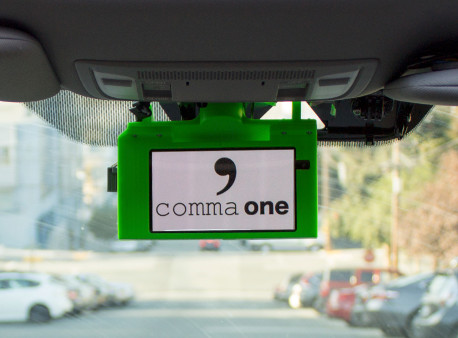 To be clear, comma is a tiny company taking a radical approach, so it is not a given that what NHTSA has applied to them would have been or will be unanswerable by the big guys. Because Tesla's autopilot is not a pure machine learning system, they can answer many of the questions in the NHTSA letter that comma can't. They can do much more extensive testing that a tiny startup can't. But even so a letter like this sends a huge chill through the industry.
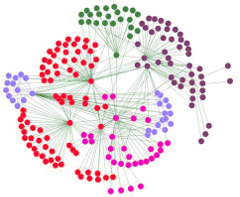 Of course, for the social site to aggregate and use this data for its own purposes would be a gross violation of many important privacy principles. But social networks don't actually do (too many) things; instead they provide tools for their users to do things. As such, while Facebook should not attempt to detect and use political data about its users, it could give tools to its users that let them select subsets of their friends, based only on information that those friends overtly shared. On Facebook, you can enter the query, "My friends who like Donald Trump" and it will show you that list. They could also let you ask "My Friends who match me politically" if they wanted to provide that capability.