


Tesla s Robovan Was The Hidden Gem In 2024's Robotaxi Teaser
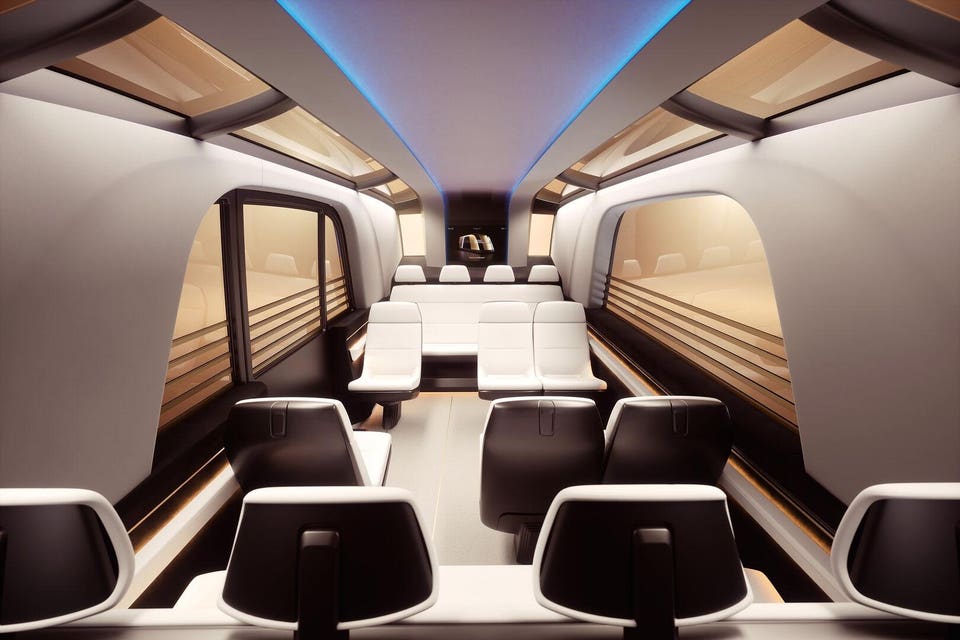
There was tons of coverage about Tesla’s October 2024 reveal of plans for a “Cybercab”--followed later by Tesla stating its aspiration to launch some sort of “toe in the water” service with it in June of 2025 in Austin, TX. But also revealed at the same time was a larger, almost bus-sized vehicle called the “Robovan,” about which almost nothing has been said, both by Tesla, and by analysts.
Since 2008, I’ve been writing about the importance of the shared-ride van, which I originally termed the “robotjitney” and later “vansit” to the future of transportation in cities, and indeed predict these concepts to be the 21st century next generation of transit, replacing conventional rail/bus approaches. I suspect that Tesla is developing similar concepts.
On-demand vans, vanpools, jitneys and other unscheduled or semi-schedule medium sized shared vehicles are not new, but they can generate something new when combined with the private transportation of small robotaxis. Vanpools are arguably the most efficient form of transit in the USA because they tend to run only when full.
Group Travel And Compromise
Whenever you try to group people together on a ride, in order to save money, energy or road space, you require compromise from the ideals of a private vehicle. People no longer leave exactly when they want, take the fastest route for them, and normally don’t go door-to-door. They pause to let others on and off and may compromise on many other things to get that advantage of sharing.
The more people you try to group together, the greater the compromise. And it’s likely to not be linear–as you double the riders, people must compromise even further. Once a vehicle gets too big, it becomes too great, and people seek alternate modes, reducing the load factor and reducing all those gains of efficiency and cost you were sharing for. It’s fairly obvious that if you could choose between one big bus every 30 minutes or a van every 5 minutes, the vans would get many more riders because of the higher frequency, fewest stops and less compromise. Even though a full bus is more efficient than the 6 vans, the overall efficiency will likely be higher due to the higher ridership. There is a “sweet spot” of vehicle size, though we don’t know exactly where it is, and it varies based on the situation. It’s bigger than a car and smaller than a bus or train. In the past, vehicles all needed drivers, and so the “six van” solution wasn’t possible because it needed six drivers. That’s change number one. Tesla has shown the Robovan featuring 14 seats.
Tesla’s van could just run regular scheduled routes with greater frequency, and it would be a win, but that’s just the start. The real value comes when you make shared travel that’s 95% as good as private travel at ⅓ the cost and 1/10th the road capacity requirements. A shared travel service that people of all incomes want to use, that offers everything that 20th century transit offered and far more.
Beyond UberPool
Early experiments with shared rides, like UberPool already weren’t doing great when Covid killed them. UberPool rides offered only modest discounts and often long detours. But consider a shared ride that requires no detour and only a minute or two delay from a private ride. That’s possible through having the ride shared only on the portion of the trip that everybody will travel, and taking the personal start and end in a private vehicle. A van taking people all going to the same broad area can stop where their routes would diverge, where private cars are already waiting, and a 30 second transfer gets them directly to their destination.
That wasn’t possible with human drivers. Robots don’t mind waiting, and they don’t mind doing short 1km trips. (You have to pay Uber drivers a minimum fee around $8 to do a short trip, while for robots the cost is mostly the distance they travel.)
Tesla’s robovan looks like a small bus, but other designs are possible, including giving people private compartments and private doors on the side, for an experience to match a private car.
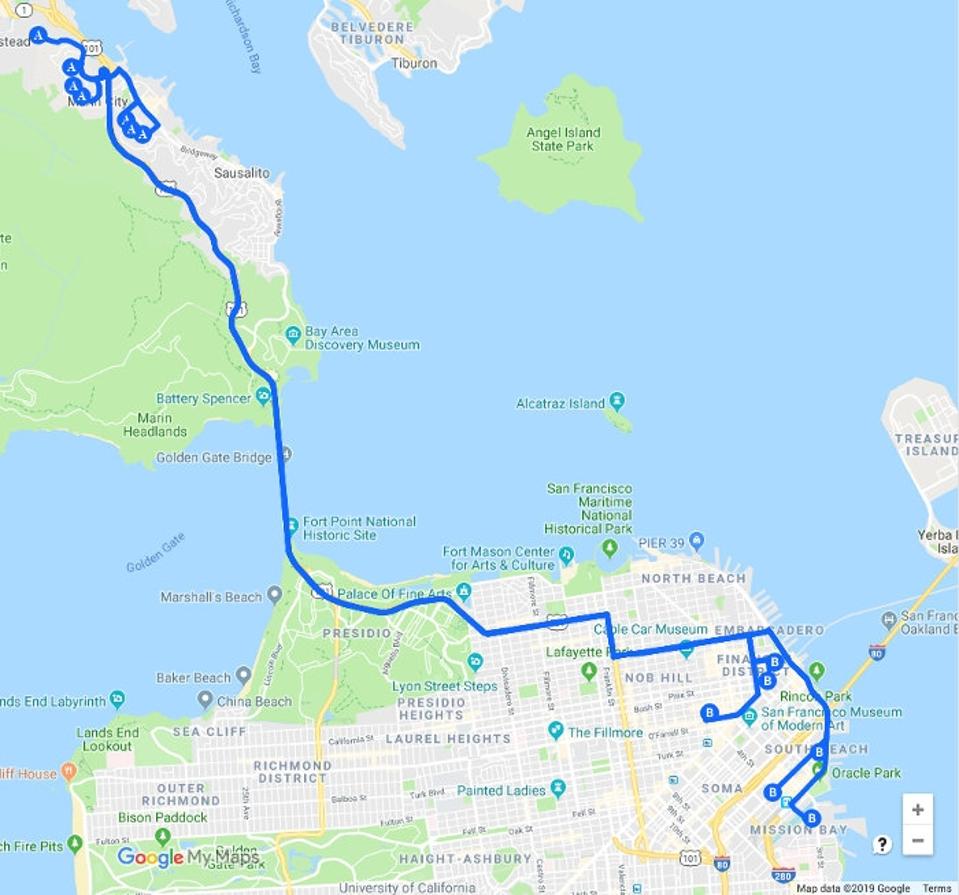
Imagine a trip on this type of transit. You travel from your own door in a private car, leaving within just a few minutes of your desired time. It takes you to a lot with a robovan already waiting, get into your reserved private seat or compartment, and in 30 seconds everybody is riding in the carpool lane on the arterial. Where it stops, another small private car is waiting for you to finish the trip. You pay a fraction of the cost, having shared the cost of most of the trip with 14 others, and due to the carpool lane, you get there faster than your private car would have. The wealthy can pay more for a more luxurious van, but all can afford it, and it uses less energy and has more capacity than 20th century transit.
This becomes the norm at rush hour, or when anybody wants to save a lot of money any time of the day on longer trips.
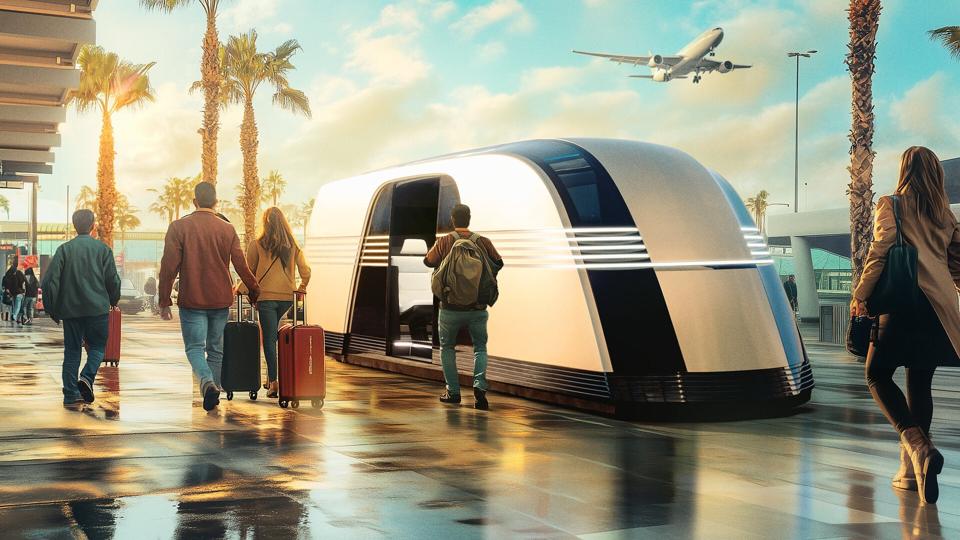
A lot opens up in shared transport when you don’t need to hire a driver for each vehicle, and don’t need to have fixed routes and fixed schedules. Which is what the various automated vans, buses and shuttles being made, including Tesla’s Robovan, can mean. Those who have looked at the robotaxis from Waymo and Zoox and others, and the CyberCab concept, have lamented that “this is just more cars,” should understand that it is not just more cars.
Of course, Tesla’s Robovan was just a concept. While Tesla claims it will make the CyberCab in 2026 (pending making their Full Unsupervised Self Drive work) they have said little about the van. They published CG concepts of the van with 14 seats, or a disabled ramp, or a school bus, or serving as a restaurant, a camper or a service van. Others have made group vehicles but mainly use testing them as transit replacement and shuttles. So we have some time before this arrives. Tesla, unfortunately, is not a major contender in the race for self-driving software, though their position as a hardware builder is strong. Their brand has suffered some damage, particularly with the urban dwellers who might use such a van.
Originally published at Forbes.com in Tesla’s Robovan Was The Hidden Gem In 2024’s Robotaxi Teaser. Copyright © 2025 by Brad Templeton.


Add new comment