


It's not just micromobility -- minimobility is where the action is
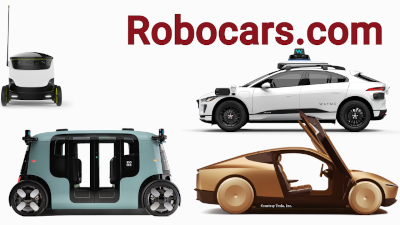
Today's hot transportation topic is "micromobility" where the "micro" means super-small kick scooters and electric bicycles, particularly dockless ones. These vehicles are convenient and (when things go right) ridiculously efficient, both in terms of the energy they use and the space they take up on the road. They are getting opposition, both because people park them in all sorts of inappropriate places, and they have safety problems both due to reckless driving and the exposure of riding such a small vehicle.
The energy and space efficiency is astounding, though, compared to both cars and transit vehicles. A typical kick scooter uses just 18 watt-hours per mile, while an electric car uses 250 (or 170 per person at the average car passenger load.) The entire New York MTA subway system, by far the most efficient in the USA, uses 150 watt-hours per passenger-mile. Eight times more efficient than the best subway -- if you care about energy in transportation, the most effective thing you can be doing is finding ways to get more acceptance of this mode.
There are arguments that this efficiency is not being close to attained today, because the scooters in service are low quality and have short lifetimes -- meaning they consume far more energy being made for the short life than they use moving riders -- and because of wasteful "juicing" by contractors, who drive around in gasoline pickup trucks to gather, charge and redistribute them. These problems are real, and need to be solved to attain proper efficiency, and a sustainable business, but there are many solutions under development.
Micromobility has other problems besides scattered scooters, though. It's really only useful in fairly dense areas, and for short trips, typically not much more than 3 miles. That's partly because of speed, and because it's actually cheaper to hail an Uber over certain distances. And they do have their dangers, and they require some physical ability to ride safely, and a helmet is a good idea, but not easy to make happen.
Minimobility
There's a different mode which has been around in some sense for a while, but may soon rule the roost: I call it Minimobility.
Minimobility means very small and light vehicles that are halfway from a scooter to a car. They are on 2-4 wheels and enclosed from the weather, but are narrow enough you can fit 2 or even 3 in a lane. They fit 1 or 2 passengers, with 2 passengers having to be in a line (possibly face to face) and not side by side. If they have only 2 wheels they have a means to stand up while stopped that doesn't involve the passenger's leg.
Motorcycles and gas scooters are not enclosed, but in some parts of the world are the most common form of transportation. A few companies have made minimobility vehicles, some of which are in production like the Renault Twizzy, and others that are prototypes like the Toyota iRoad, Nissan Land Glider, or the Commuter Cars "Tango." None of these have become successful. There are also 3 and 4 wheeled motorcycle designs with banking wheels that are fairly popular in Europe, but these are not usually enclosed.
There's a reason minimobility cars are not a success today. They don't work very well at all at being your main car, they can only be a 2nd or 3rd car. That's true even though 80% of urban trips are solo. Up to now, they've been made in small quantities, jacking up the price, and are useful only for that specific (though common) subset of urban trips. They are very easy to park, which has made some people buy them.
It's a different story when you can get a mini-car on demand that drives itself and delivers itself to your door. When buying a ride, like you do from companies like Uber, there's no big downside to getting something the size of a Twizzy. Why do you need to ride alone in a 5 seat sedan? If it's cheaper, and if it gets privileges in traffic, it should be quite popular.
So while few people want to buy such a special purpose vehicle, it's probable that if they can be robotic taxis, lots of people will want to use them.
Minimobility vehicles will use more energy and road space than scooters, but still much less than full sized cars and transit systems. Expect to see energy numbers perhaps 1/3rd to 1/2, though it is possible to do even less. Minimobility vehicles will take 1/2 to 1/4 the space on roads of human driven sedans. Many are designed to be only 8.5 feet long and thus fit perpendicular in parallel parking spaces as motorcycles do. That's cool, but even better is the ability of computer-driven cars to valet park, fitting five in the space used by one human driven sedan. (You can also fit dozens of small micromobility scooters in a sedan's parking space.)
Minimobility will offer comfort and ease for people at all levels of human physical mobility, including the disabled. Enclosed, they will offer service is most weather conditions. With electric power they will make little sound and emit no pollutants in the towns. One of my favourite minimobility prototypes is the Kenguru -- a hollow car that people in wheelchairs can just roll into and drive away. Wheelchair users will love a vehicle they can get in and drive faster than an able-bodied person can.
Minimobility vehicles will probably not be able to go on highways, though some can. As robotic taxis this will not be an issue as they are only used on suitable rides. With their narrow stance, they can't corner fast (unless they have just 2 wheels or have banking wheels) but this is less of an issue at low speeds and under robotic control
Minimobility vehicles are ideal for both local travel and "last mile" operations on longer trips. While some might imagine them being used to get to and from things like train stations, their real power comes in taking people to and from van sized group vehicles for frictionless transfer. Frictionless transfer occurs when the transfer involves just 10-20 feet of walking and never, ever any waiting. Today, transit riders greatly fear transfers, and the elimination of that fear is the key to making group transportation people love to use.
There will be a wide range of minimobility, from vehicles that are barely more than enclosed seated scooters (Disclosure: I am an investor/advisor in such a company) to vehicles approaching the features, but not size, of regular cars. Some people like full width cars with side-by-side seating (similar to the "Smart") or vehicles with 2 inline seats, which are less social and comfortable but much smaller and more efficient. The robocar era promises the "face to face" 2 person, half-width vehicle which could create a nice social experience while staying small and efficient.
Narrow minimobility vehicles will be able to travel 2, and rarely 3 to a lane, offering much better road utilization. They will have a much easier time pulling over to pick up and drop off passengers as well. They may be able to drive directly onto things like train platforms to enable those frictionless transfers -- imagine your train pulling in to a line of mini vehicles waiting right on the platform, which pull off and zip down a narrow ramp.
Minimobility vehicles also offer some interesting options if new infrastructure is needed. One can build certain types of infrastructure, particularly tunnels, bridges and elevated roads just for minimobility vehicles at a tiny fraction of the modern cost. Because the vehicles are assured to be small and light, you can build new lanes and tracks for them at low cost, while older, larger, heavier vehicles remain on the original roads.
One very interesting experiment is already being considered, just for today's small cars. Consider a typical intersection with traffic signal. Dig a small underpass tunnel, just 5' wide and 5' high in the busy direction, with a thin ramp in the central lane going down and up from this underpass. Height and width rubber bumpers make the restrictions clear (and it would be very obvious to any normal vehicle that they could never fit.) Aside from the issues of existing conduits under the road, such an underpass can be built extremely cheaply and quickly, by digging a trench and covering it over with steel plates and pavement in a matter of days. It's even easier in a new intersection. This is quite unlike the usual overpass or underpass which must be tall enough and strong enough for big trucks to go over it or under it, and must consume a lot of land with ramps and transfers.
The mini-underpass is made only available to the mini vehicle, in fact only to the self driving one. It whisks through with the walls just inches from the sides of the vehicle under robotic control. The robots understand which direction the tunnel goes at rush hour, or schedule turns in it outside rush hour. (Busy intersections get a wider 2-way tunnel.) The result, for those who ride the mini vehicle, is a non-stop trip on city streets. The people in regular cars and trucks stop at the traffic lights as usual.
Today, the wealthy commute in big, luxurious cars and the poorer folks have small ones. In this world, the wealthy would discard their big cars on urban trips, eager to never have to stop at lights with an underpass. Overpasses are also possible, and can be small due to the light load they carry, but they need to be high enough for all trucks to go under them.
For longer tunnels, the mini vehicle offers great advantages. Elon Musk has based his "Boring Company" on the realization that if you make a tunnel half the diameter, it is almost 1/4 the work to dig it out. A tunnel for 4 foot wide vehicles has 1/30th the volume of one for a 2 lane road or 2-way subway. Tunnels for mini-vehicles can be economical today where full sized tunnels are not, even without the Boring Company's hoped-for innovations.
It's a small world, after all.
Originally published at Forbes.com in Between Cars And Micromobility Lies 'Minimobility' - A Self-Driving Transportation Revolution. Copyright © 2019 by Brad Templeton.


Comments
Simone Brunozzi
Mon, 2019-08-12 22:30
Permalink
Only on Forbes I guess
Hi Brad,
I guess you're going to continue publishing all your articles on Forbes. I'm sad. I've been a long time fan of yours, and I can't understand why you have decided to do this. Forbes in not a great magazine, first of all. And all your beautiful articles are now going to be behind a paywall.
I hope you will reconsider. I am still a fan, but I won't be able to follow you like before.
brad
Tue, 2019-08-13 12:24
Permalink
Paywall?
There should not be a paywall. There may be a bunch of ads, and I do understand that this is annoying. It's allowing me to reach some new audiences. Some articles there don't seem to do much better than just posting them here, a few have taken off quite well though.
Let me know if you are encountering a paywall.
Also, I will mostly be doing transportation there. Some other articles will be only here.
Note that I created a special node and RSS feed at ideas.4brad.com/non-forbes -- this contains posts from here which are not links to forbes. So you can read only those or you can combine that with the forbes RSS feed to not see the posts that are just links. You can even access that feed on this site at https://ideas.4brad.com/aggregator/sources/1 if you don't want to pull it from the Forbes site.
Ross
Tue, 2019-08-13 13:01
Permalink
Suspended minis
An overhead cable suspension or rail might be even cheaper to build than tunnels or bridges, with the added benefit of eliminating the inevitable encroachment by pedestrians, bicycles, and motorcycles. Roller coaster companies have developed all sorts of overhead rail systems, maybe they could adapt to transportation.
brad
Tue, 2019-08-13 22:26
Permalink
Too "smart"
The problem with any specialized infrastructure is then it's only good for the vehicles designed just for it. Pavement is the only winner because it carries everything, including future vehicles, and it's cheap and well understood. Even if a cable or rail is cheaper, it only carries the specific vehicles meant for it. Never make your infrastructure "smart" and single purpose. Make it as general purpose as possible and let innovation take place in the vehicles. That's the only way to get innovation, which always beats whatever temporary advantages any special infrastructure may have today.
FKA
Tue, 2019-08-13 17:49
Permalink
I'd love there to be an option
Street legal up to at least 45 mph, range of at least 50 miles (now and 8 years from now), climate controlled, and cheap, and I'm in. I haven't found anything meeting that criteria, yet. So I'll stick with my 7-year-old hybrid, for now.
I think the biggest problem with the options out there now is that they're expensive. A 2018 Smart ForTwo goes for $24,650. That's more than a 2019 Prius C. It's not much less than a 2020 Prius Prime, which has enough all-electric range (25 miles) to take me to work and back.
Make one for $12,000, and I'm in. Maybe even $15,000, but in that case I'd probably wait until my hybrid dies first.
Most of the other options either aren't street legal at 45 mph (NEVs only are legal up to 35 mph roads), aren't climate controlled, or aren't easily available in the USA today.
Govt could do something about that. NEVs could be street legal up to 45 mph roads, at least during rush hour. Top speed seems to be the problem that causes the price to be so high.
brad
Tue, 2019-08-13 22:24
Permalink
Correct.
The Twizzy is 7,000 Euros plus battery for the base one, but if you made it quantity 200,000 it would be cheaper.
However, the point of my article is that these vehicles come in to their own when you can hire one and it comes to you. (Even if you had to drive it after it comes to you.)
In fact, it's not strictly necessary it be cheaper for that. However, if it is cheaper to make, and cheaper to run, it will be cheaper to hire, and that will make it a popular choice to summon.
FKA
Wed, 2019-08-14 17:57
Permalink
The problem with the Twizy
The problem with the Twizy is not that you can't hire one. The problem with it is that it's not street legal on the roads that people need to use.
If a car is cheaper to make, and cheaper to run, it may or may not be cheaper to hire. Depends on how much cheaper to make/run, and how much impact the cut-corners have on idle time and dead miles. If it's just a little bit cheaper to make/run (and that seems to be the case, perhaps because small cars that travel quickly are expensive to make safe enough to pass government safety regulations), then it's probably not worth it for a consumer or a robotaxi company.
It looks like once again that government regulations are the problem. Let people drive more slowly, or less safely, on public roads, and more people will use mini-cars.
brad
Wed, 2019-08-14 22:59
Permalink
Street legal
Correct, it is not street legal (though it is NEV legal for low speed roads.) However, you see them in France and a few other places. It is possible to make a small car that is compliant. And I think it will be even easier to make a small robocar, since in a robocar you can take out vast amounts of stuff you don't need. It may not cost half of the cost of a $13,000 Nissan Versa or Chevy Spark, but I think it can pretty easily get under $10K -- in fact I think it can get under $10K including sensors and computers, at least in mass quantities. Enough to be cheap to run while depreciation remains the largest cost.
FKA
Sat, 2019-08-17 13:35
Permalink
I'm sold
Under $10K and street legal up to at least 45 mph and I'll buy one, whether it's autonomous or not.
Doggydogworld
Wed, 2019-08-14 13:41
Permalink
Mini-tunnel is a cool idea!
Mini-tunnel is a cool idea!
I agree upfront cost doesn't matter for robotaxis. The key is to make them safe (obviously) and durable so you can spread the upfront cost over more miles.
Traffic privileges are the #1 key to making these work. Along with making sure they don't look too goofy. A 2x4 pack of these would take the same space as a pair of cars, but carry 8 commuters instead of two. That's a 4x improvement in congestion, giving cities a strong incentive to create such privileges.
brad
Wed, 2019-08-14 14:07
Permalink
Goofy
Goofy can be an issue, but early adopters actually like to look distinctive. Look at the Prius, which was ugly as sin, but said, "look at me, saving the planet while you destroy it."
However, once you get privileges, like even a few tunnels, people, even rich ones who can afford a Mercedes S Class, will line up.
Johnny
Sat, 2019-08-17 22:07
Permalink
Ppl wth hlthy BMs dn
Ppl wth hlthy BMs dn't mnd wlkng qrtr ml. Hnc, thy dn't nd 'mcrmblty' sltn.
Ths s why wht Brd ftn thnks s th bs kns ds nt ppl t th mnstrm.
Add new comment