


Ford Fusion, Nvidia, MobilEye, HERE, Intel and other partnerships, BMW 7s in 2017 and more CES pre-news
Submitted by brad on Thu, 2017-01-05 00:20Thursday night I am heading off to CES, and it's become the main show it seems for announcing robocar news. There's already a bunch.

Topic:

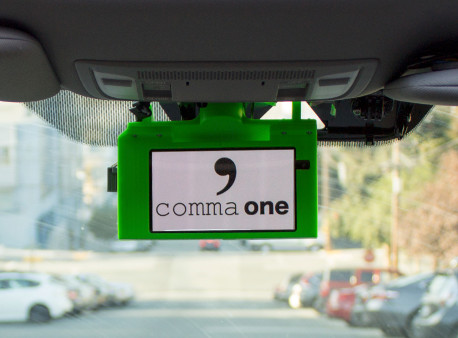 To be clear, comma is a tiny company taking a radical approach, so it is not a given that what NHTSA has applied to them would have been or will be unanswerable by the big guys. Because Tesla's autopilot is not a pure machine learning system, they can answer many of the questions in the NHTSA letter that comma can't. They can do much more extensive testing that a tiny startup can't. But even so a letter like this sends a huge chill through the industry.
 Recordings of mundane driving activity are less exciting and will be easier to gather. Real world incidents are rare and gold for testing. The sharing is not as golden, because each vehicle will have different sensors, located in different places, so it will not be easy to adapt logs from one vehicle directly to another. While a vehicle system can play its own raw logs back directly to see how it performs in the same situation, other vehicles won't readily do that.
 Make no mistake, the cost will be real. The cost of regulations is rarely known in advance but it is rarely small. Regulations slow all players down and make them more cautious -- indeed it is sometimes their goal to cause that caution. Regulations result in projects needing "compliance departments" and the establishment of procedures and legal teams to assure they are complied with. In almost all cases, regulations punish small companies and startups more than they punish big players. In some cases, big players even welcome regulation, both because it slows down competitors and innovators, and because they usually also have skilled governmental affairs teams and lobbying teams which are able to subtly bend the regulations to match their needs.
 Here are some basic models of cost. I compare a low-cost 1-2 person robotaxi, a higher-end 1-2 person robotaxi, a 4-person traditional sedan robotaxi and the costs of ownership for a private car, the Toyota Prius 2, as
  In other Uber news, Uber has announced it will sell randomly assigned Uber rides in their self-driving vehicles in Pittsburgh. If your ride request is picked at random (and because it's in the right place) Uber will send one of their own cars to drive you on your ride, and will make the ride free, to boot. Of course, there will be an Uber safety driver in the vehicle monitoring it and ready to take over in any problem or complex situation. So the rides are a gimmick to some extent, but if they were not free, it would be a sign of another way to get customers to pay for the cost of testing and verifying self-driving cars. The free rides, however, will probably actually cause more people to take Uber rides hoping they will win the lottery and get not simply the free ride but the self-driving ride.