


The NYT’s Seen A “Future Without Cars” But What About 21st Century Cars?
The New York Times released an interesting piece with lovely interactive graphics entitled, “I’ve Seen a Future Without Cars, and It’s Amazing.” It begins by reflecting what we’ve learned as Covid-19 has drained many of the cars out of our cities. We’ve definitely liked our less car-crowded and congested cities. Author Farhad Manjoo paints a picture of how to keep the cars out of the city and make it better. In particular, he hopes we can reclaim the large amount of land we’ve given over to cars and traffic, estimated to be as much as 60% in Houston, and still a lot of pedestrian heavy Manhattan. And we can reclaim a lot of that space, but not in ways people expect.
Manjoo relies on the work of Vishaan Chakrabarti, an architect and former NYC urban planner. He joins a number of urbanists who are in a panic over the decline in ridership of public transit, fearing that the ridership may take a long time to return, and before it does, a restored economy would generate an overwhelming volume of car traffic. If you’re afraid of the virus, you’re going to want solo transportation, be it a car, walking, cycling or scooter. In busy cities, there is not room for all those cars. Manjoo is a motorhead who’s been taken by the carless city vision. He’s skeptical of the ability of technology to deliver the 21st century promise in time.
I won’t actually dispute a lot of the vision. Cars definitely make the urban environment less pleasant when you’re not in one, and the cars of others slow down your travel when you are. 20th century cars suffer from a wide range of flaws, but wll 20th century cars do so? The answer is yes for some flaws, but no for many:
Let’s consider some of the issues and some of their answers
- Dangerous: Cars result in nasty accidents. This will continue to be true but will be vastly reduced. Not simply because of self-driving cars, but also because the research into those cars is producing, and making cheap, new safety technologies to stop even human mistakes behind the wheel.
- Inequitable: Cars are expensive. But I have forecast the robotaxi will eventually get down to costing about 30 cents/mile, unsubsidized. That’s cheaper than a highly subsidized bus ticket in a place like Manhattan. The New York MTA subway costs around $1/passenger-mile to run (unsubsidized) while private car ownership is about 50 cents/mile plus parking. Subsidies make transit much more affordable, but you can subsidize anything if it makes sense.
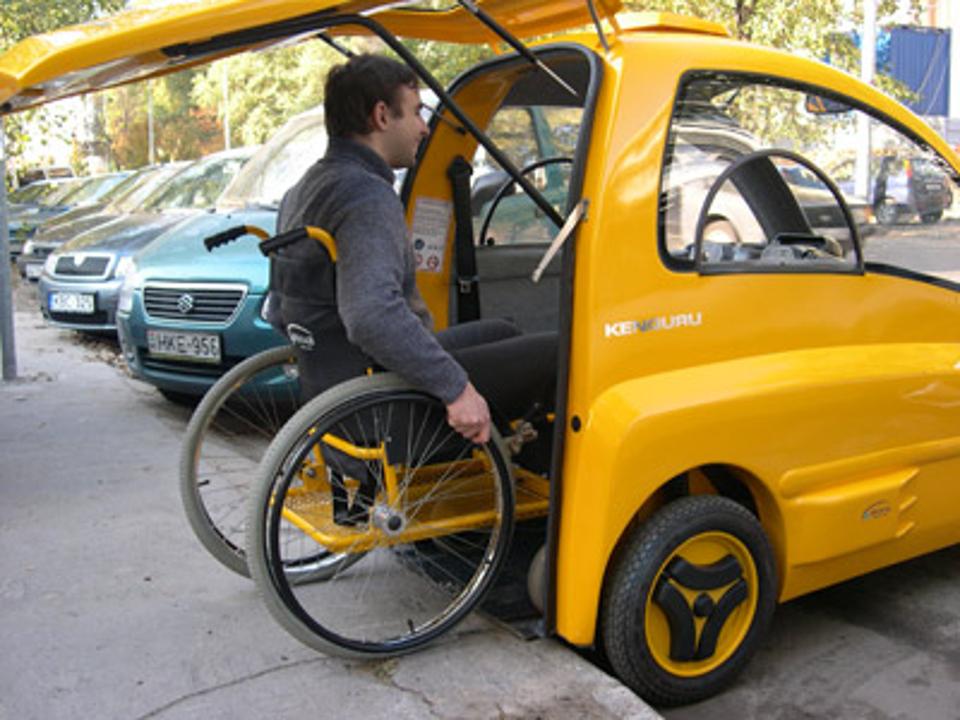
- Inaccessible: The vehicle-on-demand concept promises a wide variety of vehicles, including ones that, for example, can be quickly rolled into by a wheelchair user. Or others designed for other movement issues. Door to door travel in one of these beats any other kind of transport by a longshot if it’s too far to roll yourself.
- Inefficient: To the surprise of most, transit systems in the USA are all less efficient than most cars, and small electric cars beat everything, including the New York MTA Subway, when it comes to energy used to move a person a mile. That’s the full system efficiency as calculated by the U.S. Dept. of Energy. The vehicles are more efficient at rush hour, but have to run outside of rush hour, more than erasing that efficiency. Emissions are thus also lower.
- Polluting: Gasoline and diesel cars certainly are. Electric cars are much better and improving at an incredible pace. If this were your reason to ban cars from a city, you could just ban the fossil fuel ones.
- Parking hogs: We do devote a lot of land to parking cars. When the era of the robocar comes, this will stop — even before as self-parking is a much simpler problem than full driving. Taxis pick up other people rather than park. Non-taxis park wherever it’s cheapest, valet style, using as little as 1/5th the land that 20th century cars use to park. That’s because of another new potential — the rise of the minimobility vehicle.
- Stuck in traffic: Cars certainly lose out to vehicles like subways that get a private tunnel. But that’s a virtue of the tunnel, not the vehicle. Private right-of-way is great but hugely wasteful. Most tracks and lanes see a vehicle go by every 3-5 minutes at best, compared to the ever 2 seconds that road vehicles can do (and the 1 second that robThe rethought cityotic ones could.)
I made note of minimobility and I should mention its cousin micromobility. Minimobility means tiny cars, typically for 1-2 people on 3 wheels. 80% of trips in cities are solo, and so 80% of the cars should be these. This doesn’t happen because today people buy cars for every trip in their lives. When vehicles can be had on demand, it’s a different story, and the vehicle can match the trip since you only “buy” it for 20 minutes, not 5 years.
Minimobility vehicles take 1/3 to 1/2 the space of regular cars, and 1/5th the space in parking lots. Micromobility (scooters) take even less and are even more efficient. They are only good for short trips, and usually in good weather, but when that happens they are amazing and beat any car or transit out there by a massive margin.
Road Hogs
This takes us to the most important complaint, the one that remains true even with new technology. Solo voyagers take more space on the road than those who travel (efficiently) in groups (including transit) or use micromobility. How much more space is an interesting question. Manjoo presents a famous graphic which attempts to show the amount of space used to carry 50 people — showing one bus, 50 cars and 50 bicycles. While there is some truth in the message, what is presented in quite wrong. The average car has 1.5 people in it, the average city bus has 9. (The average bicycle still has 1.) Packed rush hour buses can hold 50 or more but are certainly uncomfortable and a virus risk when they do. Single buses are smaller than the equivalent number of other vehicles but they are much more of an impediment on the road than the same area of smaller vehicles.
Even though the graphics exaggerate the difference, the basic principle that a bus can move more people using less road capacity is true, and demands some people travel in groups when demand exceeds that capacity. If we want to reduce the capacity to make more space for pedestrians, it becomes even more true. And we should make more space for pedestrians and make our streets more pleasant to be on, live on and work on — even the car lovers have to credit that. When it is often said that “cities are for people, not cars” it is more subtle than that. The moving cars have people in them. The people in the cars would like a pleasant pedestrian street when they are out of their car — but the vast majority of those not in cars will be in a car later, and want to be able to get around quickly from door to door.
One thing new technology can bring us is better organization of people together on trips, particularly in taxi-vans, which are the most efficient form of transportation in the USA today. (They beat the larger buses because they are run full more of the time, while buses and trains run empty too much to beat the van at whole system efficiency.) They are also pretty space efficient on the roads. Not as much as a full bus, but better than the typical buses we have today.
The question is, how do you get people to ride together in these vans and carpools? There are two approaches which go together:
- You make the van and carpool service so good that people find it only a minor step down from personal car travel most of the time.
- You constrain the number of solo trips allowed, able to do that because you have pulled off #1 and people don’t resent being occasionally pushed from private cars into the vans.
The second method depends on 21st century tech. In the past, we’ve not been able to manage our roads. We have congestion on roads for a mind-numbingly simple reason. They only have a certain capacity in terms of vehicles per hour, and we let anybody who wants to try to drive them, including when that’s more vehicles than there is capacity for. If a road can handle 1,000 cars with free flow, and you never let more than 1,000 cars use it, you’re not going to get very much congestion. It’s a straightforward tragedy of the commons — we treat the road as a commons that anybody can make use of any time they want, even to the detriment of themselves and the others.
Transport planners have been dancing around this for decades, with systems like congestion charging, toll roads, carpool lanes, managed lanes and onramp metering. The latter two in particular are among the few success stories in improving traffic.
Allow no more cars on the road than it can handle
We’ve been afraid, and unable, to go all the way. To simply say, “If the road can only handle 1,000 cars over a given time, then we’re going to only let 1,000 cars use it.” Stop. End of story. We can do that by charging a fat toll that only 1,000 will pay, but that makes the roads end up being allocated mostly to the rich. But in a world where every driver has a smartphone and every car has a data-connected navigation system in the car or in that phone that the driver obeys like a robot. These tools offer a clue as to how we’ll wrangle our roads, by metering not just lanes and on-ramps and central congestion zones, but metering trips themselves. The last decade has seen a swing to planning every car or transit trip using a mobile app, and that bodes well for a world where whole trips can be managed, not just short segments or areas.
The various methods to limit road usage to not exceed road capacity are beyond the scope of this particular article. The hard part is getting the driving public to stop treating the roads like an open commons. Our “solution” today is to say, “If 2,000 drivers want to use a road that can handle 1,000, we just let them try, and it slows to a crawl and everybody loses.” The public needs to accept the idea that some days, ideally known and planned for well in advance, they are not going to drive solo that trip. It might be because they can’t afford it, or because they lost a lottery, or because they used up their rations or any other reason.
Once they know that a solo drive is not an option that day, they will work to find good alternatives they like. Those alternatives might be riding the train or other group transport. They might be carpooling. They might be driving a longer but less congested route. They might be commuting at different hours. They might be working from home that day. They will find them because they must. No subsidies will be needed for the alternate methods, at least not to the middle class. People will figure it out because they must — and be pleased on the days they do get to drive solo because they drive a smoothly flowing road with a predictable trip. (They will also like that the carpools, vans and buses they ride when not doing a single drive also get that fast and predictable trip.)
The bane of traffic planners is also largely eliminated, known as the problem of induced demand. For decades, planners have learned that adding more road capacity only temporarily resolves congestion problems. Over time, people adapt to use, and then over-use, the new capacity, and it clogs up again. If usage is capped to match supply, extra demand has to go somewhere else, into alternate methods.
In this world we can take the roads we have and design them as we like. The vast majority still prefer personal transportation — even in a city like Amsterdam, over 60% of trips by locals are in cars — so we won’t turn every road into a park, but we can respond to the desires and needs of the people. As more people want to travel a route, it just means more sharing of rides, not more vehicles, all the way until you have nothing left but full group vehicles (which is one way to describe a subway tunnel if the subways were always full.) Free markets can come up with creative solutions to give riders comfort, speed, convenience, predictability, safety, low prices and all the other things they want while also reaching the public goals of low road use, throughput, low emissions, access, equality and more.
The rethought city
Every revolution in transporation recreates the city. The tram did it in the 19th century. The car did it in the 20th century. The new offerings of the 21st (which have barely begun) will do it again. If we do it right, we get the pleasant urban environment people want at the same time as the personal private mobility people also want. We can lay out the streets and environments we like but still move people through them as they (not city planners) think they should move.
The “every driver has a smartphone world” is essentially here. The self-driving world arrives this decade. Two other technologies show promise but are yet to be proven — low-cost electric vertical takeoff vehicles, which offer the unlimited capacity of the sky, and vastly cheaper tunneling, offering the capacity of many levels below the ground at an affordable price. We don’t know when (and in the case of the tunneling if) these will arrive, but almost all city and transportation planning is still done without considering these concepts, with 20th century thinking. While nobody can tell you the precise mix of technologies that will be available in any given decade, one can be highly confident in the prediction that planning based on 20th century rules is wrong. The new would will also face its own bevy of unanticipated problems, but at least for now, it looks a lot brighter than today.
Originally published at Forbes.com in The NYT’s Seen A ‘Future Without Cars’ But What About 21st Century Cars?. Copyright © 2020 by Brad Templeton.


Comments
Lou Katz
Mon, 2020-07-13 15:36
Permalink
Future without cars
'unlimited capacity of the sky'. Not so fast, Brad! I thought you were a pilot. Various features really do limit the capacity, and it needs a whole control infrastructure.
brad
Tue, 2020-07-14 18:23
Permalink
Control infrastructure
And lots of companies, and NASA and the FAA are working on that control infrastructure.
However, I actually don't favour "infrastructure." I prefer vehicles with natural ability to fly in lanes and avoid other aircraft at close distances (compared to flying today.) These are vehicles that can stop and make sharp right turns if you want them to (it's not very efficient but you can do it.)
My approach would be that you would ask for a flight plan, and you would be handed one that intersects nobody else's plan. You would fly that. If you had to divert, there would be emergency escape plans for every point along the plan. Minimal communications would be used after, but you would of course still observe and avoid other vehicles near you.
FKA
Mon, 2020-07-13 18:08
Permalink
Road capacity
Is the problem really road capacity? More often it seems the bottleneck is intersections. Even on the interstate, unless it's caused by a crash, the root problem usually comes down to an intersection somewhere.
brad
Tue, 2020-07-14 18:21
Permalink
Capacity is network capacity
The capacity is not just of the road but the road network (including intersections) to move the people who need to move into, out of, or through that network.
There's a lot of work in traffic signal control to improve the throughput of intersections, but of course that slows the cross direction so it's not trivial.
However, whatever the capacity is, that's how many cars you let go through that section.
FKA
Fri, 2020-07-17 13:23
Permalink
you who?
The laws of physics limit the number of cars going through a section to the capacity of that section.
Inefficient use of that capacity is caused by human drivers (and the inefficient traffic control devices, like traffic signals, they require).
brad
Fri, 2020-07-17 19:21
Permalink
A bit of physics
Typical capacities are measured in vehicles per hour, and are roughly 1 ever 2 seconds on a highway lane. Physics would allow more if everybody had radio synchronization. So the reality is the capacity is more about human capability (and error.)
FKA
Sat, 2020-07-18 12:43
Permalink
Today
Capacity is more about human capability today.
In a 100% autonomous vehicle future, it won't be.
brad
Sat, 2020-07-18 19:34
Permalink
Maybe
But 100% autonomous is very far away and we want solutions decades before that.
FKA
Sun, 2020-07-19 04:40
Permalink
Decades?
It's not going to take decades before we could have sections of our road network dedicated to autonomous vehicles.
It'll happen much sooner than every car will be equipped with centrally planned navigation instructions that every driver follows like a robot (which hopefully will happen never).
Collectivism is the cause of the traffic jams, not the solution to them.
brad
Sun, 2020-07-19 11:49
Permalink
Follow like a robot
Well, having every driver follow navigation instructions like a robot is already well on its way. OK, not like a robot, as we make variations, but largely we drive as our nav tells us these days, only making exceptions rarely.
I have no problem with collectivism here. I don't think the roads make sense as a commons. I think they should be a product (publicly or privately owned) and we should be customers, with the rights of customers. Which is to say we go on them only if we've paid, or are otherwise allocated a slot on them. There are only so many slots on an efficiently flowing road. Handing out more slots (or just giving them to anybody who enters) is silly.
FKA
Mon, 2020-07-20 05:55
Permalink
Maybe you
I suppose some people follow their nav fairly closely. I doubt it's most. And our nav is generally giving us directions that are in our best interest, not asking us to do things for the sake of the collective according to some central planner. (Personally I rarely use navigation, and when I do use it I often rely on the ability to override its suggestions and let it recalculate my route accordingly. But I'm sure many others, though maybe not most, use it nearly all the time.)
As for your second paragraph, I'm not sure if you made a typo somewhere or I just don't understand it. Public ownership of roads is silly. Most roads should be privately owned just like the Internet is mostly privately owned. Whether or not it should be pay-per-use, or more of a peering arrangement between owners, I think depends on the road, but I think private competition will cause the best allocation.
Lack of good peering is one of the biggest problems. You can build a 10 lane superhighway that handles all the traffic you can imagine, but if your offramps lead to congested local roadways, it isn't going to solve the problem. So I think pay-per-use has some severe limitations.
A business-owner would never put up with such lack of efficiency. They'd force the local roadway owners causing the traffic jams to clean up their act or they'd stop peering with them altogether (unless government forced them to be inefficient with some "network neutrality" rules or something).
Keep in mind that there's no "the government" that owns the roads. Just in the USA there are many state governments, numerous local governments, many private entities, and the federal government, all owning different roads that interconnect and depend on each other. Any collectivist solution would have to take in the competing and contradicting goals of all of them.
brad
Wed, 2020-07-22 14:00
Permalink
In your best interest
The nav will still be acting in your interest, in that if you don't have the right to drive a segment of road, and would get a ticket if did so, your nav wil not steer you there. Indeed it will warn you if you try to drive there. Within the roads you have bought/received accessed to, it will find the best route for you.
For better or worse, roads are publicly owned. That does not mean the government should not run them rationally like a private road. The one advantage of the government ownership is that it can try to fix the peering problem you list. It works best if you can optimize the entire network, but it is possible as you say to optimize networks that consist of cooperating private spaces. Even with government roads, the roads of one city will join with those of another city, or the national or state or county owned roads.
FKA
Thu, 2020-07-23 05:17
Permalink
Doubt it
That’s not going to happen. Fortunately.
Which was my original comment. Then you tried to suggest that it was “already well on its way.“
Maybe these kinds of ideas would work some places. Not in the USA. We value our freedom far too much to go for that kind of stuff.
--
By the way, most roads are not owned by governments in the traditional sense. A right of way is essentially owned by no one, at least so long as it remains a right of way. When a subdivision is platted, the owner dedicates certain areas as rights of way, for the benefit of the homeowners (and because by law any parcel of land must have access to a right of way). No government ever paid for the land under most roads. Charging tolls (or requiring limited reservations) for using those roads without compensating the residents and businesses of that subdivision would likely constitute an unconstitutional taking. And exempting residents/business-owners wouldn't be enough. You'd have to also exempt any guests/customers/employees/vendors/etc. Maybe if you just wanted to restrict/charge through-traffic, you could get away with it. And actually, the residents and businesses living there would love that. But it'd be very difficult to enforce. And any proceeds should go to the people who live there, in which case it's basically private ownership.
Limited access roads, such as interstates, are the biggest exception. They are bought by governments, usually through eminent domain. Governments generally pay the owners for the land they confiscate to build interstates. I would venture a guess that the land under all toll roads was paid for, unlike the land under most roads in general, which wasn't.
brad
Thu, 2020-07-23 12:40
Permalink
Right of way
Well, whether roads are rights of way or not, the governments claim and get the power to control how people use them. And yes, this would largely relate to through traffic.
So you feel that if you have a road that can handle 2,000 cars per hour before failing into congestion collapse and ruining everybody's utility in it, the right solution to that problem is to just let all 3,000 cars try to use it? Who wins from that? I think the real question is how to decide which 2,000 cars can use it.
FKA
Fri, 2020-07-24 06:12
Permalink
wrong of way
Governments claim and get the power to control how people use everything, so long as those claims and controls are constitutional.
Restricting roads to require limited reservations, without compensating the owners of the land under those roads for that regulatory taking, would likely be unconstitutional. So if governments wanted to go with that plan, they'd be well advised to do it through eminent domain, just like how toll roads are currently built.
Fortunately, there's about zero chance of this happening in the USA, outside of the sorts of limited-access roadways that already exist. (Unless we figure out how to tunnel much more cheaply, but in that case private ownership would be the obvious way to go.)
Regarding your second paragraph, I don't think you're capturing the intricacies of what causes traffic jams.
When you say "congestion collapse," do you mean that literally? I haven't ever heard that term being used for road networks, and I don't think it applies. There's no risk of dropping packets, so it's not really a good analogy, if it was meant to be an analogy.
When you say a road "can handle 2,000 cars per hour before failing into congestion collapse," are you thinking of an interstate that can handle that amount of traffic if all traffic is following the speed limit? Metering is a simple solution to that problem, and even that isn't necessary once you have autonomous vehicles that can self-meter and coordinate a perfect zipper merge at high speed (and autonomous vehicles will be able to go higher speeds, thereby increasing the throughput of the same roads in terms of cars per hour). Of course, with metering you get backups in the places before the meter, but as long as you have a big enough waiting area so that the waiting traffic isn't blocking intersections, the problem fixes itself.
For sure there is a use for my navigation system to recognize that there are 1,000 cars in the waiting area to get onto I-95, and give me a different route or if that's not possible tell me of the increased delays so I can choose whether or not to just stay home. Even without a navigation system, it will become clear that certain areas have long queues at certain times of the day, and people will adjust accordingly. Waiting sucks, but it's the price of socialized road networks.
For interstates, rather than some complicated and collectivist system where everyone tells their driving plans to Big Brother and Big Brother decides who gets delayed and who gets places on time, I think it's enough to combine metering with much much much more capacity for on-ramp and off-ramp queueing. Especially off-ramp queueing. The on-ramp queueing can be fixed over time by adding more lanes. Fixing the off-ramp queueing requires coordination with local governments, who may be unwilling to help with something that's "not their problem." Maybe leverage can be used, though ("if you don't fix your local traffic problems, we're going to remove your off-ramp"). Also, some local traffic problems are caused by events. In that case it makes sense to get the entity hosting the event to pay to fix the traffic problems. Again, threatening to close the exit ramp if they're unwilling to help could be used.
You're right that you can't send 3,000 cars per hour on a road that can only handle 2,000 cars per hour. But the problem is when there are only 200 cars per hour using that road, due to merging delays (fixed by metering) or exit ramp delays (fixed by having adequate queueing space).
For local roads, I prefer a free market approach, but absent that this is largely an issue for local zoning boards. Some are good at making sure that the owner of land that is rezoned from farmland to support a 100,000 employee office complex pays for the infrastructure improvements necessary to support that. Others don't.
I don't think there's any need for a Big Brother approach to any of this.
My preferred answer to that question would be to let the free market decide that.
And by that I most certainly do not mean that the government should simulate some half-assed plan that vaguely resembles the free market.
But mostly, I think the question is flawed.
brad
Fri, 2020-07-24 11:52
Permalink
Metering
I am talking about metering, but of road networks, not just on-ramps. How are cities like New York able to implement congestion charges if they don't own the roads? Of traffic lights for that matter?
Tolls and a market would be a good answer but politically they don't fly in many places, even the USA. Even congestion charging has been resisted in the USA until very recently.
By congestion collapse I refer to the famous backwards-C speed-flow curve. As you try to push flow too high, you get the collapse of a traffic jam. There isn't one magic speed, but the more cars try to use the road, the more likely the jam is. And that is indeed what metering lights are for.
But if you can put a charge on entering a road network, I don't see why it would become a takings if you meter it in some other way. One approach used in several countries is to allow even licence plate cars on even days and odd plates on odd days. That hasn't been done in the USA, but woould it be a takings. While that system is easily gotten around by the rich (get 2 cars for commuting) its core idea is valuable.
You're calling it big brother, but are they big brother when they set traffic rules? When they make carpool rules? When they set streets one way are they controlling your life by refusing to let you go the other way?
It's in everybody's interests that you don't put so many cars down a road that it collapses into a traffic jam. If one operates a private road, you are going to want to prevent those jams and your customers are going to want it too.
FKA
Fri, 2020-07-24 19:54
Permalink
metering
How is government allowed to require people to wear masks in stores if they don't own the stores? The government's power to make laws in order to keep people safe is not limited to land that they own.
I can see how that applies to limited access roads, where metering works well to prevent it. But how does that apply to local roads, where the bottlenecks are at the intersections?
Do you have any success stories you can point to? I'm open to the idea of whole road network metering, if it can be implemented in a non-draconian and non-Big-Brotherish way. But I'm not sure how you'd do that without privatizing roads.
Metering is not a charge. It's basically just a traffic light. In fact, it often is literally a traffic light.
Furthermore, as I believe I said above, governments generally do own the land under the interstates and other limited access roads. I say generally, but I'm not aware of a counterexample.
The NYC congestion surcharge is just a tax on certain businesses. It's little different from the taxes on taxicabs that have existed for decades. As far as I can tell, it only applies to taxicabs, limousine services, and similar businesses (including Uber et. al.).
No. Not normal, sane traffic rules, anyway.
A device that I need to carry with me whenever I travel, that sends my intended travel plan to the government, and tells me whether or not I'm allowed to travel, and when, and what route to take. That's Big Brother.
I dunno. That's an interesting question. I'm not sure how it's relevant, though.
I don't know about everyone, but I don't have a problem with preventing so many cars from going down a road that it collapses into a traffic jam.
What you were suggesting was way way more than that.
brad
Fri, 2020-07-24 22:52
Permalink
More than that?
What I was suggesting is exactly that. That to stop more cars going into a road than it has capacity to handle, you hand out slots to be one of those cars. You might sell them, you might allocate them by lottery, you might ration them. That's a traffic light -- you have a slot, you can go. You don't have a slot, find another way.
Why you would follow your navigation system like a robot? Because it is almost surely the tool by which you would arrange to get slots to drive the routes you want to drive, and which know what slots you had, and direct you on the best way to use them. If you don't, you might cross somewhere you haven't got a reservation for, and pay the fee to do that, which might be quite high.
FKA
Sat, 2020-07-25 07:03
Permalink
not exactly
"Exactly that" may be your goal. I don't think your proposed means of achieving that goal are acceptable.
Traffic lights aren't great. I'd like to see many if not most of them replaced with roundabouts or some other less dictatorial traffic control device. But traffic lights are not nearly as draconian, dictatorial, and Big-Brotherish as what you're proposing, which seems to be the equivalent of requiring drivers to file an IFR flight plan in order to drive to work.
I can respect your opinion that you'd like more governmental control over people's everyday vehicular travel, but it's hard for me to respect your denial that your proposal involves substantially increased government surveillance and control. And I can't help but noticing how this increased government surveillance and control would facilitate achieving your desire to shut down normal daily activities (which has caused unprecedented unemployment levels). You want to drive to work today? Sorry, request denied. Your livelihood has been deemed by the Ministry of Calm to be non-essential.
Add new comment