


Analysis of MobilEye strategy in robocars and video interview with CEO Amnon Shashua
MobilEye, an Intel company, announced at CES the newest generation of their custom chip for automotive driving, known as the EyeQ Ultra, a 176 TOPS processor with various specialized components they claim will be all you need for self-driving and a Robotaxi. Indeed, they plan to operate their own robotaxi services as well as partner with many other players wishing to enter that space. I sat down with Amnon Shashua, CEO and founder of MobilEye, to discuss their strategy. After reading this article, you can watch my interview to hear Shashua in his own words:
MobilEye’s efforts are serious, based on their long history in ADAS (their chips power the advanced driver assist and “pilot” systems in the majority of OEMs, with over 100 million chips shipped) and the ability to use that fleet of cars to gather data for training and mapping. As part of Intel, they have top-tier ability to produce custom processors. They are also using Intel’s silicon photonics and other resources to generate a new high performance LIDAR and imaging radar. They combine this with several unusual approaches and a system of safety constraints on their motion planner in hope of leading the field.
MobilEye’s efforts sit in constrast with Tesla, which certainly gets the most attention among car OEMs for their efforts, and Waymo, which is the overall robotaxi leader, though it has many competitors.
Shashua goes into a lot of depth on the strategy in this recent video. As it’s an hour long it’s more than most casual readers will watch, but the seriously curious should consider investing the time. There is also an edited 9 minute version, which you should view if you don’t have time for the full hour. I will summarize key points below.
Here are the prongs of MobilEye’s strategy and key advantages:
- Their long experience in providing camera-based ADAS to a wide variety of vehicles for over 10 years, with a belief that self-driving is essentially ADAS with a much better MTBF (mean time between failures.)
- Their huge collection of cars already on the road — over 188 vehicle models, with 41 new vehicles this year, and 50 million new cars in the near future. This has created a very large network of potential partners in self-driving deployment.
- Their new EyeQ Ultra chip with 170 TOPS including 12 risc cores, 256 gigaflops, many GPU and accelerator cores and more, at less than 100 watts — 10x the performance of the previous EyeQ5 generation which is already powering prototype robotaxis.
- A new FMCW LIDAR being made-in house, to begin shipping in 2024
- An imaging radar, now sampled and shipping in 2025 with high resolution and performance
- Their “true redundancy” approach to perception where they are building two completely independent perception stacks, one based on cameras/vision, and the other based on the LIDAR and radar. If either one identifies an obstacle, it is detected. Either can fail and the car drives (though not nearly as well.)
- In connection with the above, a “Camera first, but also LIDAR/radar” approach in contrast with the “LIDAR first, but also camera/radar” of many other teams or the “Camera only” strategy of Tesla.
- Their “REM” mapping system, where millions of cars equipped with their chips are constantly reporting mapping details on the roads and uploading changes, to generate fresh maps which also contain learnings from watching how humans drive the roads.
- 238 petabytes stored, and growing, of data for building maps and training neural networks and testing software. They are now processing 100 petabytes/month from 500K hours of driving.
- Their “RSS” planning methodology, which constrains vehicles to basic principles of the law and safety, but allows them to be aggressive (like humans) within those constraints to handle chaotic roads like those of Israel where MobilEye is based.
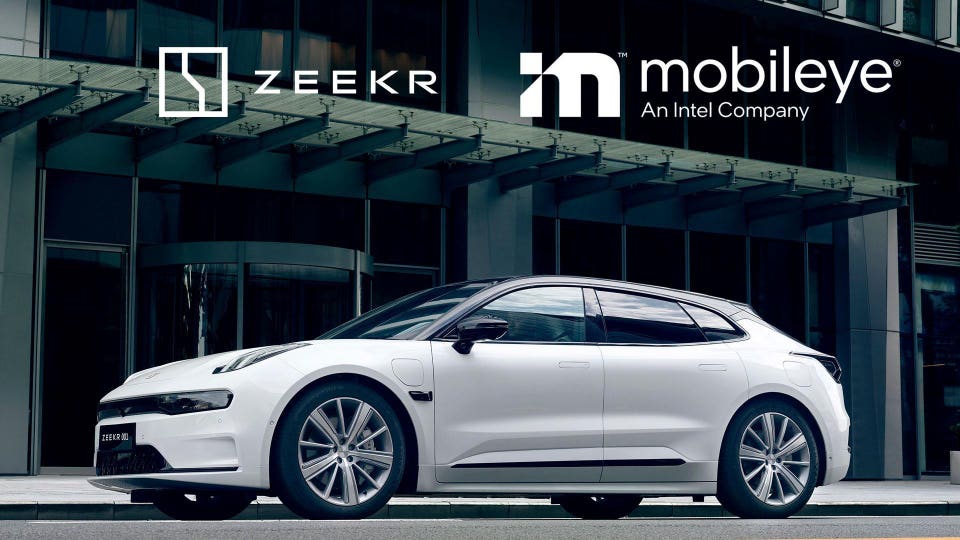
- Their experience building self-driving prototypes being developed in Israel, Munich, Paris, Tokyo and soon, New York, plus a new robotaxi project with Geely Zeekr based on 6 to 8 EQ5 chips and many sensors.
This is a very impressive list, and I wrote about many elements of it a year ago. MobilEye continues to be one of the few companies in the space to do something surprising. In particular, that they have gotten places with the strategy of “ADAS with a better MTBF” is at odds with the philosophy of almost all self-driving teams except Tesla.
MobilEye vs. Tesla
It is interesting to contrast them with Tesla. Tesla is the maverick of car OEMs, capable of and willing to try things no established OEM will do. MobilEye used to be the company that provided the technology for Tesla’s early Autopilot, but they pulled out when an Autopilot accident killed the driver, and because they knew Tesla wanted to build their own system. Both Tesla and MobilEye have tried the approach of building up and evolving ADAS, while most other teams feel that self-driving is so different as to require a dedicated effort. Former Tesla Autopilot leader Sterling Anderson, who co-founded Aurora, called it “trying to build a ladder to the moon.”
MobilEye is famous for having built ADAS with a camera (and optional radar) where previously it was an expensive radar. They are camera-centric, but believe LIDAR and radar provide important, though secondary functions. More than that, MobilEye is actually building its own custom high performance LIDAR and radar. Tesla calls LIDAR a “crutch” that distracts you from the real goal of an all computer-vision system. It has recently been almost as mean to radar, and removed radar from future vehicles, though probably mostly because of the chip shortage.
One of Tesla’s biggest assets is their fleet, which gathers data to help them train their machine learning. There are well over a million Teslas out there, which take regular software updates and help in the quest. They also have a vast number of users for Autopilot who return data all the time, and a growing number of testers of the ill-named “full self driving” prototype they are building. MobilEye has a larger fleet, with 100 million chips sold, and they just did deals with more car OEMs which will result in 50 million more cars using their latest chips. Unlike Tesla, they can’t constantly update the software in the cars, nor get them to report the volumes of data Tesla can ask because the carmaker customers pay for the mobile data. But for both, this fleet is a big asset.
MobilEye goes further than Tesla and exploits the fleet for mapping, while Tesla disdains the use of mapping beyond the navigation level. MobilEye’s REM project creates fairly sparse maps, but includes more than just lane geometry. In particular REM watches cars as they pause at intersections, creep forward and make turns to know where the sightlines are, and just where the drivers actually drive — not just where the lines on the road are.
Both companies design their own custom chips to provide the processing power, since neural networks and computer vision are hungry for that. As part of Intel, MobilEye has a strong advantage here — it’s arguably the top processor company in the world. Tesla uses external chip IP and contracts with external fabs to make their chips, though they do a good job for a non-chip company.
There is also a difference in management style. Elon Musk is perhaps the greatest entrepreneur in history, but his style is brash, with no fear of hype or outrageous efforts and statements. Amnon Shashua makes bold claims, but doesn’t go nearly as over the top as Musk.
MobilEye “True redundancy”
MobilEye wants to claim a trademark on this, but it’s perhaps the most questionable element of their strategy. They are building two completely different perception stacks, one vision only, and the other using the LIDAR and radar. While in earlier statements they indicated both could drive the car, there is only one planner.
The basic philosophy that different systems will make different mistakes is a strong one, but only to a point. The errors the two systems will make are not entirely indpendent. If your vision system fails once in 10,000 miles and and your LIDAR/RADAR fails at the same rate, you definitely not going to get a system that fails every 100 million miles — not even close. The MobilEye approach was described by Shashua as “an OR gate” meaning that if either system detects an obstacle, then one is viewed as present. This reduces your false negatives (blindness that can make you hit things) which is good, but also increases your false positives (ghosts you brake for.) Generally false positives and negatives are a trade-off. You can’t have blindness, but if your vehicle constantly reacts to ghosts it’s not a usable system.
Shashua realizes you don’t get to multiply the MTBFs but feels he will still get something “much, much better.” Most other teams try something more complex in their sensor fusion, rather than an “OR.” They try to fuse returns at different levels, starting at basic sensing, but sometimes going all the way to after classification. It’s not clear why the MobilEye approach is superior, except from a software engineering standpoint, as you can just put two different teams on the problems and not worry too much about integrating their work. He asks how the system will perform if you “shut down all the cameras” or the LIDARs. He states that you can look at his systems being tested in many cities and they are performing at a much higher level than purely camera based systems. For camera based system he asks, “If they shut down a subset of their sensors could they continue? ... I think not.”
MobilEye is also creating a “VIDAR” — a virtual LIDAR that attempts to make LIDAR like point clouds from 2D camera images using machine learning. Many, including Tesla are working on this, and it shows promising results but is not yet at “bet your life” reliability. That’s one reason they also have the LIDAR.
Indeed, the new imaging radar and LIDAR look impressive, though only modest details are revealed. They even have an experiment to see what it looks like if they take the imaging radar and try to turn it into an image video using deep learning — a challenge when you consider how little resolution is in even the best radar. Radar’s ability to see through most weather is a big plus in places where that’s crucial. Radar’s other big edge — knowing the speed of all returns thanks to Doppler — is also found in FMCW LIDAR. Indeed, if you have FMCW LIDAR, the virtues of radar are fewer. In addition to the weather penetration, it is cheaper (MobilEye plans only one forward facing LIDAR) and it also can see “invisible” objects because radar waves can bounce under cars to detect a vehicle 2 ahead of you that’s hidden by a big truck, at least if it’s moving.
Shashua is optimistic about his imaging radar. It can “with the right development become a standalone sensor. Today radar is not a standalone sensor.” In the future “It can compete with a LIDAR and then instead of having 360 degree LIDAR, you have only a front facing LIDAR and you can bring the cost down considerably.”
MobilEye REM maps
In keeping with MobilEye’s quest for what might be described as the “Goldilocks” point, their mapping system does not have the high detail of those from Waymo and other companies, but it has much more information than a “no HD maps” player like Tesla. REM maps, MobilEye states, take only about 10 kilobytes per mile, a cost which fits in the budget of the mobile data plans in the cars of their customers.
In the REM system, cars with the chips are using them to locate important road elements, including objects in 3-space, signs, lane boundaries, traffic signals and more. They are compressed down and uploaded if changed. In addition, the cars report their driving tracks (which can be accurately placed on the map.) These tracks reveal not just what is painted on the road, but what large numbers of cars have actually driven. Natural human driving often involves not being centered in the lane or taking an exit as drawn. MobilEye has noticed the common problem of unprotected turns, where cars must creep forward until the driver (or cameras) can see what they need to turn. Using the REM data, cars can know just where they need to get in order to see what they need to see, resulting in a more human-like driving pattern with less uncertainty. This also collects what might be called the unwritten rules of the road, the rules that human intelligence figures out, and makes them part of the map.
With the largest fleet, MobilEye equipped cars are likely to encounter any changes to the road quickly. This is not just the robotic fleet, but all the human driven cars able to handle construction zones and other changes, and even teach how to drive in them. The risk of coming upon areas where the world has changed from the map is overstated — all cars must be able to handle a wrong map gracefully, and for each construction zone or other change there is only one car that is the first to encounter it. MobilEye has the advantage that this is often a human driven car, making it unlikely any early robotaxi will be the very first, forcing it to exercise its “drive with a wrong map” skills. That’s in contrast with Tesla where the car has to use its “drive with no map” skills all the time.
RSS planning system
Driving safely is one (though far from the only) important factor in making a working self-driving car. The challenge is to be safe while also being a good “road citizen” which includes some aggressive behavior in order to make traffic flow in a large number of cities, especially MobilEye’s home territory of Israel. Chaotic driving there has led them to develop a set of rules for planning the car’s path that they call RSS (Responsibility sensitive safety) which constrain and enable paths for the car, keeping it’s actions legal and reasonably safe. Though it could be argued the approach guarantees the vehicle won’t violate the vehicle code, though that might involve it in unsafe situations because other vehicles ignore the code. Regular driving involves such situations regularly, and MobilEye is one of the few to talk about solving them.
That said, access to data about MobilEye’s real world performance is currently modest compared to what we know about some other companies. They are pushing for RSS to become an international standard, to get regulators to demand that RSS be implemented to get certified. I suspect more real world testing (or at least reporting) is called for before this is done.
Robotaxi plans
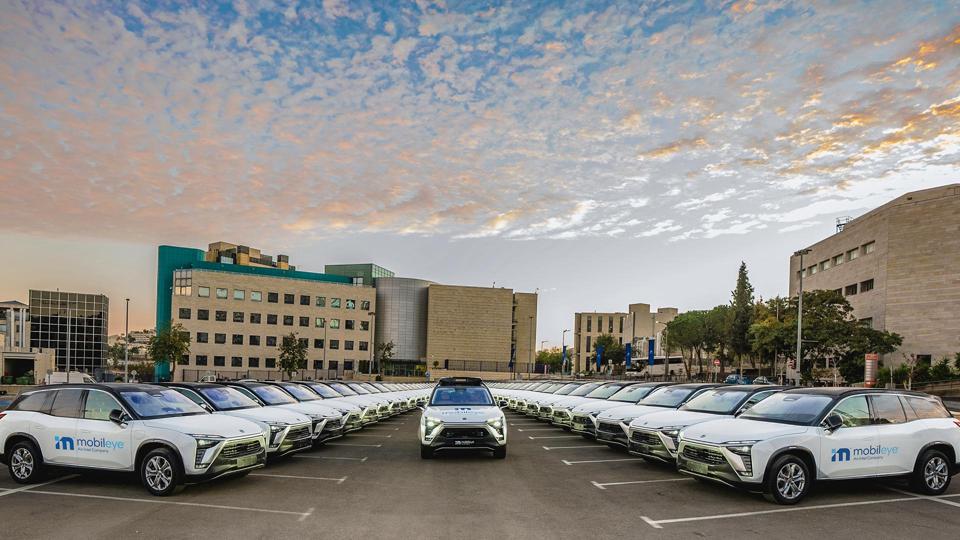
MobilEye is planning both to sell hardware and systems to carmakers, and also to build and deploy its own Robotaxis. MobilEye purchased MoovIt, a multimodal trip planning app, and is using it to allow users to book trips in its robotaxi pilots. It has stated it will begin robotaxi pilots in several cities this year and in the coming years. At the same time, it is helping Geely’s Zeekr produce its own Robotaxi with multiple EyeQ5 chips, and supplying delivery robot company Udelv with systems to drive their unmanned vehicles, with deployment not yet announced.
Shashua expects a world of “co-opetition” where suppliers are competing with their own partners. Certainly many of MobilEye’s customers plan their own robotaxi operations, either with MobilEye chips, or in cases like Ford, through the different system made by Argo.AI. This willingness to both supply car OEMs and startups and also operate its own service seems brash, but it positions the company as one of the few companies with efforts in both consumer cars and robotaxis, not worrying too much about which will win. (Or, in fact benefiting from the reality, which is that neither will overwhelmingly win for a long time.) Tesla plans to play in both areas in a clever way, but unfortunately with inferior hardware that relies on a longshot approach.
One thing still missing from the MobilEye story is real data about its robotaxi efforts. There are scores of teams developing robotaxis, all making big claims. Only a few, though, are backing up their claims by letting the public see an unvarnished picture of their performance, with real statistics, and allowing unvetted and unscheduled rides by members of the public who can publish videos. MobilEye has released nice videos of their vehicles driving various routes, as have many firms. These videos show sufficient capabilities to demonstrate that MobilEye is a player, but it’s a very, very, very, very long journey from that to having a working service.
Many of the signs from MobilEye are good, and the collection of strategic moves is superb. The proof, though, is in the quality of their system in a real robotaxi environment which we must wait to see. In the 2010s it was sufficient to show plans and research. Today actual operations and commitments are what matters, as outlined in the milestones of a robotaxi service. When a company actually does things, like deploy unmanned vehicles, it proves to us that their board of directors signed off on taking that big risk, which in turn means that their internal research said they were ready to make a “bet the company” move. For now, we only have MobilEye’s declarations that their “evolved ADAS” approach has surprised us and done the jobs, and we need to see those declarations made real. They probably won’t hit their target of “early in 2022” but promise that thanks to REM and other tools, they can deploy quickly in new cities with minimal effort.
At present, people have not been paying as much attention to MobilEye’s efforts nor valuing them the way that some companies have with dekaunicorn status. MobilEye used to be a public company until it was bought by Intel. Inside Intel, its efforts have not been able to move the needle of the chip giant’s valuation. This may be why Intel plans to spin-off MobilEye in a new IPO shortly, which Shashua could not comment on. It will be an interesting stock to watch.
Are we done yet?
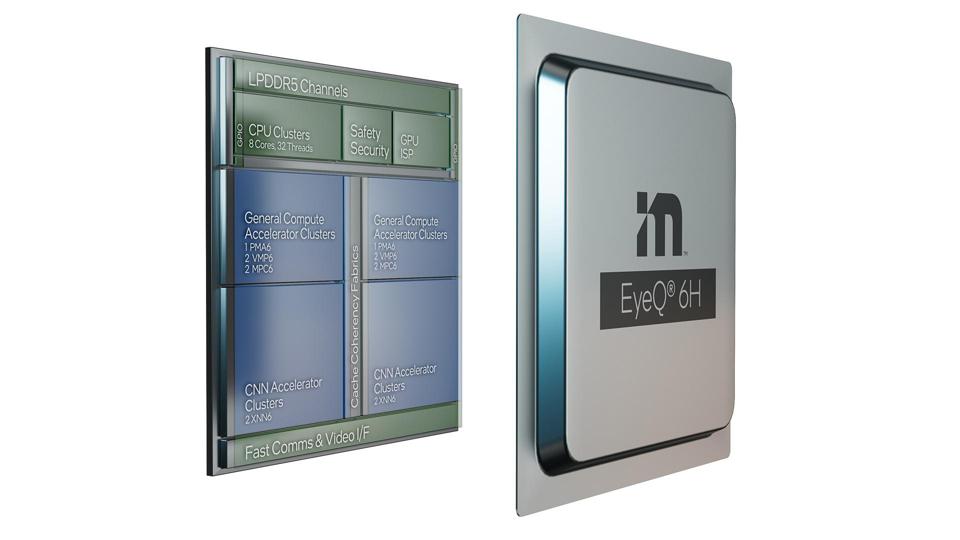
Shashua believes that the robotaxi problem is close to solved. So close, in fact that he doesn’t think we’ll need more algorithmic breakthroughs, and as such we can say today what hardware is enough to do the job — and that’s the hardware he has put in the EyeQ Ultra chip. Indeed, they feel that 6 to 8 of the EyeQ 5 chips they offer today can do the job, which is what gives him the confidence that the EQU is enough.
That’s a fairly bold claim, because the history of the research teams that are the industry has been one of finding new techniques, and that has informed what hardware we actually want. But if you are a chipmaker, you have to decide what goes in your chip so you can tape it out and get it into production 3 years from now, so you need to choose well. MobilEye got lucky early on. They designed their earliest chips before neural networks exploded on the scene, but those chips had GPU-like elements for massive parallel processing that were able to run earlier, smaller neural networks. Now it’s not luck (and they might not call it that, but frankly very few could have predicted the big deep learning explosion of the early 2010s) and they have made their plan.
Cost
Most robotaxi developers aren’t strongly focused on cost. Almost all started using very expensive LIDARs that clearly cost too much for a production vehicle. They made the correct bet that the cost of the extra gear would drop greatly by the time things were ready to deploy. When your only goal is to get to market first by being safe first, cost is not that much of an issue.
MobilEye came to this by a different path. They began by making a camera based ADAS tool that could do things like adaptive cruise control for less than the automotive radars of the day. In addition, they could do it better, like handling stopped vehicles. They did very well with this. As they have tackled self-driving, cost has remained an issue for them.
The Ultra is planned to cost less than $1,000 in volume by 2025. The LIDAR will have an MSRP of about $1,000. While other vendors promise $250 LIDARs and Shashua says they could also produce on at that price, theirs will be higher performance and worth that cost. The full package of chip and sensors will come in “way below $5,000.” That cost of parts typically adds $10K to $15K to the cost of a consumer vehicle, but is a pretty reasonable cost addition to the cost of a robotaxi. Indeed, Larry Burns, a former VP of GM who consults in the industry, estimates that all the things you remove from a robotaxi — wheels, pedals, most of the dashboard, adjustable seats, mirrors and more — can easily cost more than the cost of the new additional sensors, making the robotaxi cheaper than a similar sized car.
Conclusion
MobilEye is one of the few companies to have it all: Experience, a huge fleet to draw mapping and training data from, extensive mapping efforts at very low cost, an FMCW LIDAR in the works, imaging radar, advanced computer vision, a trip-planning app, the ability to make its own silicon, low cost, robtaxis driving in complex cities and the most relationships of automakers of anybody in the game. While some players have better in some of these individual area, nobody has as good a combination. The key that remains to be seen is just how good their software is. Shashua said they are still working at getting their system to 1,000 hours between accidents but they are confident they will get there soon. That’s not there yet, as humans go 3,500 hours between minor dings and about 12,000 hours between police reported accidents. We’ll be watching to see how they do.
Originally published at Forbes.com in Intel’s MobilEye Levels Up To Take On Tesla And Others In Self-Driving. Copyright © 2022 by Brad Templeton.


Comments
Anonymous
Tue, 2022-01-25 18:24
Permalink
Bosch and VW/Cariad today
The Bosch and VW/Cariad partnership for ADAS and AV announced today fails to mention Mobileye. Does Volkswagen commit to Mobileye to gather REM Roadbook data towards the end of this decade?
One would think the Mobileye REM Roadbook contract is not year to year but rather a 3 or 5 year agreement.
The new BMW partnership with Qualcomm/Arriver and the new Volkswagen partnership with Bosch could limit resources to any current or renewable BMW and Volkswagen contracts with Mobileye in this decade.
Anonymous
Wed, 2022-01-26 07:24
Permalink
vw ceo tweet for bosch
1
we are acquiring the IP and capabilities to design our own software. And we are forming a world-class team with Bosch to join forces with our own software engineers who’ve been working on developing VW’s proprietary 2.0 software stack. Congrats to all who’ve made this happen!
2
the alliance nicely complements last year’s Hella Aglaia camera software acquisition and what we’re doing in the AD space with argoai and the ID BUZZ robotaxi.
3
in the end, it’ll be a game of vertical integration: From sensors to the latest and most precise road data, software and AI training loops for adequate perception and the compute power to take the right decisions in very diverse traffic situations worldwide.
vw use bosch in next year 2023 car
bosch work with vw for year
Anonymous
Wed, 2022-01-26 08:05
Permalink
Your reference to early 2022 was poorly researched researched
Your reference to early 2022 was poorly researched.
You author in May 2020 the intended date of a Robotaxi launch in Israel in early 2022. But legislation to allow Robotaxis only achieves draft form as of Dec 2021 (Reuters Dec 7). To imply a tecnological slowdown for the timeline implimentation is not substantiated. Mobileye then went on to add Munich to Robotaxi rollout because of acceleration in legislation in Germany in September 2021 for a mid 2022 rollout.
Israel eyes 400 self-driving electric taxis,
Anonymous
Wed, 2022-01-26 09:47
Permalink
10,000 hour MBTF by Q4 2023
Is the CEO of Mobileye truly informing the public that a current 1000 hour MBTF for camera vision based automated driving system will improve to 10,000 hour MBTF by Q4 of 2023 when UDELV intends to have vehicles on the road with vision, lidar and radar. A 10x improvement in 21 months?
brad
Wed, 2022-01-26 12:36
Permalink
Improvement
I believe he is predicting a 1,000 hour MTBF for his camera based system, and that makes a 10,000 hour value for the camera/lidar/radar system more attainable. I would easily believe that, and have a harder time with the 1000 hour camera only system.
And yes, 10x improvement in 21 months is not unreasonable. Like many such technologies, improvement is on an exponential. Which can mean that if it took you 6 years to get to 99.9% from 9%, it might take just 6 more years to get to 99.9999% if you can keep up that exponential pace.
Anonymous
Wed, 2022-01-26 14:14
Permalink
incorrect - for specifics see ppt for ces 2020
for specifics see PPT for ces 2020
see slide "Motivation Behind Surround CV", slide 10, from the CES 2020 Under the Hood of Mobileye’s
Computer Vision
straight forward slide
brad
Wed, 2022-01-26 15:04
Permalink
Slide 10
That's about driving in Tokyo. Do you mean another slide?
Anonymous
Wed, 2022-01-26 16:34
Permalink
Pdf
for the PDF download
1st slide reads CES 2020 Engines Powering L2 to L4
slide 10 labeled the Motivation
Behind Surround CV
pdf on intc dot com under news > presentation dated jan 7 2020
title Mobileye CES 2020 Presentation – Prof. Amnon Shashu
brad
Wed, 2022-01-26 18:42
Permalink
2 years ago
But yes, he is predicting 10,000 hour MTBF for the vision only system, that is true. Back then he predicted it for 2022, and obviously that's not true. This is not particularly surprising.
I don't think the figure of 10,000 hours between injuries is correct for humans, I put it closer to 20,000. For fatalities it's around 2 million hours (he says his numbers are approximate, and so are mine but not off by factor of 2.)
He thinks they will see 1,000 hours this year, so we'll see how it does. But since that's vision only when he adds the LIDAR and radar (particularly the ones coming in 2025) I could see that boosting things a fair bit.
Anonymous
Thu, 2022-01-27 07:52
Permalink
Shashua says in your interview will see many times 1,000 hours
In your interview Mobileye says will see *many times* 1,000 hours this year
Anonymous
Thu, 2022-01-27 10:14
Permalink
Does Zeekr SuperVision launch require a certain TBF threshold
Does Zeekr SuperVision launch require a certain MTBF threshold internally at Mobileye?
1000 hr MTBF at approximately 37.5 miles per hour average yields 37,500 miles.
Zeekr goes live with Mobileye SuperVision L2+ in first half of 2022.
Shashua states improvement in 2022 to "way above over 1000 hours" MTBF.
Sandbagging sounds more plausible than tarnishing the premier rollout of SuperVision with Zeekr.
Anonymous
Thu, 2022-01-27 10:42
Permalink
zeekr autopilot is not called supervision
zeekr autopilot is not called supervision
brad
Thu, 2022-01-27 11:54
Permalink
Many times
No he says "way above" which to my mind would could mean as little as 1,200 to 1,500 hours. But we'll see how he does.
Anonymous
Wed, 2022-01-26 20:15
Permalink
bkgd
statistics NHTSA links
Anonymous
Wed, 2022-01-26 20:52
Permalink
Reddit article has NHTSA table links
Reddit article - "Mobileye CEO on the rate of failures for humans vs. autonomous vehicles" - has links to NHTSA stats. Posted by strangecosmos 2 yrs ago under r/SelfDrivingCars
Anonymous
Thu, 2022-01-27 18:53
Permalink
Waymo's CA fleet of AVs (690 max) drove 2.3 mil miles 2021
Waymo's fleet of AVs (690 max) drove 2.3 million miles in California between December 1, 2020 and November 30, 2021. "Waymo finished 2021 with 690 AVs in CA"
CA had a total of 1,397 DMV-approved vehicles in Dec 2021.
Cruise AV fleet stayed about 200 in CA in 2021, with 210 by end of year.
Anonymous
Fri, 2022-01-28 10:40
Permalink
Still have found one news item about sdk for EyeQ in
Still have found one news item about sdk for EyeQ in last 60 days with the exception of comment made by Ford.
Anonymous
Fri, 2022-01-28 10:44
Permalink
meant Still have NOT found
meant Still have NOT found
Anonymous
Fri, 2022-01-28 12:34
Permalink
No indication a SSP based vehicle
No indication found yet that supports VW Group vehicles built upon the SSP platform architecture will incorporate Mobileye technology.
Also Interesting that Bosch and VW started collecting fleet road data in an alliance in 2021 and never mentions Mobileye. This collected data parallels the data Mobileye collects for REM yet no reference to Mobileye.
This recent news of both the VW and BMW change of development partnerships for ADAS for future platform architectures would make for a good case study.
brad
Fri, 2022-01-28 12:39
Permalink
German companies
The German OEMs have had, correctly, a fear that the software components (particularly driving system) of a car will become the most important part of the car. Not the engine or luxury or even their brand. That is a nightmare for them, unless they can own that system. They fear a world where Waymo dominates, but they are not keen on a world where MobilEye or Intel dominates either.
Anonymous
Fri, 2022-01-28 22:48
Permalink
Ownership of IP - core competencies: perception planning control
Ownership of IP is not exactly a new concern in the evolution of a software-defined vehicle.
If the conceptual flow of the core competencies of AV driving systems followd this general framework:
Perception > Forecasting/Prediction >
Planning/Policy > Control
then the core objective of the OEM is to be entirely responsible for the behaviorial planning?
brad
Sat, 2022-01-29 12:53
Permalink
Software has been important
For a long time. But previously, software and computing were not in control. ECUs and code are things a car OEM buys in putting together a car today. In the future, they are the car, and the maker of the software controls what the car is.
Anonymous
Sat, 2022-01-29 13:13
Permalink
Did Aptiv acquisition of Wind River occur to
Did Aptiv acquisition of Wind River occur to late in the movement to software defined car cycle?
Anonymous
Sat, 2022-01-29 10:34
Permalink
Too late for German OEMs to neuter Waymo
Too late for German OEMs to neuter Waymo.
Anonymous
Mon, 2022-01-31 00:15
Permalink
here coming Foxconn
here coming Foxconn
Anonymous
Mon, 2022-01-31 10:50
Permalink
Samsung now building new central compute chip for Waymo so
Samsung now building new central compute chip for Waymo. Amusing
Volkswagen wanted to take silicon IP in house but Bosch will force CUDA into Cariad stack. So much for owning silicon IP as well.
Anonymous
Fri, 2022-02-04 20:02
Permalink
SOAFEE Cariad
ARM'S SOAFEE could sway Cariad.
Anonymous
Mon, 2022-01-31 12:33
Permalink
Complete malarkey to deny there does not
Complete malarkey to deny there does not exist an underground stream of inside knowledge about future plans in the AV industry given as much as the engineering talent jumps around. Loose lips is not a phenomenon but human nature. Give me a break. The Qualcomm automotive plans were well advanced by 2019. VW caught few by suprise with Bosch partnership. Silicon Valley does not move as fast as claimed when dealing with verticals. The list is endless.
Anonymous
Mon, 2022-01-31 23:23
Permalink
Mobileye never shows video from its
simulator like Waymo, Cruise and Tesla.
Anonymous
Tue, 2022-02-01 08:55
Permalink
as intel stands by on sidelines as
mobileye loses adas business from major oem accounts for new ev platform architectures ....
going public on the exchanges only glosses over this loss of future business that intel cannot remedy
Anonymous
Fri, 2022-02-04 10:45
Permalink
what is current mobileye moral ?
what is current mobileye moral ?
Anonymous
Fri, 2022-02-04 14:30
Permalink
Who cares????
Who cares????
VW & BMW just reduced Mobileye status to a minor player in 6 months.
Anonymous
Sat, 2022-02-05 12:20
Permalink
cannot recall if bosch ever used mobileye technology
but i highly doubt it.
Anonymous
Sat, 2022-02-05 13:09
Permalink
serious Amazon car chatter would change
the landscape
Anonymous
Tue, 2022-02-08 10:29
Permalink
velodyne no proof amazon
make car got zoox
Anonymous
Fri, 2022-02-18 12:19
Permalink
did any information provided in
did any information provided in the investor day presentation from yesterday from the mobileye ceo surprise you?
Anonymous
Mon, 2022-03-07 09:05
Permalink
Intel Submits Mobileye S-1 Draft Registration
Intel Announces That Mobileye Has Submitted S1 Draft Registration Statement
SEC S1 registration review is between 90 to 150 days.
Expect little news from Mobileye in the interim due to the quiet period.
Anonymous
Tue, 2022-07-26 10:55
Permalink
Navigate-on-Pilot NOP
Linkedin description from SVP of AV Group at Mobileye
Navigate-on-Pilot NOP
Remote Smart Parking Assist RSPA Remote Parking Assist RPA
Automated Parking Assist APA
full self-driving L3/L4/L5
Anonymous
Thu, 2022-07-28 21:50
Permalink
Mobileye references in todays earnings release and call
Mobileye update from today
3 OEMs wins for SuperVision in Q2 2022
REM now covers 90% of all roads in Europe and US
First half 2022 design wins generating 37 million units of projected future business
Mobileye Q2 2022 revenue of $460 million up 41% YoY, outperforming the rate of increase of global automotive production, which was relatively flat year over year
Anonymous
Thu, 2022-07-28 22:50
Permalink
3 new OEM wins for SV, point-to-point navigation in China
3 new OEM wins for SuperVision in Q2 2022
Since Geelys Zeeker was a previously announced OEM win for SuperVision, the three new OEMs is worthy of an official unveiling down the pike.
BTW, Mobileye got the regulatory approval to collect road test data in China, as indicated by CEO statement several days ago.
Amnon Shashua states
Next OTA will be with full-HD maps powered by REM (Mobileye's crowd-sourced HD-map building technology) offering point-to-point navigation. This is the beginning of a new era of premium ADAS. Eventually, we'll see this in the rest of the world.
Anonymous
Fri, 2022-07-29 08:50
Permalink
supervision
best guess for 3 new supervision oem
Ford, SAIC, Nissan
Anonymous
Fri, 2022-07-29 22:12
Permalink
completed a 2,000+ kilometer proof-of-concept
Mobileye announced that it has successfully completed a 2,000+ kilometer proof-of-concept expedition for Mobileye SuperVision with a major European OEM on all road types, including night-time driving in several urban centers, utilizing only our 360-degree camera system, RSS-supported driving policy, and the existing
Anonymous
Fri, 2022-07-29 23:03
Permalink
collected 8.6 billion miles of road data by Q1 2022
As of the end of last quarter, we had collected 8.6 billion miles of road data from, based on our estimates, approximately 1.5 million REM-enabled vehicles worldwide, and were analyzing up to 43 million miles of road data per day, with the size of the REM-enabled fleet increasing daily. The scale of REM becomes clear when compared to manually generated high-definition road maps from competitors that currently cover 1-5% of US roads.
Mobileye covers 90% of US.
source: Mobileye news section on corporate website from today
Anonymous
Sat, 2022-07-30 17:21
Permalink
Separately announces a PoC with major European OEM after
Mobileye seperately announces a Supervision PoC with major European OEM after announcing 3 OEM wins for SuperVision in Intel Q2 earnings slide deck, in the same week.
That would bring to total the 5th OEM with a model incorporating Supervision.
Anonymous
Thu, 2022-08-11 08:05
Permalink
2,000 Kilometers, Six Countries, Four Days
New blog article on Mobileye blog today
2,000 Kilometers, Six Countries, Four Days
Anonymous
Thu, 2022-08-11 09:23
Permalink
Boeing joins the ELISA Project as a Premier Member to Strengthen
Boeing joins the ELISA Project as a Premier Member to Strengthen its Commitment to Safety-Critical Applications.
Anonymous
Sat, 2022-08-13 00:43
Permalink
seldom discussed is the strategy the Moovit integration
seldom discussed is the strategy driving the Moovit integration into Mobileye.
The 2 presentations about the MaaS stack
1) Mobileye. D.R.I.V.E.S Israel, Nov. 5, 2019 Inaugural Investor Relations Summit pdf
2) EVP, Products & Strategy Strategy Session-MaaS Erez Dagan pdf
explain superficially the $900 million check for Moovit.
Anonymous
Sat, 2022-07-30 18:57
Permalink
Nissan may have jumped Mobileye REM ship to DMP
Nissan may have jumped Mobileye REM ship to Dynamic Map Platform. An April 2022 DMP news release references Nissan use of DMP HD Map tech for the Nissan electric crossover SUV Ariya.
Another next generation EV platform jumping ship similar to BMW (to Qualcomm and HERE) and VW (to Bosch and TomTom) would not be good news for Mobileye if true.
Ford, Geely and SAIC may be the only remaining top tier OEMs using REM Roadbook in the future for new platforms.
Anonymous
Tue, 2022-08-02 11:39
Permalink
twitter post by CTO
Today finds a twitter post by CTO of Mobileye Shai Shalev-Shwartz with a twist.
Look closely at display screen.
Anonymous
Wed, 2022-08-03 11:40
Permalink
Another strange post today
Another strange post today - Along with the other tweets all in the last week.
Anonymous
Tue, 2022-08-09 14:04
Permalink
CTO FLOC talk yesterday posted
Mobileye CTO FLOC talk yesterday posted and still concerned
with simulators.
Anonymous
Wed, 2022-08-10 11:21
Permalink
Amnon Shashua talks on simulators
Amnon Shashua at Hammers & Nails 2022
last night at Weizmann Institute
After Dinner Talk: The State of AI: Opportunities and Dangers
Talking about Simulators per
Kyle Cranmer on Twitter @KyleCranmer
First tend: the importance of simulators. Amnon Shashua
Anonymous
Tue, 2022-08-02 12:44
Permalink
old news as Nissan used DMP back in 2019 for the Skyline
old news as Nissan used the Dynamic Map Platform companys map data back in 2019 for the Nissan Skyline model.
Anonymous
Wed, 2022-08-03 10:26
Permalink
new GM Super Cruise expansion has many caveats
New GM Super Cruise expansion has many caveats and Forbes has a good beginners read on subject.
Anonymous
Thu, 2022-08-04 23:20
Permalink
Toyota and Mobileye BEV bZ4X
Some of those 37 million EyeQ units were Toyota.
Toyota’s first China-made BEV bZ4X starts presale on April 29, 2022
Toyota's e-TNGA platform, the bZ4X is the first model of the bZ full-electric vehicle series.
The model will be armed with the third-generation Toyota Safety Sense system that offers Level 2 driver assistance functions. Other intelligent features include the Mobileye EyeQ4 autonomous driving chip, front-facing monocular camera, 12 ultrasonic and millimeter-wave radars.
TSS 3.0 is Mobileye.
2023 Toyota Crown has TSS 3.0
Marklines Glenn Sanders review ...
Toyota’s first true battery-electric vehicle brings some of the best driver-assistance features we have tested so far.
Anonymous
Thu, 2022-08-04 23:36
Permalink
ZF and Koblenz and Mobileye
Mobileye office in Mülheim-Kärlich on the outskirts of Koblenz where ZF Active Safety Division is located is noticably hiring staff.
Anonymous
Thu, 2022-08-04 23:44
Permalink
Does ZF manufacture the ECU or DCU for Mobileye?
Mobileye is looking for a hardware functional safety engineer to join our Platform HW Development and Industrialization group in the design of the next generation of an automated driving control unit.
This position is based at our Mülheim-Kärlich office in Germany.
Anonymous
Fri, 2022-08-05 09:46
Permalink
ZF ProAI with Nvidia silicon versus Mobileye.
ZF ProAI with Nvidia silicon versus ZF solutions with Mobileye silicon will be an interesting competition to watch.
How much attention will ZF give Eyeq5 or EyeQ6 or EyeQ Ultra?
Anonymous
Fri, 2022-08-05 09:47
Permalink
ZF ProAI with Nvidia silicon versus Mobileye.
ZF ProAI with Nvidia silicon versus ZF solutions with Mobileye silicon will be an interesting competition to watch.
How much attention will ZF give Eyeq5 or EyeQ6 or EyeQ Ultra?
Anonymous
Sat, 2022-08-06 23:47
Permalink
EU July 2022 EU requirement
As of July 2022 specific safety technologies will become mandatory in all new model types of European vehicles.
The new EU requirement stipulates intelligent speed assistance ISA, lane-keeping assistance LKA, advanced emergency braking AEB, and Driver Monitoring System DMS for cars, and blind spot detection for buses and trucks.
GM and Stellantis fitment rates for the above were some of the lowest in the EU at the end of 2021.
Anonymous
Sun, 2022-07-17 21:28
Permalink
Apple Titan project and maps
Is The Information report about the Apple Titan car project reference to tests without relying on highly detailed, three-dimensional road maps accurate?
Does the Apple choice of AV maps over HD maps influence the robo industry?
brad
Mon, 2022-07-18 00:57
Permalink
Accurate? Who knows
However, it rings true, because the report says that the decision to not use maps (for similar reasons to Tesla) is what has held the project up.
It's silly to avoid maps while trying to get your project to work. Driving while forgetting all prior drives is something to do later on when you are better.
Anonymous
Wed, 2022-07-20 09:55
Permalink
Amazon and Mobileye
A new Amazon AWS and Mobileye video on YT How to Process Data from 70 Million Cars Driving Around the World, reflects a different perspective.
Anonymous
Sun, 2022-07-24 14:01
Permalink
Mobileye is reportedly in merger talks
Mobileye is reportedly in merger talks
brad
Sun, 2022-07-24 15:14
Permalink
Huh?
That hardly makes a lot of sense. They are part of Intel, and while "old" ME is run fairly independently they are deeply tied with Intel now for chip design/fab, lidar, and imaging radar. They did plan to go public but put it on hold due to the market, and yes, they want a way to exploit the success of ME while Intel has stagnated, but it's not easy to see how they would be spun out to be merged into another company. I've never really heard of a division of a mega-giant "merging" with somebody. But it's not out of the question that somebody could buy ME from Intel, keeping the hardware relationship in place.
Not many could afford it though, the value would be very high. Apple could afford it of course, but Apple doesn't buy businesses, it buys tech.
Anonymous
Thu, 2022-07-28 00:13
Permalink
Apple hires Luigi Taraborrelli and
Apple special project hires in 12 months for purported Titan project.
Today, there is a report that Luigi Taraborrelli, a 20-year veteran of Lamborghini, joined Apple.
Apple just hired Ford veteran Desi Ujkashevic in May.
Last year, Apple hired Ulrich Kranz.
Last year, Apple hired Dr. Manfred Harrer.
Last year, Apple hired Dr. Anton Uselmann.
Last year, Apple hired Christopher CJ Moore and Stuart Bowers.
Anonymous
Thu, 2022-07-28 09:52
Permalink
Apple special project Titan headcount
If Apple special project Titan headcount is above 500, there surely is outsiders who know what is going on, including the Chinese.
brad
Thu, 2022-07-28 13:05
Permalink
Semi outsiders.
Apple is one of the best companies at keeping secrets, even with Chinese companies making their hardware.
Anonymous
Mon, 2022-08-01 21:36
Permalink
Apple buys IP aka technology and talent
Apple buys IP aka technology, and talent.
I believe Michio Kaku said radar and GPS would be the basis of the driverless car and V2X would be the conduit for scalability.
Time and space.
Anonymous
Mon, 2022-08-01 22:34
Permalink
Daniel Nenni at Semiwiki review of material
The Turn of Moore’s Law from Space to Time - written by Liming Xiu
Book review by Daniel Nenni on 07-29-2022 on Semiwiki
This book is worthy of a read.
What will be a future fundamental paradigm shift for the autonomous vehicle?
Anonymous
Sun, 2022-07-24 20:28
Permalink
lol
someone has to pay for the new headquarters
Anonymous
Sun, 2022-07-31 22:32
Permalink
cannot make this up someone tell Karpathy
this is the Director of AI Engineering and previous Chief AI Architect ???
youtube Mar 3 2022
Ohad Shitrit Mobileye - AI Engineering - Challenges in large scale ML development
Anonymous
Sun, 2022-07-31 14:04
Permalink
Apple picks Jerusalem for new development center in Israel
July 27 2022 Times of Israel
Apple picks Jerusalem for new development center in Israel.
Johny Srouji, senior vice president of hardware technologies at Apple, was responsible for setting up the first two Israeli Research and Development centers where Apple now employs about 2,000 people.
Anonymous
Sun, 2022-07-31 15:11
Permalink
Apple campus site for Hebrew University of Jerusalem
Apple reportedly will establish a campus site at Hebrew University of Jerusalem per HUJI twitter feed.
Anonymous
Sun, 2022-07-31 18:22
Permalink
New Apple development center HUJI Givat Ram campus
The primary location of the new Apple Jerusalem development center is reported to be near or on the Givat Ram HUJI Safra campus.
Anonymous
Thu, 2022-08-04 10:33
Permalink
Autonomous trucking
Amnon Shashua comments and answers at CES several years ago about autonomous trucking not making sense especially for Mobileye and the industry is a moment few remember. Four years later it is quite different in the industry.
Anonymous
Sat, 2022-08-13 10:42
Permalink
new post by CEO today
CEO of Mobileye on Twitter
Just a few weeks ago, we completed a multi-day, transcontinental road trip that put Mobileye SuperVision – our next-generation driver-assist system – to the test. It made extensive use of the Mobileye Roadbook, our AV map fueled by REM which provided the vehicle with a wealth of information about what to expect in its driving environment. The success of this latest test paves the road for the adoption of Mobileye SuperVision in additional vehicles, and we can’t wait to share what we have planned next.
Anonymous
Sat, 2022-08-20 01:15
Permalink
MoovitAV is about to launch
MoovitAV is about to launch.
September say the intelligentsia.
Anonymous
Sat, 2022-08-20 13:04
Permalink
Munich source please..
source please
Anonymous
Sat, 2022-08-20 17:06
Permalink
possible as EU regulations set in place now
possible as EU regulations set in place now
Anonymous
Sat, 2022-08-20 17:33
Permalink
Schaeffler blitz coming Sep in Detroit and Hanover IAA
Schaeffler's first IAA Hanover presence
www dot schaeffler dot com/en/media/dates-events/kolloquium/digital-conference-book-2022/rolling-chassis/
Anonymous
Sat, 2022-08-13 20:58
Permalink
PoC for the media in USA next?
strange comment by ceo - can't wait to share what we have planned next.
A PoC in the USA for the media?
Anonymous
Sat, 2022-08-13 21:02
Permalink
Lol - just ribbing on Brad
Brads favorite pet peeve - proof is in the ride
Anonymous
Sun, 2022-08-14 21:18
Permalink
strange post in May
Herbert Diess Linkedin post in May
All of below in single thread by HD.
-----
picture together of
Herbert Diess (VW), Tal Babaioff (Mobileye), Nakul Duggal (Qualcomm)
I visited Amnon Shashua (we share also the passion for motorbikes) and our former colleague Johann Jungwirth in Israel in February. The autonomous driving experience itself was very, very impressive. The L2++ camera only system manages the really complicated traffic in Israel, we drove for 45 minutes without any intervention – so it makes sense for us to implement Mobileye also in our next generation of software. ...
.... I had a great meeting two weeks ago in San Diego with Qualcomm-CEO Cristiano R. Amon and their Automotive Chief Nakul Duggal to align on our cooperation. The chips of Qualcomm’s Snapdragon Ride portfolio will be used in all Group vehicles with the unified CARIAD Software generation starting in the middle of the decade.
Important: That doesn’t mean that we stop to work with Intel – the opposite is going to be reality: We want to expand our very successful partnership with Mobileye, are already in talks. In the current ID.-vehicles the customers can already benefit from their great technology with the travel assist based on swarm data. And for the next generation of our software used by AUDI AG & Porsche AG we want to have Mobileye stronger implemented to enable the cars for convenient and reliable level 2 ++ automated driving.
Linkedin thread by HDiess
herbertdiess_trinity-software-activity
Anonymous
Sun, 2022-08-14 21:31
Permalink
Tal Babaioff left Mobileye (co-GM of REM) ?
Tal Babaioff left Mobileye?
ORCA AI says ex-Mobileye
(was Vice President of Mapping and Localization and the co-GM of REM)
the exodus begins?
Anonymous
Sun, 2022-08-14 23:32
Permalink
minor re-org ?
minor re-org by July ? and Intel EyeC groups and IP merge into Mobileye in April ? Both REM group co-GMs make changes.
AV Group now defined as (SuperVision, Chauffeur, Drive, MaaS)
Anonymous
Sun, 2022-08-14 23:42
Permalink
lol that is Cristiano Amon, not a Tal Babaioff
wrong - that is Cristiano Amon, not a Tal Babaioff
Anonymous
Mon, 2022-08-15 21:23
Permalink
From CTO on twitter today - read between the lines
CTO
Congrats to FSD team for the great progress! Our Supervision system shares the camera-centric approach, but differs in some key elements. 1) Crowd-based HD map vs. SD map 2) Math-based vs. simulation-based driving policy 3) Multiple redundant systems vs. a single one.
Humans drive better when they are familiar with the road ahead. Furthermore, it is better to solve problems offline than to solve them online. Offline has more compute, knowledge of the future, optimal weather conditions, and the ability to validate quality.
With REM maps, we adjust driving style to the crowd behavior at each geographical region. This is a key aspect in generalizing our system to so many different places.
Our driving policy approach is unique. In a nutshell, we specify transparent assumptions on the behavior of other road users, and then calculate analytically the worst-case. That is, we use math formulas instead of simulating many possible futures.
For details on driving policy see:
youtube.com
Mobileye's Lean Driving Policy by CTO Prof. Shai Shalev-Shwartz
Tesla's perception system is based on one big "hydranet". It is a great solution. But, it is one great solution. There are many other great solutions. We believe in redundancy. Every piece of our system is solved by more than one approach.
We use e2e deep networks as well as decomposable methods, and even good old computer vision. Every single solution will suffer from diminishing returns at some point. Multiple redundant approaches can cover for each others.
Company today on Twitter
At Mobileye, we believe there’s more than one way to solve a problem. Our AV's robust sensing system utilizes three different tech engines: 1. Our legacy computervision backbone 2. Pixel-level segmentation 3. Vidar (visual detection and ranging).
Anonymous
Thu, 2022-08-18 23:39
Permalink
final validation stage of hands-off driving Zeekr 001
SVP Johann Jungwirth
I am driving the Zeekr 001 every day, just returned from a 2.5 hour trip to the Dead Sea, experiencing already the next software release with the hands-free pilot in action - with driver monitoring ensuring eyes-on the road - driving me from Jerusalem to the Dead Sea and back, touching the steering wheel partially only about once every half an hour. Just amazing, can’t wait for the next over-the-air update offering the same driving experience to all customers.
We are already in the final validation stage of hands-off driving (eyes-on with driver monitoring) for the next major OTA release, offering the full AV driving experience in REM-mapped areas, in many parts of the world it means virtually everywhere and also parking assistance. I am personally experiencing it every day in the Zeek 001 and other vehicle platforms and it’s such a joy to let the car do the supervised driving.
Anonymous
Thu, 2022-08-18 23:52
Permalink
45,000 L2++ SuperVision on roads by end of year
45,000 L2++ SuperVision on roads by end of year
Pages