


2021 Year in Review for Robocars
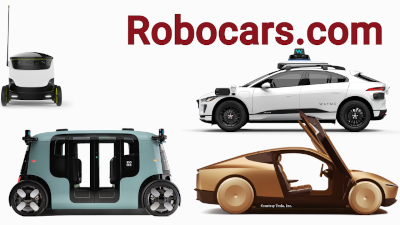
Here’s the annual year in review, with the top 10 1/2 stories of the year in self-driving cars, robotaxis and more. This year, since there were many interesting video backgrounds to use, it is available as a video.
The video contains indexes so you can easily seek to the different stories in the top 10.
10.5 Electrification
It’s not robocars, but the big surge in electric cars and the infrastructure bill will be a benefit to robocars which are mostly designed on EV platforms.
10: Cruise opens Kimono, goes unmanned
We finally got to see more of what goes on inside a Cruise vehicle, and they started early robotaxi deployments with no safety driver — covered more at #3 in the countdown. But the recent firing of the CEO is not a good sign.
9: Tons of new LIDARs and radars
Sensors keep getting better and better. We’re seeing new LIDARs and radars with amazing resolution, and scores of companies are working to make it all cheaper. One reason many were scared of LIDAR is that in the beginning, it was very expensive. But nothing made of electronics stays expensive for long. Instead, metaphorical Moore’s law makes everything better and cheaper every day.
8: Bounce back from pandemic for smart mobility
The pandemic was the big story of both 2020 and 2021. It hurt all areas of transportation, but they are starting to bounce back, including smart mobility. Oddly, Omicron offers a way out of the pandemic which will see things go full speed ahead.
7: Apple car is real again
The Apple car has been on-again/off-again with defections and changes of plans. It looks like their back now, and their cars are busy roaming the streets. Apple never releases any details, but this story outlines what sort of car Apple would be likely to make.
6: Waymo
Waymo is the leader and always makes a lot of the news. They had ups and downs, from a public screw-up put on YouTube (to be fair, because they are one of the few companies that will let random members of the public use their cars and make videos) to the departure of their CEO. But see them again at #3 in the countdown.
5: Starship and Alibaba deliveries
Delivery robots are soaring. Starship (Disclaimer, I am a stockholder) announced 2 million real commercial deliveries, and Alibaba announced 1 million packages delivered (in larger vehicles.) Scores of companies are getting in on the game, from the sidewalk to the bike lane to the low-speed road vehicle. (Today uDelv announced their van will operate with MobilEye’s self-drive system.)
4: Tesla
Tesla’s FSD beta is still a very poor self-driving car — I will have a better review of that coming soon, but it doesn’t stop Tesla from dominating the headlines.
3: San Francisco
While Cruise and Waymo already made the list, their competition in San Francisco is one of the most important stories. Cruise finally started test operations there with employees, Waymo is doing it for a limited subset of the public with their Jaguars.
2: Move to trucking
There wasn’t a specific big story here but the overall boom in self-driving trucks was the not-so-stealth big event. While people debated the success of robotaxis vs. ADAS, the commercial value of trucks became clear. Players like TuSimple and Aurora went public with near dekaunicorn valuations, with a SPAC planned for “Plus.” Several players completed test runs on public highways with no safety driver on board, including most recently tuSimple from Phoenix to Tucson.
1: Roboataxis deploy in China
Waymo and Cruise may have generated the robotaxi excitement in the west, but 3 different Chinese companies started deploying services in China with no safety driver or limited safety driver involvement, including AutoX, Baidu Apollo and WeRide. In addition, Waymo decided to use a new robotaxi vehicle platform from Chinese manufacturer Geely/Zeekr
In 2022 we can expect more exciting news. Tesla won’t deliver on their promise of real FSD, but that won’t stop them making plenty of news. We’ll see more and larger robotaxi deployments and more news from China. An exciting ride is ahead.
Originally published at Forbes.com in Self-Driving Cars 2021 Year In Review. Copyright © 2022 by Brad Templeton.


Comments
Steve
Wed, 2022-01-05 02:07
Permalink
Tesla LIDAR?
I wonder if Tesla do find vision only, with strong input from the NHTSA, is not good enough. Maybe they will end up purchasing a LIDAR company to catch up and skip RADAR?
brad
Wed, 2022-01-05 12:13
Permalink
It's difficult
Tesla has charged hundreds of thousands of customer $10K to provide FSD. If they need a major hardware retrofit it's a loser. There is nowhere to easily put a LIDAR on Tesla cars with their glass roof, though there are some that go into the headlamps or in the rearview mirror but that makes it more difficult.
Steve
Thu, 2022-01-06 16:20
Permalink
Fair call.
Fair call, although as I understand vision systems they can have a weakness in understanding the distance to stationary objects against the background. Even a basic forward looking LIDAR (or Radar) could give a last few seconds warning of a serious failure. I guess there are huge costs either in introducing it or not having it. Probably one for both Tesla the NHTSA to sort out.
Anonymous
Tue, 2022-01-11 19:55
Permalink
No top-hats and skateboards for you.
No top-hats and skateboards for you.
Anonymous
Wed, 2022-01-12 15:13
Permalink
Have you read David Twohig's opinion on
Have you read David Twohig's opinion A Skateboard ain't a Platform.
The OEMs will defend their turf given the bruises from Tesla.
brad
Wed, 2022-01-12 21:20
Permalink
Skateboards
Most of his points are valid, though not all can't be solved. Certainly networking and power are done in more modern ways where they can be divided. But yes, the vehicle will need to be designed for strength as a whole, and the frame of the top hat won't just be quickly bolted on the base, I suspect the bases will be designed with a variety of structural bodies meant to be "on top of" (really structurally a part of) and the rest hung on that.
The skateboard companies want to be the big guys, who call the shots on their product and on what can be done with it. So you're not going to just buy it and screw something on top of it. If you're also big you can demand things you need in the skateboard, otherwise you take what you are given.
Or it might never work, as he says. That's the situation with Waymo and Geely. Waymo is doing overall high level design, Geely making the full structure of the vehicle, but leaving places on it for Waymo to bolt on sensors. I suspect Geely will run the wiring to Waymo's spec, or just leave conduits for them to do that. Waymo will want to do only what they feel they must do, which is sensors, networking, internal screen. They will be happy to leave the rest to Geely. Waymo is a big enough customer that many aspects of the vehicle will be Waymo's design though. And I suspect Waymo will own the VIN, not that it matters because nobody will ever buy the vehicle.
Anonymous
Thu, 2022-01-13 10:45
Permalink
responses always appreciated
responses always appreciated.
Anonymous
Thu, 2022-01-13 10:55
Permalink
the VIN implication is a good addition to
The VIN implication is a good addition to the analysis. This is for liability reasons mostly?
brad
Thu, 2022-01-13 12:47
Permalink
Cars are mishmashes
A modern car is made by many different supplies. Big car OEMs may make almost none of their car, but they design it and sell it, using contract manufacturers. But they "own the vin" which makes them responsible for liabilities on it. Or sometimes they do the final assembly, or rarely they make everything important in it.
But in a vehicle that will never be sold, just used as a taxi, that does not matter as much.
Anonymous
Sun, 2022-08-07 23:52
Permalink
Yole Group 18x as many L1-L2 VIOs versus L4-L5 by 2040
The new website for the Yole Group, including Yole Intelligence and Yole SystemPlus goes live.
Yole Group - 18x as many L1-L2 Light Vehicles In Operation versus L4-L5 Light Vehicles by 2040.
See pdf -
Imaging for Automotive 2022
Technology and Marketing report
Especially slides 11 and 12 - nuances in slides, must extrapolate (expand slides for scaling)
NOTE: slides are cumulative but unit scaling different yet useful
Interesting trends or growth rate of all L2 types versus L3L4L5 for 20 years (extrapolate distribution levels, rate of change, absolute uptakes and comparative percentages over select time periods)
Average yearly uptake of various ADAS levels in absolute values, cumulative and comparative percentages over select time periods.
Attrition rate of non-ADAS (eg a minimum of 270 million non-ADAS light vehicles to be replaced by ADAS LVs between 2020 and 2030).
Eg With somewhat linear growth rates, average of 67 million L1-L2 ADAS LVs estimated to be manufactured from 2020-2027.
Eg. The delta of the estimated 4.7% VIO penetration rate for L4-L5 by 2040 (100 mil) with the 89% VIO penetration rate for L1-L2 by 2040 (1.8 bil) is the essence of the incrementalism versus moon-shot debate and what is the most accessible and quickest path to safety for all.
Anonymous
Wed, 2022-08-17 11:29
Permalink
throw hands into air
Where Are The Autonomous Cars?
on semiengineering dot com
Is TOPS estimate clickbait?
Anonymous
Tue, 2022-09-20 11:39
Permalink
ZEEKR First Customer for Nvidia Drive Thor 2025
ZEEKR First Customer for Nvidia Drive Thor, With Initial Production Vehicles Planned for Early 2025.
Geely-owned automaker ZEEKR announced it will integrate DRIVE Thor on its centralized vehicle computer for its next-generation intelligent electric vehicles, starting production in early 2025.
Intel's loss of business for Zeekr's next gen AV had to be known in advance.
NVIDIA Unveils DRIVE Thor, includes automated and assisted driving, parking, driver and occupant monitoring, digital instrument cluster, in-vehicle infotainment (IVI) and rear-seat entertainment into a single architecture.
Anonymous
Tue, 2022-09-20 11:44
Permalink
Proof Intel knew in advance?
ZEEKR has already selected DRIVE Orin for its in-house advanced driver-assistance development. With the forward-compatible DRIVE platform, ZEEKR can seamlessly leverage its current development investments on DRIVE Orin to DRIVE Thor for its long-term production roadmap and beyond.
Anonymous
Tue, 2022-09-20 11:48
Permalink
Nvidia is scrapping the Drive Atlan system on chip ahead of sche
Nvidia is scrapping the Drive Atlan system on chip ahead of schedule for Thor,
Anonymous
Wed, 2022-09-21 11:21
Permalink
self certification in Europe
Is the lack of self certification in Europe part of the impetus for Thor?
Thor also seems like an attempt by Nvidia to mitigate the lack of L2+ / Premium ADAS platform design wins of late.
Does the trend of in-house chip design and software IP by OEMs present a challenge to Nvidia silicon and/or platform adoption?
Is Nvidia attempting to thwart off Chinese acceleration in silicon design for premium ADAS or AVs (eg Baidu or Horizon)?.
Anonymous
Tue, 2022-09-20 19:05
Permalink
Surprisingly muted comment
Jim McGregor from IntelTechTour on Twitter
2 Mobileye EyeQ 5 AV demo rides - an 11-camera system in a Ford Focus and a radar/lidar/camera robotaxi. Both worked, but the Robotaxi was smoother with higher object recognition and tracking.
Reading the above comment, one assumes the Focus was SuperVision and not Drive.
Anonymous
Wed, 2022-09-21 13:56
Permalink
Zeekr- Intel, then Waymo, now Nvidia - the
Zeekr- Intel, then Waymo, now Nvidia - the Chinese manipulation never ceases
Anonymous
Thu, 2022-09-22 23:51
Permalink
add PonyAI to the Geely hedge and disloyalty
add PonyAI as company partners with Geely affiliates to build robotaxi fleet
Anonymous
Thu, 2022-09-22 23:57
Permalink
remember Baidu & Geely in cahoots
Baidu & Geely invest EV joint venture Jidu Auto
Anonymous
Sat, 2022-09-24 21:04
Permalink
Will MBLY and Zeekr now even go to market with L4 ?
The ebb and flow of winning next generation L4 design wins.
July 2022
"In the meantime, our business is thriving, we are growing on all fronts and the future was never brighter" CEO MBLY on IPO update
September 2022
Zeekr selects Nvidia for L4 for 2025 production.
Zeekr & MBLY only started L4 AV project exploratory 9mos ago 1/2022.
Will MBLY and Zeekr now even bring to market a consumer L4 car in 2024?
Reminiscent of NIO flip flop? BMW?
And to think Zeekr obtained a US$100 million investment from Intel Capital only a year ago (2021)
Geely musical IP: from Intel/MBLY, Baidu/Jidu, Waymo, PonyAI, Nvidia, ..
All eyes on Ford BlueCruise with MBLU SuperVision tech first.
Anonymous
Mon, 2022-09-26 19:42
Permalink
"developing new lidar-based features"
"ZEEKR will .... as well as developing new lidar-based features with Mobileye."
The intentional wording in this statement is impossible to overlook.
The notion of the addition of Lidar in a L2 + Premium stack?
Anonymous
Tue, 2022-09-27 11:30
Permalink
from 2020
from September 2020
This long-term agreement will extend to enabling ADAS features on numerous models across multiple brands under the vast worldwide umbrella of Geely
www dot mobileye dot com/blog/our-new-deal-with-geely-is-a-game-changer-says-shashua/
from September 2022
Yesterday's Mobileye and Geely Holding Group are expanding their collaboration to bring Mobileye SuperVision to three additional Geely brands, with additional plans to bring the technology to other models in the future.
Anonymous
Tue, 2022-09-27 13:53
Permalink
basically, SV technology
basically, SV technology has been approved for production in Zeekr 001 in a forthcoming OTA update and then rolls out further next year to other brands. Nothing about L4 despite the lidar reference.
Anonymous
Thu, 2022-09-22 23:46
Permalink
today feels like Qualcomm is a Waymo adversary
today feels like Qualcomm is challenging Waymo through proxies.
Is a delineation between AVs and robotaxis becoming more pronounced?
Anonymous
Sun, 2022-10-23 01:16
Permalink
mobileye ces 2023
major news by mobileye ceo at ces 2023
mbly new company hq opens and has autonomous elevators
ceo's new company mentee robotics demos robot cleaning mbly robotaxi
volocopter to use rem roadbook for eyes off/hands off flying
fisker partners with mbly $35,000 av
Anonymous
Sun, 2022-10-23 01:18
Permalink
mobileye road show investors slides
www dot sohu dot com/a/594636088_618347?
shlomo
Sun, 2022-10-23 11:01
Permalink
2 EVPs and 2 VPs in last 9 months
2 EVPs and 2 VPs in last 9 months no longer in role at Mobileye.
Erez Dagan, Executive Vice President, Product & Strategy
Elad Serfaty, Executive Vice President, Government Affairs & Data Products (now at Orcam)
Tal Babaioff, Vice President Mapping and Localization and Co-General Manager REM
Jack Weast, Vice President for Automated Vehicle Standards and former Intel Fellow
Anonymous
Mon, 2022-10-24 02:12
Permalink
is new SVP the son of President of Boeing Israel
Is Nimrod Nehushtan, the new Senior VP, Strategy & Business Development at Mobileye the son of the President of Boeing Israel, Ido Nehushtan, who also was the former Commander of IAF?
One of the bio's for the former MG indicates the strong possibility.
shlomo
Wed, 2022-10-26 12:51
Permalink
Without viewing IPO presentation slides
Without viewing the IPO presentation slides from the roadshow (link posted on this thread) that describes the the various (and many new) solutions for the first time "in public", one could not understand the Mobileye conversations today. It is rather strange the information is not available on the company’s website.
shlomo
Wed, 2022-10-26 13:49
Permalink
$16.7 bil to $23.4 bil in valuation as of minutes ago
First day, increase of $16.7 bil to $23.5 bil in valuation as of minutes ago. 40%
Jul 2 2022 -> Oct 1, 2022 (both S1)
266 mil to 270 mil in pipeline
37 mil to 54 mil in design wins
(Management conservative on 2023 and Toyota in re-adjustment most likely).
In first 9 months of 2022, rev of $1.304 billion, shipped 24 mil EyeQs.
Total revenue for 2022 of $1.8 bil is still possible, as is shipping 32 mil EyeQ chips
The two new L3 solutions for 2025 probably from OEM demand was not well known by the market.
shlomo
Wed, 2022-10-26 13:56
Permalink
Bloomberg Technology interview with CEO today
Bloomberg Technology interview with Mobileye CEO today provided some insight.
Anonymous
Thu, 2022-10-27 00:28
Permalink
CEO comments
Shahua said, "I assume there will be more liquidity in the future. If Intel wants to sell (Mobileye) that's its business but it's a long process. For us an opportunity has now been created to be in the public eye and to build value and we already began to build value at the opening of trade today. There is very strong interest from investors, and we met hundreds of investors and they all told us how much this is a special company and there are not more companies like this."
Anonymous
Fri, 2022-12-23 18:54
Permalink
Will Zeekr and Mobileye even bring to market a Level 4 AV as
In September 2022, Zeekr selects Nvidia for a Level 4 AV production project for a 2025 release, only 8 months after the Zeekr and Mobileye Level 4 AV collaboration announcement for a 2024 release was announced.
Will Zeekr and Mobileye now even bring to market a consumer Level 4 car in 2024?
Anonymous
Sun, 2022-10-23 01:35
Permalink
new SuperVision + front Lidar = L3 announced
new SuperVision + front Lidar = L3
L3 Traffic Jam Pilot (1 EyeQ6H)
L3 Highway Assist (2 EyeQ6H)
Anonymous
Sun, 2022-10-23 02:36
Permalink
SV Lite 61, SV62, Chauffeur 63, Chauffeur Ultra
SV Lite 61, SV62, Chauffeur 63, Chauffeur Ultra all are projected to hit market in 2025
SV52 shown but not Chauffeur 56.
Zeekr 001 L4 was stated Chauffeur 56
Anonymous
Sun, 2022-10-23 21:49
Permalink
Chauffeur Ultra release accelerated to 2025
In addition to Vinfast signing the Chauffeur 56 stack (GEN 1.0) licensing arrangement for a 2024 rollout, the IPO presentation has updated and "accelerated" the Chauffeur Ultra release (GEN 2.0) to 2025 (IPO slide) from 2026 (Investor Day slide).
The Vinfast 2024 SoP implies Gen1 Chauffeur AV design win since Gen2 (Chauffeur 63 or Chauffeur Ultra) arrives in 2025.
The IPO presentation has no new updates of the L4 project SoP with Zeeker (GEN1 Chauffeur 56), originally indicated as "early" 2024 (Intel Investor Day slide).
Engineering Samples for EyeQ6H were slated for Q4 2022 which parallels the two advanced contract negotiations for Supervision (and AV) with major western OEMs (volume production in 2024).
The Supervision SV62 hardware and software feature set as compared to the SV61 (SV Lite) feature set (inc ODD) is notably differentiated and so which OEM will license SV Lite first will be interesting.
The pipeline grew 4 million units to 270 million since the last update (S1 reg) versus 37 million design wins in the first half of 2022. EyeQ sales now total at 125 million units versus the 100 million units announced Dec 12, 2021, the 117 mil by Jul 2, 2022, and the 125 million by Oct 14, 2022 (25 million units in 10 months). The 2022 preliminary Q3 revenue is $450 million per the slides. In 2021, Mobileye shipped approximately 28.1 million chips with revenue of $1.363 billion. Mobileye revenue as of the end of the first 3 quarters of 2022 is approximately $1.304 billion. Expectations for the fourth quarter have declined slightly.
2025 - all targeted for the same year
Supervision Lite SV61
Supervision SV62
Chauffeur 63
Chauffeur Ultra
Anonymous
Sun, 2022-10-23 22:36
Permalink
CTO of Mobileye response to question
Twitter Oct 17
Will CV alone be able to achieve L4/L5, ever? Or will the "superhuman capabilities (lidar/radar)" be necessary to gain regulatory/public acceptance?
Reply by Shai Shalev-Shwartz:
Hard to know for sure, but I believe that CV will eventually reach human-level (at least for driving purposes). Nevertheless, public acceptance may require additional sensors. I'm betting on a single front Lidar + surround imaging radars
shlomo
Sun, 2022-10-23 12:14
Permalink
New Supervision Lite info in IPO roadshow slides
There is new Supervision Lite info in an IPO roadshow slide.
Supervision Lite 2025 could easily be based on the new Mobileye imaging radar since availability of this new L2+ solution is not available until 2025.
Anonymous
Sun, 2022-10-23 15:53
Permalink
Apparently not true
Imaging Radar is not part of Supervision Lite as Chauffeur Ultra specifically identifies type of radar as IM.
shlomo
Mon, 2022-10-24 16:56
Permalink
Intel CEO comments today at WSJ conference
- commonplace on the streets by the middle of the decade -
Intel Corp's Chief Executive Pat Gelsinger on Monday said the initial public offering of its self-driving tech company Mobileye was not a capital raise, but more of an entry into the market.
"It is a move to potentially move them into the market. It's not a capital raise," said Gelsinger at the WSJ Tech Live conference when asked about why Intel was moving ahead with an IPO during such tough market environments and whether Intel needed that cash.
"The autonomous vehicle segment is a strong segment for growth. It's a tough market. At the same time, we're believing this company should be public and this is the best way to maximize the company's potential," Gelsinger said.
He also said he believes self-driving cars could become commonplace on the streets by the middle of the decade.
shlomo
Mon, 2022-10-24 16:58
Permalink
WSJ: MBLY share price likely at top end or above range,
Mobileye Global set to price shares at top end or above range, WSJ reports
Anonymous
Wed, 2022-10-26 10:19
Permalink
a former Automotive News Europe reporter of 7 years
a former Automotive News Europe reporter of 7 years, now writing in Fortune, wrote this today:
"Importantly, the Israeli startup has long designed its own proprietary silicon based on a RISC-V architecture rather..."
You have to chuckle.
shlomo
Mon, 2022-10-24 17:17
Permalink
the pushback hasn't been so much about valuation, but rather how
Intel's advisers are telling prospective investors that shares of Mobileye Global will likely price at the top end or above the targeted range in the upcoming trading debut of the self-driving-car business, according to people familiar with the matter.
Mobileye, which was originally expected to land a valuation of more than $50 billion, is now looking at one of roughly $16 billion or more if it prices the shares at $20, the top of its range. That’s slightly more than the roughly $15.3 billion Intel paid for the business in 2017.
Mobileye’s IPO comes at a time when few companies are daring to sell shares in the public market. In order to get the deal done, Intel adjusted its offering, selling fewer shares than planned—representing only about 5% to 6% of those that will be outstanding after the offering. It also lined up what are known as cornerstone buyers for roughly 40% of the deal if it prices at the high end of the range.
The roadshow pitch to investors started last week, and books are set to close for orders later Monday. So far, the pushback hasn't been so much about valuation, but rather how few shares are being sold, according to people familiar with the offering. The small offering—41 million shares, which includes the stock going to the cornerstone investors—means it may be tough for big funds to build up a meaningful position. Some other prospective buyers say they are worried about how a company with a low float, or number of shares publicly traded, can be subject to big stock swings, one of the people said.
Add new comment