


Year end summary: Top Robocar stories of 2022
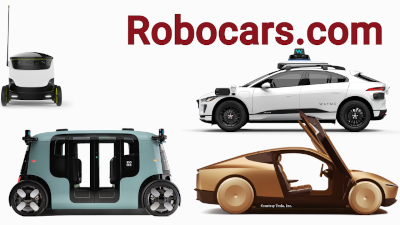
As we enter 2023, these were the big stories in self-driving cars for 2022. You an also check out my summary of early 2022 for more details on that quarter, but these are the game-changers for this year.
There’s no doubt this was a year of huge ups and downs. A year where some gave up and others doubled down. A year where the stock market and VC funding took a massive nosedive and companies mostly shrunk, but also a year of great technical progress.
Usually I do this as a countdown to the biggest story, but I’ll spoil it right now and say the big story was the incredible contrast of the good and bad news. So I’m instead going to tell you the good, the bad and the not particularly ugly.
Here’s a video version of this story with video illustrations.
First, the bad news.
While there’s been talk of a robocar winter for some time, ever since automotive OEM players missed on their invented predictions of having cars in 2020, things hit a low note in 2022. The events I am about to list triggered a spate of articles in some press declaring the death of the robocar. It became fashionable to now predict such cars were decades away, and that untold billions had been spent in the market frenzy with little to show for it.
One company that dealt with some of the bad news was one of the biggest newsmakers of the year, GM’s Cruise unit. Cruise had their vehicles out on the street each night, but didn’t make a fan of the city officials. Cruise had a spate of incidents where their cars would just get “stuck,” frozen on the roads with blinkers on, sometimes several of them at the same time. Some people got angry, or pretended to be angry, but the reality is that while Cruise clearly had some strange bugs, if blocking traffic in the middle of the night is a calamity, we would have banned human drivers long ago.
Cruise got a lot of attention and went viral in a bad way when one of their cars was pulled over by police for not having its lights on. That was strange enough, but a strange result of Cruise’s special programming for just such events took it viral. The car is programmed to attempt to pull off into a safe space when it is determined (by remote operators or the car) that police are pulling it over. But it decided that only after it had stopped and police walked up to it – and then it darted across the intersection to pull over in a better spot, seemingly trying to make a break for it.
For decades a very common question of people first learning about robocars was “what happens when police want to write it a ticket?” The police didn’t write a ticket in this case, but the car had a protocol for being pulled over. It displayed a phone number in big print on its screen and the police phoned it, talked to Cruise operators and resolved the problem. A remote operator had mistakenly turned off the lights. If it had been a software bug, Cruise would have fixed it quickly and it would have never happened again. When police write a ticket for a human driver, it doesn’t do much to stop other drivers from doing the same thing. Not so with robots.
The Fire Department was more upset when an unusual situation had a Cruise vehicle stopping in the oncoming lane – as it was programmed to do – when a fire truck approached. Problem was it stopped in a place opposite a double parked truck, and the road was blocked, and the Cruise could only back up into the intersection, which it didn’t want to do. The Cruise crew were about to fix it when the truck moved on. The Fire Department didn’t like even this short delay at all, but in reality I think that robocars will make the roads much better for emergency crews than they are now.
Cruise had a much more serious problem with their first injury accident. They were trying to turn left and started their turn while a car was coming at them in the right turn lane very fast. The car didn’t turn and tried to go straight through. The Cruise car froze – a mistake – and the oncoming car clipped it on the corner. Injuries were not serious but Cruise somehow arranged for the silence of all involved so we don’t know a lot more. Police didn’t put the Cruise car at fault – the other car was speeding and in the wrong lane – but it could definitely have done better. Cruise issued a “recall” to fix this – but it was just a software update. A recall doesn’t make sense when the carmaker owns the cars.
The real bad news was business news. At the start of the year, Cruise fired their CEO, Dan Amman, over a dispute with GM CEO Mary Barra over whether the company would go public and whether it would focus only on self-driving or feeding useful tech to GM. Founder Kyle Vogt returned to the role of CEO.
But there was much worse business news than that. Casualties were left on the side of the road as shuttle companies Optimus Ride and Local Motors shut their doors, along with Amazon’s Scout delivery robot project. We saw significant layoffs at high-flyer Nuro – even though they started manufacturing, and also Hyundai and Aptiv’s Motional joint venture. Trucking company tuSimple saw major chaos in the C-suite and boardroom, and ended the year by laying off ¼ of their staff. Almost no company was unscathed by layoffs. The many companies in the space who went public by SPACs saw massive devaluations, and lidar pioneer Quanergy, which I helped get started, went bankrupt in December.
We also law Audi shut down their Artemis unit – all the car OEMs except GM and Tesla have been scaling back their self-driving efforts in some way, which is part of what inspired the declarations of doom in the press.
We also saw leaks that Apple was scaling back their project, with a potential release in 2026 but with pedals and a wheel, like a regular car. Apple, of course, has made no comment.
But no question the biggest and baddest story was the shutdown of Argo AI, a startup funded by Ford and later VW. Argo was one of the big players, with billions invested, though it was not one of the leaders. Ford simply announced they were shutting it down. They rehired about 700 of the staff into Ford and reabsorbed the IP.
That OEMs were getting cold feet was no surprise. They never wanted a fast robocar revolution and are content to work on ADAS. What was more surprising is that nobody wanted to buy Argo for a song. It was reported that Amazon, which already owns Zoox, was interested in it for delivery vans but nothing happened. If they shopped it to anybody else, nobody bit in this slow market.
Tesla’s stock fell greatly, and they got new investigations by government agencies. They got a poorly ordered recall on the ability to do rolling stops at empty intersections and investigations into hitting emergency vehicles and other Autopilot accidents. Impressively, there are not reports of serious FSD accidents. They also had Dan O’Dowd, the wealthy CEO of Green Hills Software decide to spend a lot of his money on a campaign against Tesla FSD, running full page ads in the New York Times and pretending to run for U.S. Senate to do political ads. That didn’t seem to dent Tesla much, but the biggest wounds came from Elon Musk deciding to buy Twitter, and to seemingly destroy it and his formerly stellar reputation in the process. This took his eye off the ball at Tesla and scared away at least some customers.
But there was good news
Even with all the layoffs, shutdowns and market haircuts, many players pushed forward. In particular, the teams that were startups and tech companies rather than car companies. I include Cruise here, which began as a startup and is mostly run as one.
Several of the trucking and delivery companies had big improvements this year. Starship, where I’m a stockholder, hit the 4 million paid autonomous delivery milestone and expanded to a whole raft of new service locations, mostly universities. Gatik, a “middle-mile” delivery company is now doing regular runs with nobody in the truck between depots in Arkansas for Wal*Mart and in Toronto for Loblaws. Regular commercial service with no safety driver aboard in a big heavy truck is nothing to sneeze at. While the long-haul companies that went public by SPAC have seen major hits, Einride, which makes trucks that can’t even hold a driver, just closed an additional $500 million investment round. Kodiak, a long-haul company led by Don Burnette who worked on the early Waymo team, just announced a big military contract. Meituan, a Chinese company similar to Nuro, has reported good growth due to Covid lockdown deliveries.
MobilEye was bought by Intel for $16 billion several years ago. Late in 2022 they went public at a valuation not too different from that, which at first seemed like bad news. They popped the first day and MBLY is up over 75% while the rest of the market has been down or flat.
While Tesla has certainly had its challenges, their FSD prototype, mistakenly labeled as a beta, is definitely showing improvement. While I still can’t get it to do a significant drive without interventions, the distance between interventions is improving, and the system is getting better at turns. I still wouldn’t expect any of Elon Musk’s regular “next year, and I mean it this time” predictions to come true, and all his attention is on Twitter.
News from China was of continued growth, and opening up a few more cities to no-safety-driver robotaxi service. There are now over a dozen Chinese cities with robotaxi service. Baidu showed off their custom robotaxi design – it still has a wheel
due to the law but it’s designed so it can be removed later. They say it will cost just $37,000 to make. Waymo also announced it would use a new robotaxi built by Geely in China.
Zoox is growing. Amazon is building them a factory and spending $1 Billion per year on them. They are hiring when the rest of Amazon is cutting back with the downturn.
But the big story was the progress and expansion of the field’s top two teams, namely Waymo and Cruise, with a lot of it coming near the end of the year.
In 2019, Waymo launched service in the Phoenix suburb of Chandler with no safety driver in the vehicle. This year, Cruise began service at night in San Francisco to a subset of the public, and Waymo joined in later with 24 hour service (with safety drivers in heavy weather.) Cruise got permission to charge money as well.
Near the end of 2022 we saw big improvements. Waymo started taking the public, and expanded their no-safety-driver territory to the whole city, though the NE quadrant including downtown is only for employees. Waymo also expanded to downtown Phoenix, and opened up to public use there, and this this month doubled the service area. As a plus, they will also take you to Phoenix Airport’s Skytrain that runs to all terminals. Waymo will soon charge money in SF. I rode in their car in SF, and while no single experience can tell you a system is good, it can quickly reveal if it’s bad, and the ride was smooth and well performed. Waymo now has 700 vehicles in operation across its fleet.
Cruise announced in October that in 90 days they would open in both Austin and Phoenix, and they pulled it off, though it’s still only at night, and the Phoenix area is also the easy suburb of Chandler and the Austin area is small. Even so, it shows they can expand and do it fairly quickly.
Waymo has also said they will soon operate in Los Angeles, and just got their DMV permit. There are now many cities around the world where people can hail a robotaxi ride, sometimes with no safety driver in the vehicle. This map shows where they are – mostly in the USA and China, but growing regularly.
Not so Ugly
This year I began a YouTube channel. You might enjoy some of the videos there, which all come with text articles for those who prefer that. This includes a 2 part series on why you aren’t riding in a robocar quite yet, plus a review of Tesla FSD that gave it an “F” – and still does, even though it’s better. I also covered why Tesla should get maps, and why they might be putting in imaging radar. There was also a lot of coverage of electric vehicles and the charging business, as well as some on the Air Travel overload, e-VTOL aircraft and much more. Plus plenty about Tesla, as seems to be always the case.
Tune in and read in 2023 for what should be an interesting year. With a bit of luck, we’ll bounce back from the market downturn, though not without losing a few companies on the way. The business models will get more refined and that will inspire a new round of startups if they can get funding. We’re getting close to the time where a real commercial robotaxi service arrives, scaled to make money, at least on a gross margin basis. Then the land rush can begin. The same will happen in China in the next couple of years.
Originally published at Forbes.com in Top Self-Driving Car Stories Of 2022 In Review - Big Ups, Big Downs. Copyright © 2023 by Brad Templeton.


Comments
Richter7
Mon, 2023-01-09 17:14
Permalink
700 and IP ?
700 and IP ?
Richter7
Mon, 2023-01-09 19:37
Permalink
AV expert Professor Steven Shaldover
Noted academic AV expert Professor Steven Shaldover says at TRBAM TRBAM2023 that he has personal experience with Chinese AV companies operating in U.S. and observed unsafe practices. Warns against US - China AV deployment race that sidelines safety.
possibilities?
AutoX
Black Sesame Tech
DeepRoute
DiDi
Nio
Pony AI
QCraft AI
XMotors AI
WeRide
lsrc
Fri, 2023-01-13 13:20
Permalink
top 5 global BEV players to take 80 percent of market
huh
top 5 global BEV players to take 80 percent of market states Lei Jun, founder and CEO.
"the threshold for EVs has been dramatically lowered compared to petrol cars' . For example, the cost of batteries has fallen by 80 per cent in the past 10 years, Lei said.
tsrc
Mon, 2023-01-23 20:12
Permalink
Flat-rate Unlimited Rides On-Demand Mobility Service
Flat-rate Unlimited Rides On-Demand Mobility Service, "mobi"
Mitsui, KDDI, and WILLER
Anonymous
Mon, 2023-01-30 21:27
Permalink
WTH ? Seriousily. WTH? the Mobileye 3 Stooges
Mobileye posts a video on Twitter TODAY of a recap from CES titled:
"Learn more about our product spectrum, including Mobileye SuperVision, our most advanced driver-assist system, Mobileye Drive, our self-driving system that can turn vehicles autonomous, and Mobileye Chauffeur, our consumer AV solution" with a Nir Gideon.
CES was 3 weeks ago.
At the end of the clip, Nir Gideon states Chauffeur "is scheduled for rollout in 2024 in the Zeekr consumer vehicles" - WTH ?
Seriously- WTH ?
Someone tell Mobileye marketing the CEO announced 3 weeks ago the Zeekr Chauffeur launch was delayed until 2026.
What a circus from the marketing group at Mobileye.
Or was this a Freudian slip that the 2026 delay was made at the very last minute and this video was produced prior to a last minute change to the Chauffeur rollout timeline ? Who really made the change, Mobileye or Zeekr (despite the CEO comment in the Q&A at the end of the keynote)?
Richter7
Thu, 2023-02-02 05:05
Permalink
Mobileye Announces Participation in Upcoming Investor Conference
Mobileye Global Inc announced today that Dan Galves, Chief Communications Officer, is scheduled to participate in the following upcoming investor conferences in the first quarter of 2023.
Wolfe Research Global Auto, Auto Tech, and Mobility Conference, February 15, 2023
Citi 2023 Global Industrial Tech and Mobility Conference, February 22, 2023
Barclays Industrial Select Conference, February 23, 2023
Raymond James & Associates’ 44th Annual Institutional Investors Conference, March 6, 2023
Morgan Stanley Technology, Media & Telecom Conference, March 8, 2023
Anonymous
Thu, 2023-02-02 08:34
Permalink
Ipo price $21 and currently above $43 in 3 months
more than doubled in price in 3 months
market capitalization over $34 billion
Anonymous
Thu, 2023-02-02 12:52
Permalink
is mobileye allowed to say
is mobileye allowed to say material news at investor conference without making a news statement for the public
Anonymous
Fri, 2023-02-03 07:23
Permalink
600 Argo-nauts joined the Blue Oval
"including those 600 former Argo engineers who are now working full time at Ford on our autonomous systems"
"We're about to ship our second cycle of BlueCruise already, and we are really starting to see that is clearly what customers want revenue-wise. And I do believe in this first three, four years of software to the car that ADAS, that Level 2, Level 3 system is really the most remarkable TAM."
"our customers using BlueCruise have now traveled 42 million hands-free miles. So we're scaling incredibly rapidly."
tsrc
Fri, 2023-02-03 08:10
Permalink
Mobileye is out and chip supplier Qualcomm is in
Despite all the teething troubles, the VW Group is adamant it wants full control of the software rather than outsourcing it. In fact, an earlier agreement with Intel's Mobileye unit to supply the chip powering the MEB cars' assisted driving system was a big reason for Cariad's existence. That agreement gives Mobileye sole access to the data from the cars, which then goes to populate its REM (Road Experience Management) database to digitally map roads and pave the way for greater levels of autonomous driving. "That's a contract the Volkswagen brand did prior to Cariad. That's why Cariad was founded, because we are not having access," Hilgenberg said in Las Vegas.
VW and Cariad realised they needed that data if they wanted to gain the knowledge to offer level three and level four hands-free driving capability on cars built on the Unified platform. Cariad reckons it'll have 40 million cars on the road harvesting data by 2030, creating knowledge about all those rare 'corner cases' in driving that we humans can usually figure out how to navigate, but a computer might not.
"The functionality is dependent on the amount of corner cases you actually can secure, harden and validate, and that needs a big fleet and high-performance power," Hilgenberg said. Which means that for the Unified platform, Mobileye is out and chip supplier Qualcomm is in. One advantage Qualcomm has is that its chips can power both the assisted driving functions and the infotainment, as well as letting VW keep its data.
Cariad's goal is to write more of the software itself, up to 60% by 2025 from around 10% now. It is recruiting hard and Hilgenberg says Cariad will hire another 1700 staff in 2023 to take its headcount over 7000 across its locations in Germany, China, the US and India.
The CEO said his company receives 7000 applicants a month and is benefiting from the mass layoffs at US tech giants such as Google and Facebook.
One way it grows is through acquisition, such as the 2022 purchase of Intenta, a sensor data fusion company. In 2021, it bought the camera software division of Hella Aglaia. Cariad also has a wealth of partnerships outside the key chip makers. The premium infotainment software within the 1.2 platform going into the PPE cars is being developed on the Android Automotive open-source operating system. Cariad has formed a majority-owned joint venture in China with Horizon Robotics to develop assisted driving systems for the country, meaning it has split its strategy to avoid problems around data leaving the country (illegal in China).
Meanwhile, after VW removed itself from the Argo AI self-driving enterprise, the weight of developing more saleable (ie achievable) levels of autonomous driving fell to Cariad and its partner Bosch under the Automated Driving Alliance. The partnership now has 750 people from each company, 1500 in total, working on hands-free technology.
All this change within Cariad means timelines have slipped. The previous target of 2025 for the 2.0 software aimed at the Unified platform and the cars that were meant to herald its arrival, including the VW Trinity flagship EV, have dissolved with no new date set. It's still uncertain if cars on the PPE platform (sometimes called SSP, for Scaleable Systems Platform) including the Macan EV and new Audi A6 E-tron will use the 1.2 software or be fitted with the latest iteration of the 1.1.
Cariad's next major release of the ID software will coincide with the market launch of the Volkswagen ID 7, the electric saloon that VW teased at CES and is expected on sale in the autumn following a reveal in the spring. The timing incidentally shows how hard it is to ignore vehicle launches when rolling out major upgrades.
tsrc
Fri, 2023-02-03 08:12
Permalink
That's why Cariad was founded, because we are not having access
"That's why Cariad was founded, because we are not having access"
tsrc
Fri, 2023-02-03 08:18
Permalink
Hilgenberg slammed Mobileye with comment
Hilgenberg slammed Mobileye with comment
Anonymous
Fri, 2023-02-03 19:09
Permalink
yep mobileye Rem requires major
yep mobileye Rem requires major global oems to gather data on three or four continents.
without Vw using Rem for majority of new model launches starting around 2026 or 2027 and beyond, mobileye crowd sourced data gathering is significantly impacted.
Rem requires multiple oems for coverage across a continent.
qualcomm Vepp mapping is not currently as mature as Rem though.
lidar mapping too damn expensive.
New Bosch mapping for Vw is similiar to Rem.
Anonymous
Fri, 2023-02-03 21:31
Permalink
3 weeks ago from Handelsblatt "to be announced
Las Vegas: Mobileye is one of the world's leading providers of sensor systems for cars. Now founder Amnon Shashua is focusing on Germany . "We are currently in talks with potential German customers and are open to new partners," says the head of the Israeli company, which specializes in autonomous driving, in an interview with the Handelsblatt.
Most recently, Volkswagen had agreed on extensive cooperation with Mobileye - and at the same time discontinued the Argo AI joint venture started with Ford . Shashua does not want to comment on the deal. According to industry circles, the new partners want to work together to improve autonomous driving performance on the motorway, among other things.
As the founder confirms, another partnership with a large car manufacturer that does not come from Europe is to be announced in the coming weeks. It would be the seventh cooperation: According to Mobileye, it has already signed contracts with four Chinese and two European manufacturers.
CES
- 9 SuperVision Projects plus ...
we have now SuperVision design win into six carmakers, nine brands. The scope is expanding towards Chauffeur, the eyes-off system. And additional SuperVision traction we expect to come out in the second half of the year. We have customers that we haven’t named yet, but I think the additional traction in the second half would be ones outside of those six OEMs.
We saw recent evidence in this with a premium European OEM, which kicked off a SuperVision program in Q4. During discussions, the scope of the program expanded to include a Chauffeur program that will launch in 2026 timeframe.
so 2024 there will be additional OEMs it’s not only ZEEKR, ZEEKR it’s not – currently its ZEEKR 001. That’s one brand, there’s another brand of. ZEEKR coming to launch throughout end of 2023, beginning of 2024 and then there are additional Geely OEMs that are kicking-in in 2024 and then 2025. We’re talking about OEMs outside of the Geely outside of the Geely Group.
Mobileye has kicked off development work with a premium European automaker for programs targeting delivery in 2025, with other customers at advanced stages of development.
Zeekr- 3 (001, 009, X)
Geely - 3
BMW - 1
Others - 2 (1 European, 1 ?)
Overall, Mobileye now expects volume of SuperVision based vehicles to reach about 1.2 million units in 2026.
- 4 Chauffeur Projects ( 3 plus 1)
we are now streamlining it to one piece of hardware called CH663, so three EyeQ 6, that will be in the 2025 timeframe. We have additional OEM with an eyes-off and an additional one, this European, which is not yet named for 2026 timeframe, and there is a potential additional one, which I believe that could be announced in the second half of the year for an eyes off-system based on the three EyeQ 6.
So on eyes-off system with OEMs except ZEEKER that starts in 2025, the rest of the OEMs are starting in 2026. So we have quite a nice traction, as I said three OEMs and the fourth one should be – should be closed second half of this year for eyes-off systems for 2026.
During discussions, the scope of the program expanded to include a Chauffeur program that will launch in 2026 timeframe. The Chauffeur portion of this program alone represents an expected $1.5 billion opportunity through 2030.
2025 - 1 (Zeekr)
2026 - 3 (Vinfast, BMW, ? )
Anonymous
Sun, 2023-02-12 19:47
Permalink
Mobileye CEO enters into $750 mln funding round0
ZEEKR has entered into an investment agreement with industry-leading partners including Prof. Amnon Shashua, CATL, Yuexiu Industrial Fund, Tongshang Fund and Xin’an Intelligent Manufacturing Fund to raise USD $750 million for continued technology research and global expansion.
The five investors have agreed to invest in the Series-A funding round that will raise a total of USD 750 million. Zeekr is now valued at USD 13 billion after completion of this funding round.
Of the five investors, two investors in the company are new- Amnon Shashua, CEO and founder of autonomous driving technology company Mobileye Global and the Guangzhou city municipal government’s investment arm Yuexiu Industrial Fund.
The successful signing of the second external funding round represents a significant vote of confidence as Zeekr develops proprietary technologies built around safety, sustainability, user-experience, and new mobility services. Zeekr will use the funds to explore and grow a global sales network.
Anonymous
Mon, 2023-02-13 06:36
Permalink
mbly ceo invests in co switching to mbly competitors chip
mbly ceo invests in zeekr who switching to mbly competitor chip from nvidia
makes no sense
mbly employee confusion why ceo help zeekr who switch to nvidia
tsrc
Thu, 2023-02-09 11:56
Permalink
what good is REM if next generation platforms
what good is REM if next generation platforms from the big oems do not use eyeq system
Vw, Bmw, Gm are moving to qualcomm in 2025 to 2027
how will Rem gather fresh data with fewer and fewer cars on road with eyeq
tsrc
Sun, 2023-02-12 18:27
Permalink
stsndard roads, certain roads and gradually
lol gradually can be years
what be standard roads
what be certain road
what be gradually
mobileye on lnkdn 1w
Mobileye SuperVision provides driver-assist features on all standard roads, but still requires the driver's full attention with eyes on the road.
With the addition of further sensors, Mobileye Chauffeur will allow drivers to go 'eyes-off' on certain roads: gradually from highways, to arterial and rural roads and eventually to urban roads, at which point a driver is no longer needed.
Anonymous
Mon, 2023-02-13 22:39
Permalink
Nissan prefer Trimble RTX over Mobileye Rem in new car?
Trimble announced today that Nissan Motor Co. will use Trimble RTX technology as its high-accuracy positioning source, enabling the hands-off and guided freeway driving capabilities of the ProPILOT Assist 2.0 driver assistance system, available initially on the 2023 Nissan Ariya.
Richter7
Fri, 2023-02-03 14:04
Permalink
ADAS tech was only in 32 percent of China car sales in H122
In the first half of last year, 2.88 million passenger vehicles fitted with driver-assistance systems were sold in China, according to the Ministry of Industry and Information Technology. They accounted for 32.4 percent of all passenger vehicles sold in the nation during that period.
Andrew Grant, senior associate with Bloomberg NEF's Intelligent Mobility team, said Level 2 vehicles are expected to surpass 50 percent of global passenger vehicle sales by 2025. He estimated the peak for Level 2 sales will arrive in 2028, with approximately 53 million vehicles sold.
"While Level 2 vehicles will remain a sizable market, Level 3 vehicles could be even bigger as soon as 2027, with sales of Level 2 and 3 vehicles approaching a combined $150 billion," he said.
Baidu said it can launch its robotaxi fleets in a new city in just 20 days, as its automated systems generate 96 percent of the maps needed, reducing the workload for human engineers in completing them.
A report by global consultancy IHS Markit said the market for China's robotaxi services is expected to surpass 1.3 trillion yuan by 2030, accounting for 60 percent of the country's ride-hailing market by then.
BloombergNEF estimates that China will operate the world's largest robotaxi fleet, with about 12 million vehicles by 2040, followed by the United States, with around 7 million autonomous vehicles.
Richter7
Sat, 2023-02-04 18:47
Permalink
announced in August 2021
Originally announced August 2021
Aug 27 2021 - 'The two companies (Zeekr and Mobileye) also plan to collaborate further on a next generation system powered by six EyeQ5 SoCs to deliver a new standard for a comprehensive ADAS experience. It is expected to make its global debut as soon as 2023'
Then four months later on Jan 4 2022, this next generation system is re-positioned -'Mobileye and Zeekr aim to deliver the world’s first consumer autonomous vehicle with L4 capabilities by 2024'.
Based on new information provided at CES 2023, this first Mobileye Chauffeur program launching with Zeekr is now scheduled to ship in late 2025, about a year later than originally expected.
Mobileye provided some other additional updates during CES 2023 on the company’s first three Chauffeur launches - this original Zeekr program, a Vinfast program noted in the October IPO Roadshow presentation and a third 'premium European' auto program (with BMW as the likely candidate).
As a result of details provided in the question and answer segment of the Mobileye CES keynote, the Zeekr and Vinfast Chauffeur launches will not have Urban ODD support based upon the specifications provided in the keynote.
Mobileye is moving the Zeekr and Vinfast (Chauffeur 56) launches from 6 EyeQ5 to 3 EyeQ6H (Chauffeur 63).
The specific ODD supported by this hardware change for eyes-off navigation has not been officially announced but the ODD range will minimally include Highways and On/Off Ramps ODD (Blade 3) and at a maximum can provide eyes-off support on an ODD range up to and including Arterial and Rural roads (blade 4 and blade 5). But Chauffeur 63 cannot provide eyes-off support in a Full/Urban ODD.
The two development programs were evidently too advanced to add an additional EyeQ6 (a further upgrade to Chauffeur 64) as well as the Mobileye EyeC Imaging Radar sensor suite in order to enable Full/Urban ODD support, even if the Mobileye EyeC Imaging Radar will be available in the latter half of 2024 as an Automotive C Sample grade product.
Zeekr has been Mobileye's first customer throughout the SuperVision and Chauffeur product program launch cycles but there is a possibility that this third Chauffeur program launch noted at CES and scheduled for 2026 (European - likely BMW) could be the first 'Full/Urban ODD' Chauffeur launch for Mobileye.
It would be ironic if BMW launches the first FULL ODD Chauffeur program.
Zeekr still could debut the world’s first consumer autonomous vehicle with L4 capabilities by 2024 - Mobileye did not state 'full ODD' - but another OEM could launch the first Full ODD L4 program.
Or maybe this third Chauffeur program launch does not pursue a Full ODD but this seems unlikely for a premium European auto manufacturer.
There is a fourth Chauffeur program in negotiations that could close in the second half of 2023.
Anonymous
Sun, 2023-02-05 19:05
Permalink
what made mobileye originally believe it could launch L4 in 2 yr
what made mobileye originally believe it could launch L4 in 2 yrs?
to state as the company did in august 2021 that chauffeur could be on roads in late 2023 had to been based on some set of metrics or criteria.
the new estimate of the second half of 2025 would suggest a robust program is the end game.
a solid eyes off capability on highways, arterial and rural roads would advance the notion of safe and affordable eyes off driving noticeably.
Richter7
Sun, 2023-02-05 20:02
Permalink
Morgan Stanley on Tesla vs Mobileye interventions
Via Twitter: From a MS note
re: Tesla FSD vs. Mobileye Supervision
"On a test drive from Barcelona to Germany, an OEM benchmarking ADAS products noted that the rate of interventions for the Supervision-equipped car was one-tenth that of Tesla's FSD-equipped car in their tests"
And to think this road test was seven months ago not to mention SuperVision is also one-tenth the cost of FSD.
Richter7
Thu, 2023-02-09 16:11
Permalink
Fidelity Investment 13G for Mobileye: 5.069 percent of shares
Fidelity Investment 13G for Mobileye
(a) Amount Beneficially Owned: 2,631,819
(b) Percent of Class: 5.069 percent
on February 9, 2023 this Schedule 13G in connection with their beneficial ownership of the CLASS A COMMON STOCK of MOBILEYE GLOBAL INC at December 30, 2022.
Tsrc
Wed, 2023-02-08 10:36
Permalink
eyes off chauffeur on highway still 2 1/2 or more yrs
eyes off chauffeur on highway still 2 1/2 or more yrs away and will launch be a 3 to 12 month trial pilot for select customers of zeekr before entire fleet recieve update. what zeekr model will have chauffeur since nvidia is working with zeekr?
Anonymous
Fri, 2023-02-10 10:22
Permalink
BMW CEO comment
BMW CEO Oliver Zipse comments at CES 2023 that spawned several reports and opinion columns remain unfinished as the original reporting failed to follow-up on the CEO's seemingly contradicting statements.
As reported on the German website
efahrer dot chip dot de, this translation is generating commentary in the US media -
- "The BMW boss is skeptical about the market prospects of today's autonomous driving systems, where the car can take control in some situations and liability lies with the manufacturer during this time. According to common classification, this is seen as level 3 of autonomous driving. At level 4, a car only drives itself under specified conditions, but human intervention should no longer be necessary.
BMW competitor Mercedes has been selling a Level 3 system in some models since last year, which takes over control and liability on freeways at speeds of up to 60 kilometers per hour until the human takes control back when requested.
Zipse currently does not see the current state of the art as sufficient for a business model: "A level 3 system, whether at 60, 80 or 120 kilometers per hour, which constantly switches off in the tunnel, switches off when it rains, switches off in the dark, switches off in fog - what's that supposed to mean? No customer buys it.” No one wants to be in the shoes of a manufacturer who misinterprets a traffic situation during the liability phase, for example when control is handed back to the driver. "We don't take the risk." -
With BMW to introduce a "Level 3" vehicle later this year, a reasonable follow-up to the above (Google translated) comments by the BMW CEO would seem appropriate.
From the website BMWBlog-
"In an interview with CarBuzz, Frank Weber explained why the system will be launched with the 7er: "...
"BMW has announced the new 7 Series G70 will get a Level 3 self-driving system later this year. Speaking in Las Vegas at CES 2023 where the i Vision Dee concept was unveiled, Chief Technology Officer Frank Weber said the functionality will be added to the company’s flagship model in 2023. He went on to mention it’s a “real Level 3; the vehicle is in charge, not the driver.”
Richter7
Fri, 2023-02-10 15:10
Permalink
Matrix of ADS requirements and validation methods
FRAV and VMAD agreed on a methodology to manage and coordinate work on the joint submission to WP29 for June 2024.
- Matrix of ADS requirements and validation methods. Iterative process to reach agreement on text for requirements and their validation. FRAV expects to begin collaboration with VMAD from April. - Initial requirements and explanations for consideration by VMAD and its subgroups.
Informal Working Group on Functional Requirements for Automated Vehicles Status Report - 15th GRVA Session, 23-27 January 2023
tsrc
Fri, 2023-02-10 16:43
Permalink
Polestar more probably number three Chauffeur car not BMW
Polestar more probably number three Chauffeur car not BMW
Polestar a Geely company
Richter7
Fri, 2023-02-10 19:28
Permalink
Chauffeur program for 2026
As the commentary on this 2026-2030 program references $1.5 billion over 5 years, a reasonable estimate is for 250,000 to 275,000 vehicles over the 5 years. Any "premium European OEM" selling 250,000 vehicles in 5 years would have a strong presence in Germany as the driving and legal environment in the country is positioned for a Chauffeur driving experience.
For the intial SuperVision program to dovetail with the follow-up Chauffeur program, engineering continuity is key. Polestar is also purported to be implementing Nvidia's central compute framework across all new models.
BMW has considerable experience working with Mobileye on highly assisted driving technology on the company’s existing internal combustion engine platform. In addition, despite BMW's development of a next generation EV platform, the company is still targeting delivery of ICE models well past 2030. The ability to smoothly launch the SV and CH programs consecutively would be a competitive edge for BMW as the company’s Neue Klasse next generation EV platform launch cycle is intentionally independent from their ICE platform and several years away from a launch. The compressed launch sequence of the SV and CH programs also imply the use of the same platform. This favors BMW as well as Polestar is in the process of an EV platform transition.
Anonymous
Mon, 2023-02-13 19:56
Permalink
Will Intel partner w/ Harman in Vinfast
Vinfast and Intel will also work together to define a shared vision of future in-vehicle computing platforms and build scalable in-vehicle computing platforms for Advanced Driver Assistance Systems (ADAS) based on Mobileye technology and infotainment systems that deliver a unique in-vehicle experience for Vingroup and VinFast customers and create a suite of services that will differentiate them from competitors.
central compute? with ZF?
infotainment? with ?
Tsrc
Wed, 2023-02-08 09:28
Permalink
Joachim Langenwalter joins Autobrains
Previously, Joachim Langenwalter was SVP, Head of Global Software and Hardware Engineering at Stellantis, including its autonomous driving, smart cockpit and connected services programs. Prior to Stellantis, he was VP of Software Strategy at Volkswagen, and Director of Automotive Software at NVIDIA.
Autobrains just recently hired Former Mobileye VP Hilla Tavor as Chief Business Officer who was Vice President of ADAS Business Development at Mobileye.
Shlomo
Sun, 2023-02-12 16:11
Permalink
Congratulations Mobileye!
Congratulations Mobileye!
tsrc
Tue, 2023-03-07 08:11
Permalink
no news from company with
no news from company with investing meetings
four meetings but nothing
nothing
tsrc
Tue, 2023-03-07 08:32
Permalink
millions of shares now
millions of shares now short
over 15pc shares
get bigger every week
ipo lockup soon ends
tsrc
Wed, 2023-03-08 09:05
Permalink
Bosch and Cariad replace Mobileye
Automobilwoche
In an exclusive interview with Automobilwoche, Mathias Pillin, Head of Technology at Bosch's Mobility division, talks about the collaboration with Volkswagen, the challenges of automated driving and the software-defined vehicle.
Bosch has been working with the Volkswagen subsidiary Cariad on the next generation of driver assistance systems for a year. The first functions such as a lane change assistant are to come into the cars this year, says Bosch technology boss Mathias Pillin in an interview.
Mathias Pillin has been Head of Technology at Bosch's mobility division since autumn last year and is also responsible for the software-defined vehicle.
Anonymous
Sat, 2023-03-11 11:57
Permalink
Mobileye officially opens Shanghai Jiading Technical Test Center
Shanghai, March 10, 2023 — Mobileye, a leading global provider of advanced driver assistance systems (ADAS), today announced the opening of its Shanghai Jiading Technical Test Center, continuing its commitment to providing advanced and reliable solutions to Chinese automakers.
Mobileye executives were on hand to deliver remarks, and the opening event was attended by Ms. Ravit Baer, Consul General of Israel in Shanghai, as well as Mobileye’s customers and partners.
In 2022, through the collaboration and efforts of our partners, Mobileye has been awarded 24 project sites from 12 Chinese automakers.
tsrc
Tue, 2023-03-07 10:24
Permalink
car maker sell mobileye chauffeur for much more
mobileye sell chauffeur to car maker for between 3000 and 6000 euro but car maker sell in car between 12,000 and 15,000 euro
who buys chauffeur
Anonymous
Thu, 2023-03-09 08:25
Permalink
sv?
sv?
Anonymous
Thu, 2023-03-09 10:00
Permalink
.
another 1/2b for sv
Shlomo
Wed, 2023-05-03 20:07
Permalink
Congratulations again Mobileye!
Congratulations again Mobileye!
Shlomo
Tue, 2023-05-09 06:51
Permalink
World-class!
World-class!
Shlomo
Thu, 2023-05-25 00:11
Permalink
Congratulations Mobileye again!
Congratulations Mobileye again!
Anonymous
Tue, 2023-05-30 09:22
Permalink
Toyota
Toyota
Shlomo
Mon, 2023-06-26 18:35
Permalink
Liat Koren
Liat Koren
Shlomo
Tue, 2023-07-11 09:34
Permalink
Congratulations Mobileye!
Congratulations Mobileye!
Shlomo
Fri, 2023-10-06 13:38
Permalink
Congratulations Mobileye!
Congratulations Mobileye!
Anonymous
Tue, 2023-02-28 12:07
Permalink
robotaxi news from emea
robotaxi news from emea
Shlomo
Sat, 2023-03-25 22:13
Permalink
Mobileye is hiring for Stuggart.
Stuttgart is home to Porsche and Mercedes-Benz.
Shlomo
Sun, 2023-04-02 21:54
Permalink
Samsung to supply chips for Mobileye
Samsung to supply chips for Mobileye reports The Korea Economic Daily Global Edition in an exclusive report today.
"Samsung Electronics Co., the world's largest memory chipmaker, has won a semiconductor production order from Israel-based Mobileye Global Inc., a leading autonomous driving tech developer within Intel Corp."
"The Israeli fabless will use the chips for some products under its EyeQ 5 model, an automotive-grade system on a chip (SoC) based on 7 to 28 nm processes. Mobileye has commercialized EyeQ1-5 models"
Add new comment